FRP Grating Systems Overview
FRP grating systems are composite grating products made with glass-fiber reinforcement in a thermosetting resin matrix. The range includes molded and pultruded grating for industrial walkways, platforms, drainage covers, and access areas. Product configuration varies by grating type, resin system, surface finish, support arrangement, and project requirements.
FRP grating, also known as fiberglass grating or GRP grating in some markets, is used to form working and access surfaces in industrial environments. The two main construction methods are molded grating and pultruded grating, with each using a different structural arrangement.
The FRP grating range can include open-mesh and covered-surface configurations, along with different resin and surface options. The appropriate product family depends on the intended application, environmental exposure, structural arrangement, and installation conditions.
Grating Types
Molded FRP Grating
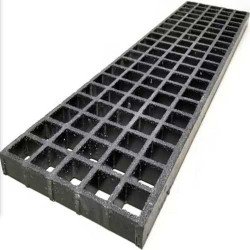
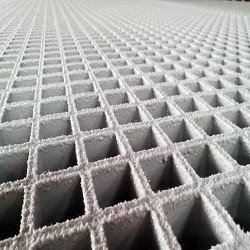
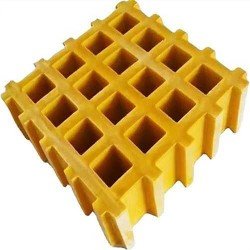
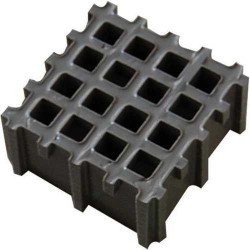
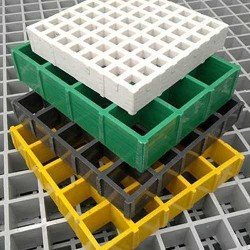
Molded FRP grating is formed as an integrated panel using continuous glass-fiber reinforcement and a thermosetting resin matrix. Open-mesh configurations are commonly used for walkways, platforms, drainage covers, and equipment access areas.
Pultruded FRP Grating
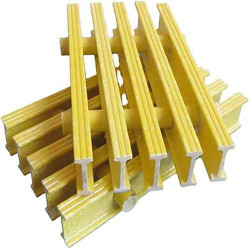
Pultruded FRP grating is assembled from pultruded structural bars and cross members. Its bearing-bar construction provides a different load-carrying arrangement from molded grating and is used across industrial walkways, platforms, and access structures.
Material & Surface Options
FRP grating uses glass-fiber reinforcement within a thermosetting resin matrix. Resin systems can include polyester and vinyl ester, with other formulations available for selected product configurations.
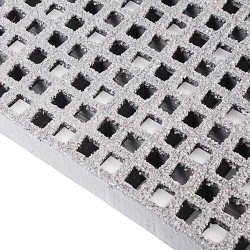
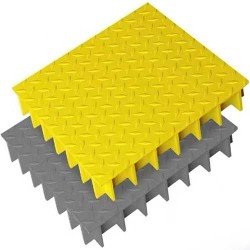
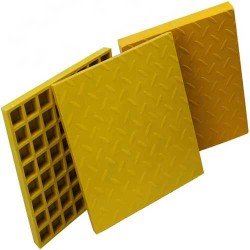
Surface finishes vary by grating type and product configuration. Options may include concave, grit-topped, meniscus, smooth, or covered surfaces. Surface selection is typically related to walking conditions, drainage requirements, cleaning considerations, and the intended installation area.
Typical Industrial Applications
FRP grating is commonly used where industrial access and flooring surfaces are exposed to moisture, chemicals, marine conditions, or other environments in which material selection is an important design consideration.
- Chemical processing facilities
- Water and wastewater treatment plants
- Marine and offshore facilities
- Power and electrical installations
- Industrial walkways and maintenance platforms
- Equipment access areas and drainage covers
The final product choice depends on the application, environmental conditions, support arrangement, and selected grating configuration.
Selection Considerations
Several project variables are normally considered when selecting an FRP grating system:
- Application: Identify whether the grating will be used for a walkway, platform, access area, drainage cover, or another defined service function.
- Environmental conditions: Consider moisture, chemical exposure, marine atmosphere, outdoor exposure, cleaning conditions, and other factors affecting material selection.
- Structural requirements: Review expected loading, support spacing, span arrangement, traffic conditions, and the structural configuration of the selected grating.
- Resin system: Match the resin system to the environmental conditions and the requirements of the intended application.
- Surface finish: Select the surface configuration according to traction, drainage, cleaning, and access requirements.
- Installation arrangement: Consider panel dimensions, support layout, fastening method, and any required field modifications.
FRP Grating Product Range
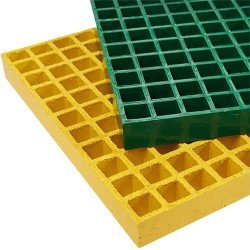
The FRP grating range includes different panel and surface configurations for industrial flooring and access requirements. Product selection can be further refined by construction method, mesh or surface configuration, resin system, and project conditions.
Frequently Asked Questions
What is FRP grating?
FRP grating is a composite structural grating made with glass-fiber reinforcement and a thermosetting resin matrix. It is used for industrial walkways, platforms, access areas, drainage covers, and related flooring applications.
What is the difference between molded and pultruded FRP grating?
Molded grating is formed as an integrated panel with reinforcement distributed through the molded structure. Pultruded grating is assembled from pultruded bearing bars and cross members, producing a different structural arrangement.
Where is FRP grating commonly used?
Typical applications include chemical processing, water and wastewater treatment, marine and offshore facilities, power installations, industrial walkways, maintenance platforms, equipment access areas, and drainage-related covers.
What factors affect FRP grating selection?
Selection is influenced by the application, environmental exposure, expected loading, support spacing, resin system, surface finish, panel configuration, and installation arrangement.
Are different surface finishes available?
Yes. Surface options vary by grating type and configuration and may include concave, grit-topped, meniscus, smooth, or covered surfaces.
Related Grating Resources