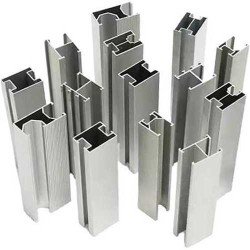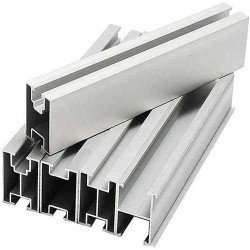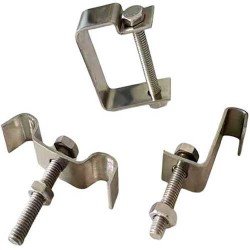
FRP grating accessories are fastening and support components used to secure fiberglass grating panels to supporting structures. Common options include hold-down clips and related fasteners, with selection based on the grating type, panel geometry, support arrangement, fastening material, and installation environment.
Grating Clips and Fastening Components
FRP grating installation accessories connect and secure molded or pultruded fiberglass grating to the supporting structure. Common options include M-clips, C-clips, L-clips, J-clips, and related support components. Accessory configurations and fastening materials may include molded FRP, aluminum, or stainless steel, depending on the product configuration and project requirements.
Selection Considerations
When selecting FRP grating accessories, the following factors should be considered:
- Grating type – Molded and pultruded grating have different bearing-bar and flange configurations, which can affect clip engagement and the fastening arrangement.
- Panel geometry – Panel thickness and bearing-bar geometry should be considered when selecting compatible clip sizes and bolt configurations.
- Support spacing – The support arrangement can affect the fastening layout and the number and positioning of hold-down clips.
- Environmental exposure – The installation environment should be considered when selecting fastening materials, including stainless steel or non-metallic options where corrosive exposure is a relevant design condition.
Frequently Asked Questions
Can carbon steel clips be used with FRP grating?
Carbon steel clips may be considered where the installation environment and corrosion-protection requirements permit. For corrosive exposure, stainless steel or non-metallic fastening options may be considered according to the exposure conditions and project requirements.
How are FRP grating panels secured in place?
FRP grating panels are commonly secured with mechanical hold-down clips that connect the grating to the underlying support structure. Clip type, number, and spacing depend on factors such as panel dimensions, grating configuration, support spacing, loading conditions, and the installation environment.