


Fiberglass Irrigation Channel Overview
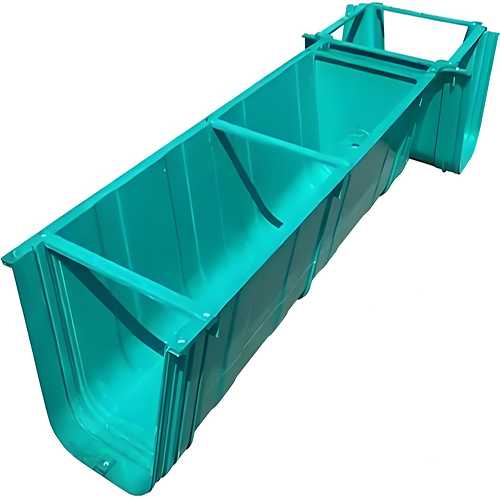
Fiberglass irrigation channel, also known as an FRP irrigation channel or GRP water conveyance channel, is an open-channel water conveyance product made from glass fiber reinforcement and a polymer resin matrix. It is intended for agricultural irrigation, drainage, and related industrial water conveyance applications. Cross-section, dimensions, resin system, and connection details are specified according to project requirements.
What Is a Fiberglass Irrigation Channel?
A fiberglass irrigation channel is a water conveyance structure made from glass fiber reinforced plastic (FRP/GRP). It is used for open-channel flow in irrigation and drainage systems and can be supplied in sections for on-site assembly. The channel body combines glass fiber reinforcement with a thermosetting polymer resin matrix and a smooth internal flow surface.
Key Product Facts
- Material: Glass fiber reinforcement embedded in a thermosetting resin matrix
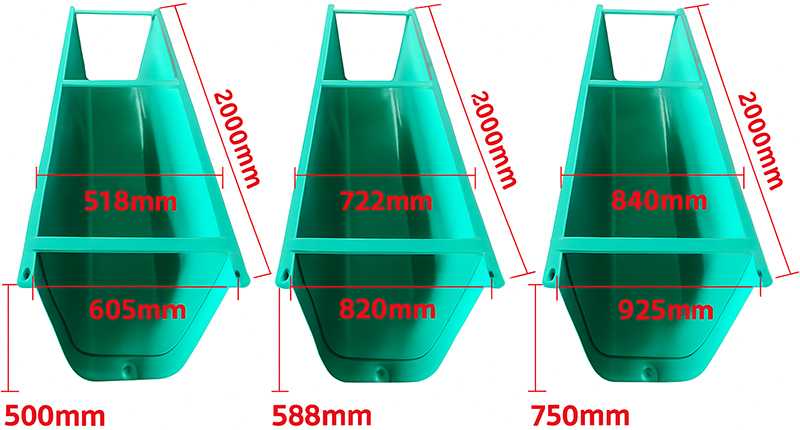
- Cross-section options: Rectangular, trapezoidal, U-shaped, and other profiles depending on project requirements
- Connection method: Flanged, overlap, or interlocking joints with sealing materials specified for the application
- Configuration: Channel dimensions, resin system, wall structure, section length, and joint details are project-specified
Material & Construction
The channel body combines glass fiber reinforcement with a polymer resin matrix. Resin selection depends on the conveyed water, surrounding environment, UV exposure, and operating temperature. Wall thickness and laminate structure are determined according to channel dimensions, flow requirements, soil loads, support conditions, and handling requirements.
Connection details are specified for the project. Field assembly can use mechanical connections with sealing gaskets selected for the application. If cutting or drilling is required on site, exposed glass fibers should be sealed with a compatible resin or suitable protective coating to restore edge protection.
For mixed chemical compositions, fluctuating temperatures, or other variable operating conditions, material and configuration selection should be evaluated against the actual project conditions.
Applications
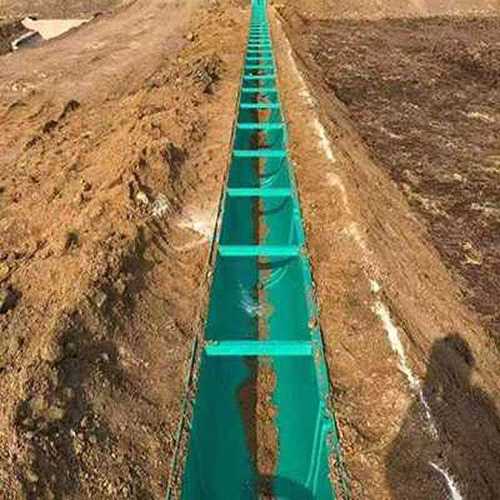
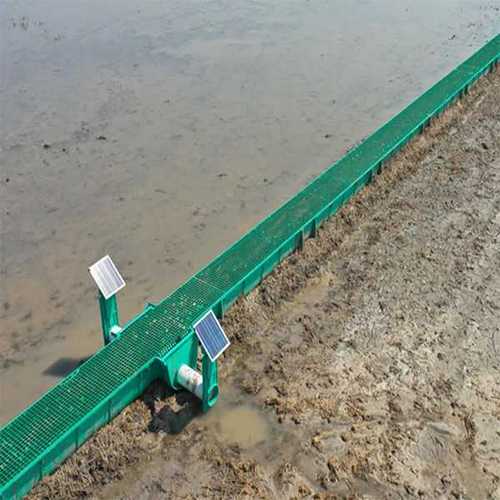
Fiberglass irrigation channels are intended for open-channel water conveyance in agricultural irrigation, drainage networks, and selected industrial water management applications. Typical system uses include irrigation water distribution, drainage flow, and water transfer where the channel configuration is matched to the required flow, installation conditions, and environmental exposure.
Load Capacity
Load capacity for a fiberglass irrigation channel is determined for the project-specific configuration. Important variables include:
- Channel cross-sectional dimensions and wall thickness
- Support spacing and surrounding soil load conditions
- Resin system and operating temperature
- Internal water pressure and flow conditions
- Installation method and joint design
Load values calculated for one configuration should not be transferred to another configuration without re-evaluation. Changes in cross-section, wall thickness, support spacing, resin system, or installation conditions can affect the required design basis.
Selection Considerations
When specifying an FRP irrigation channel, the following variables are typically considered:
- Flow capacity: Channel cross-section is selected according to the required water volume and flow conditions.
- Water chemistry: Chemical composition and concentration influence resin system selection.
- Soil conditions: Soil type, moisture, and surrounding loads influence wall structure and support requirements.
- UV exposure: Outdoor applications may require UV-stabilized resin or other surface protection provisions.
- Temperature range: Operating and installation temperatures should be considered when selecting the resin system and laminate structure.
- Connection type: Joint design should be matched to assembly method, sealing requirements, and site conditions.
- Section dimensions: Channel width, depth, length, and transport constraints should be considered together during configuration.
Technical Specifications
The following table summarizes the main configuration attributes of fiberglass irrigation channels. Specific dimensions and construction details are determined according to project requirements.
| Attribute | Configuration |
|---|---|
| Material | Glass fiber reinforced plastic (FRP/GRP) |
| Cross-Section Options | Rectangular, trapezoidal, U-shaped, and other project-specified profiles |
| Section Length | Project-specified according to transport, handling, and installation requirements |
| Color | Gray and other project-specified colors, subject to the selected resin system |
| Connection Type | Flanged, overlap, or interlocking joints with application-specific sealing details |
| UV Protection | UV-stabilized resin or other UV protection provisions can be specified for outdoor applications |
Frequently Asked Questions
What is a fiberglass irrigation channel?
A fiberglass irrigation channel is an FRP/GRP open-channel water conveyance structure made from glass fiber reinforcement and a thermosetting polymer resin matrix. It is used for irrigation, drainage, and related water conveyance applications.
What materials are used in an FRP irrigation channel?
The channel structure consists of glass fiber reinforcement embedded in a thermosetting resin matrix. The resin system and laminate structure are selected according to the conveyed water, environmental exposure, temperature, and project configuration.
What cross-sections are available for fiberglass irrigation channels?
Common cross-sections include rectangular, trapezoidal, and U-shaped profiles. Other cross-sections can be specified when required by the project design.
What factors affect the load capacity of an FRP irrigation channel?
Load capacity depends on the channel dimensions, wall thickness, support spacing, surrounding soil loads, resin system, operating temperature, water conditions, installation method, and joint design. A load calculation for one configuration should not be transferred to another configuration without re-evaluation.
Can fiberglass irrigation channels be used in outdoor environments?
Yes, outdoor use can be specified with consideration of UV exposure, temperature range, resin system, and installation conditions. UV-stabilized resin or other protection provisions may be selected according to project requirements.
How are fiberglass irrigation channels assembled?
Channels can be supplied in sections and assembled on site using specified connection methods such as flanged, overlap, or interlocking joints. Sealing details depend on the selected connection system and application conditions.
Are fiberglass irrigation channels suitable for chemically variable water?
Suitability depends on the chemical composition, concentration, temperature, exposure conditions, and selected resin system. For mixed chemical streams or changing operating conditions, the configuration should be evaluated against the actual project environment.
Related Products & System Components
Depending on the installation, fiberglass irrigation channels may be integrated with related FRP components such as:
- FRP grating and decking panels for channel covers and access areas
- FRP support structures and brackets for channel mounting
- Sealing gaskets, connection hardware, and fastening components
Engineering Inquiry
For a project-specific fiberglass irrigation channel configuration, provide the main design variables so the required channel structure and connection details can be evaluated.
- Required channel width, depth, and section length
- Water flow rate and conveyed-water composition
- Soil conditions and support spacing
- Operating and installation temperature range
- UV exposure and installation environment
- Preferred connection method


