

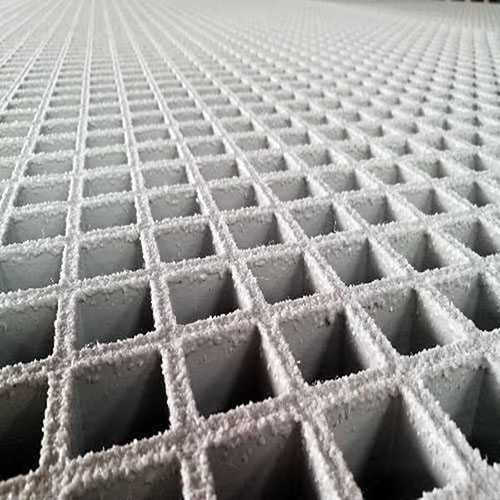


Fiberglass Grit Top Anti Slip Grating Overview
Fiberglass grit top anti-slip grating is a molded FRP/GRP open mesh grating with a rough, grit-coated walking surface. It is intended for industrial and commercial access areas where a textured walking surface is required, including wet or oily environments. Typical applications include manufacturing plants, chemical processing areas, food-processing facilities, outdoor walkways, and marine platforms. Configuration selection depends on panel thickness, mesh configuration, resin system, support spacing, and project load requirements.
What Is Fiberglass Grit Top Anti Slip Grating?
Fiberglass grit top anti-slip grating is a molded open mesh panel made from fiberglass reinforced plastic (FRP/GRP) with a grit-coated walking surface. The textured top provides a rough surface for access areas where wet, oily, or contaminated conditions are part of the operating environment.
The product is commonly described as fiberglass non-slip grating, anti-slip FRP grating, grit-top FRP grating, or grit-coated composite grating. The open mesh structure provides passage for liquids, debris, and airflow while maintaining a defined walking surface.
Key Product Facts
- Material: Glass fiber reinforcement embedded in a thermosetting resin matrix
- Surface: Grit-coated walking surface for anti-slip access applications
- Structure: Molded open mesh grating panel
- Resin options: Polyester and vinyl ester systems are available, subject to project requirements
- Color options: Yellow, black, gray, green, and other project-specific colors can be considered
- Customization: Panel dimensions, thickness, mesh configuration, and other product details can be specified according to project requirements
- Mounting: Fastening arrangements are selected according to the grating configuration and supporting structure
Material & Construction
The grating panel consists of continuous glass fiber reinforcement embedded in a thermosetting resin matrix and formed into an open mesh structure. A grit-coated surface is incorporated on the walking side to provide the textured finish associated with anti-slip grating.
Polyester and vinyl ester resin systems can be supplied. Resin selection should be based on the chemicals, concentrations, operating temperature, exposure pattern, and other conditions defined by the project.
The molded open mesh construction allows liquids and debris to pass through the grating openings. Panel dimensions, thickness, mesh configuration, and fastening arrangements can be selected according to the supporting structure and project requirements.
Typical Applications
Fiberglass grit top anti-slip grating is intended for access and flooring applications where a textured walking surface and open mesh construction are required. Typical industry settings include:
- Manufacturing plants: Walkways, mezzanines, equipment platforms, and access areas
- Chemical processing: Walkways and platforms exposed to chemical process environments
- Food processing: Areas subject to regular washdown and wet operating conditions
- Outdoor access: Walkways, ramps, catwalks, and other exposed access routes
- Marine and coastal: Docks, piers, platforms, and other marine access areas
- Public and utility infrastructure: Pedestrian access structures, boardwalks, and drainage-related access areas
Final product selection should consider the expected load, support spacing, chemical exposure, operating temperature, mesh configuration, and surface requirements for the specific installation.
Selection Considerations
When specifying fiberglass grit top anti-slip grating, the following factors should be reviewed together:
- Panel thickness and support spacing: These variables are considered together with the expected design load when selecting a grating configuration.
- Resin system: Polyester and vinyl ester options can be considered according to the chemicals, concentration, temperature, and exposure conditions involved.
- Mesh configuration: Opening geometry affects drainage, airflow, debris passage, and the relationship between the walking surface and the supporting structure.
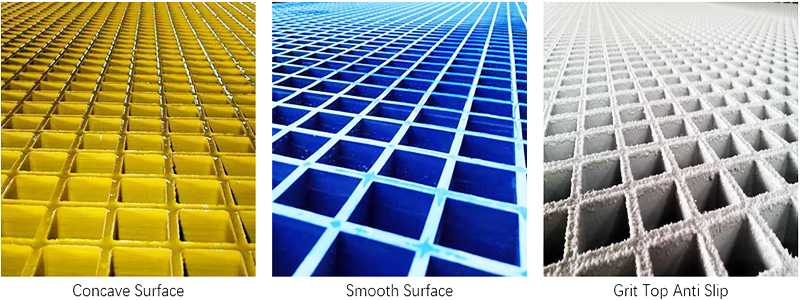
- Grit surface: Surface texture and grit characteristics should be selected according to the expected wet, oily, contaminated, cleaning, and footwear conditions.
- Mounting method: Fastening arrangements depend on the grating configuration, support type, support spacing, and project installation requirements.
Technical Specifications
The following specifications describe the product configuration and available options. Exact dimensions and structural requirements are determined according to the selected configuration and project conditions.
| Attribute | Typical Scope / Options | Selection Notes |
|---|---|---|
| Material | Fiberglass Reinforced Plastic (FRP/GRP) | Glass fiber reinforcement in a thermosetting resin matrix |
| Manufacturing form | Molded open mesh grating | Configuration selected according to application and support conditions |
| Surface type | Grit-coated top surface | Textured walking surface for anti-slip access applications |
| Resin system | Polyester or vinyl ester | Selection depends on project exposure conditions |
| Panel dimensions | Standard and project-specific sizes | Confirmed according to the required installation layout |
| Panel thickness | Configuration dependent | Considered together with support spacing and expected load |
| Mesh configuration | Multiple opening configurations | Selected according to drainage, access, and project requirements |
| Color options | Yellow, black, gray, green, and project-specific colors | Color selection may be used for identification or project requirements |
Where structural calculations, slip-performance data, or other project-specific technical information are required, the relevant configuration and operating conditions should be defined during engineering review.
Frequently Asked Questions
How does fiberglass grit top grating compare with steel grating?
Fiberglass grit top grating is a molded FRP/GRP composite with a grit-coated walking surface, while steel grating is a metallic construction. The appropriate material depends on factors such as design load, support spacing, chemical exposure, electrical requirements, installation conditions, and project specifications.
Can fiberglass grit top grating be used at elevated temperatures?
Temperature suitability depends on the selected resin system and the actual operating conditions. Resin selection should take account of the continuous operating temperature, temperature cycling, chemical exposure, and other environmental conditions of the installation.
How is the grit surface used in wet or oily areas?
The grit-coated surface provides a rough walking texture intended for access areas where wet, oily, or otherwise contaminated conditions may occur. Actual slip performance depends on the surface configuration, contaminants, wear condition, footwear, cleaning conditions, and other project variables.
What maintenance is required for fiberglass grit top grating?
Routine maintenance should keep the grating surface and openings free from accumulated debris, process residues, and other contaminants. Cleaning methods should be selected according to the resin system, surface condition, cleaning chemicals, temperature, and site requirements.
Is fiberglass grit top grating suitable for food-processing areas?
Fiberglass grit top grating can be considered for food-processing access areas where an open mesh FRP structure and textured walking surface fit the project requirements. Resin and surface selection should take account of cleaning chemicals, operating temperature, washdown conditions, and applicable hygiene requirements.
Engineering Inquiry
For project-specific selection of fiberglass grit top anti-slip grating, provide the key installation and operating conditions so the grating configuration can be reviewed against the project requirements.
- Required panel dimensions or total area
- Expected design load and support spacing
- Chemical exposure, concentration, and operating temperature
- Preferred mesh configuration and grit surface requirements
- Support structure and mounting method
- Color or identification requirements


