
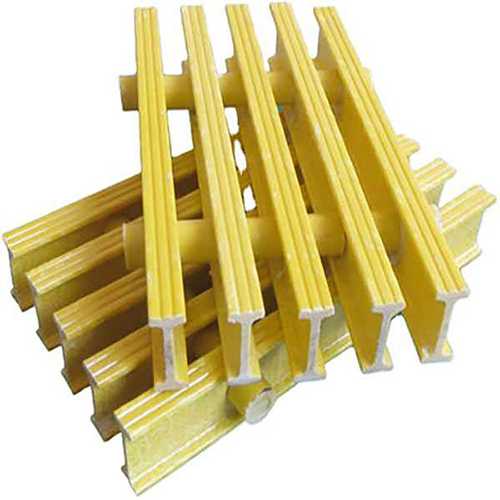
Fiberglass Pultruded Bar Grating Overview
Fiberglass pultruded bar grating, also known as pultruded FRP grating or composite bar grating, is a structural grid panel made from pultruded FRP bearing bars and cross bars for industrial walkways, platforms, and access areas. Its continuous reinforcement is aligned primarily along the bearing bars, making bar profile, span, support spacing, and loading important considerations during product selection.
What Is Fiberglass Pultruded Bar Grating?
Fiberglass pultruded bar grating is a load-bearing grid panel assembled from pultruded FRP bars in a regular pattern. The bearing bars carry the primary load, while cross bars connect the panel into a rigid grating structure. Compared with molded grating, pultruded grating uses a different reinforcement architecture, with continuous reinforcement oriented primarily along the bearing bars. This makes bar geometry, span, support spacing, and loading important factors when selecting a grating configuration.
Key Product Facts
- Material: Glass fiber reinforced polymer (FRP / GRP)
- Manufacturing process: Pultrusion
- Bar profile: I-bar or T-bar
- Typical panel depths: 25 mm, 30 mm, 38 mm, 50 mm
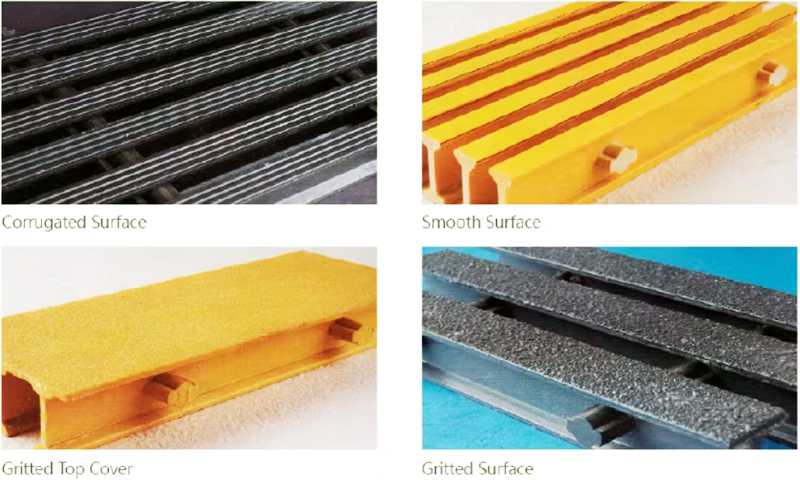
- Surface options: Gritted, meniscus, or smooth
Material & Construction
Fiberglass pultruded bar grating is manufactured through pultrusion, in which continuous glass fiber reinforcement is impregnated with resin and pulled through a heated die to form continuous structural bars. The finished bars are assembled with cross bars using mechanical fastening or adhesive bonding to create the grating panel.
The reinforcement layout is primarily longitudinal along the bearing bars. The resin system surrounds the glass reinforcement and influences material compatibility with moisture, chemicals, UV exposure, and other operating conditions. Resin options can include polyester, vinyl ester, and flame-retardant formulations, depending on the required product configuration.
Typical Applications
Pultruded FRP grating is used in industrial and infrastructure settings where grating configuration, support arrangement, environmental exposure, and material properties are important considerations. Typical application areas include chemical processing plants, offshore and marine facilities, power generation facilities, water and wastewater treatment plants, and other industrial access areas.
Common installation types include walkways, catwalks, trench covers, mezzanine decks, maintenance platforms, and other access surfaces where the grating configuration must be selected according to span, loading, support spacing, and operating conditions.
Selection Considerations
When specifying pultruded bar grating, several product and project factors typically influence the appropriate configuration:
- Span and load: Bearing bar depth and spacing should be selected according to the required span, support spacing, and design load.
- Resin type: The resin system influences chemical compatibility and other material properties, so selection should reflect the chemicals, temperatures, and exposure conditions involved.
- Surface finish: Gritted or meniscus surfaces can be selected when slip resistance is an important consideration, while smooth surfaces may be preferred where easier cleaning is required.
- Electrical properties: Electrical conductivity can be an important material consideration in electrical facilities and around energized equipment; the grating configuration and installation hardware should be considered together.
- Field modifications: Panels can be cut or drilled during installation. Field modifications expose glass fibers at the cut or drilled area, so the exposed area should be sealed with a compatible resin system after modification.
Product Options & Configurations
| Property | Options / Values |
|---|---|
| Material | Fiberglass reinforced polymer (FRP / GRP) |
| Manufacturing process | Pultrusion |
| Bar profile | I-bar, T-bar |
| Typical depths | 25 mm, 30 mm, 38 mm, 50 mm |
| Panel sizes | Common 1220 × 3660 mm, 1000 × 4000 mm, and other project-specific sizes |
| Resin options | Isophthalic polyester, vinyl ester, flame-retardant formulations |
| Surface options | Gritted, meniscus, smooth |
| Color options | Gray, green, yellow, and other project-specific colors |
Load capacity and span selection depend on the grating configuration, bearing bar geometry, support spacing, and project loading conditions. Resin and surface selection should also reflect the intended operating environment.
Frequently Asked Questions
How does pultruded grating differ from molded grating?
Pultruded grating is assembled from structural bars formed through the pultrusion process, with continuous reinforcement oriented primarily along the bearing bars. Molded grating is produced through a different manufacturing process and reinforcement architecture. The distinction is relevant when selecting grating geometry, support spacing, and loading conditions.
What factors affect the selection of pultruded grating?
Important factors include bearing bar profile and depth, span, support spacing, design load, resin system, surface finish, environmental exposure, and the intended use of the grating panel.
Can pultruded FRP grating be used in corrosive environments?
Pultruded FRP grating can be considered for corrosive environments when the resin system is selected for the chemicals, concentrations, temperatures, and exposure conditions involved. Chemical compatibility should therefore be treated as a configuration and application consideration rather than a general property of every FRP grating panel.
Can pultruded grating panels be cut or drilled on site?
Panels can be cut or drilled during installation. Because field modification exposes the glass reinforcement, the modified area should be sealed with a compatible resin system to help protect the exposed reinforcement from the operating environment.
Related Products & System Components
Fiberglass pultruded bar grating is commonly installed as part of an access or flooring system. Related components can include:
- FRP support beams and structural framing for grating mounting
- Handrails and guardrail systems for elevated platforms
- Fastening hardware, hold-down clips, and connection accessories
For related product options and system-level selection, see the FRP Grating Acessories selection guide or the FRP Grating Systems overview.
Engineering Inquiry
For project-specific product selection, provide the main conditions that influence grating configuration:
- Required panel dimensions and bearing bar depth
- Span length and support spacing
- Expected live loads and type of traffic
- Chemical exposure and ambient temperature range
- Surface finish preference: gritted, meniscus, or smooth
- Fire-performance or electrical-isolation requirements
- Color preference and required quantity


