


Fiberglass Cable Tray Overview
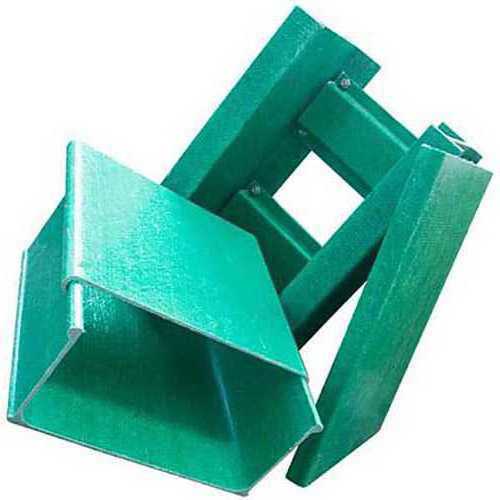
Fiberglass cable tray, also known as FRP cable tray, GRP cable tray, or composite cable tray, is a cable support system made from glass fiber reinforcement and a thermosetting resin matrix. It is used to route and support power, control, and communication cables in industrial installations where corrosion exposure, electrical insulation, or reduced structural weight are relevant considerations. Common configurations include ladder, solid-bottom, perforated, and channel trays. Typical applications include chemical processing, wastewater treatment, offshore structures, and power generation.
What Is a Fiberglass Cable Tray?
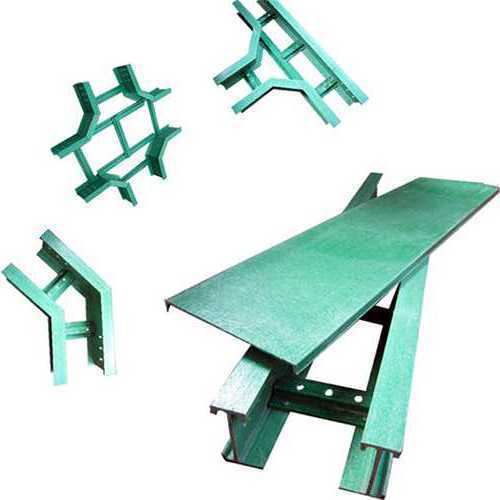
A fiberglass cable tray is a non-metallic cable support component made from fiberglass reinforced plastic (FRP/GRP) profiles. It supports and routes cables in industrial installations where corrosion exposure, electrical insulation, or lightweight construction are relevant considerations. A tray system can include straight sections and compatible fittings such as bends, tees, risers, and covers for building cable routing layouts. The product is also commonly described as a FRP cable tray, GRP cable tray, composite cable tray, or pultruded cable tray.
Key Product Facts
- Material: Glass fiber reinforcement with polyester resin; other resin systems may be specified depending on project requirements.
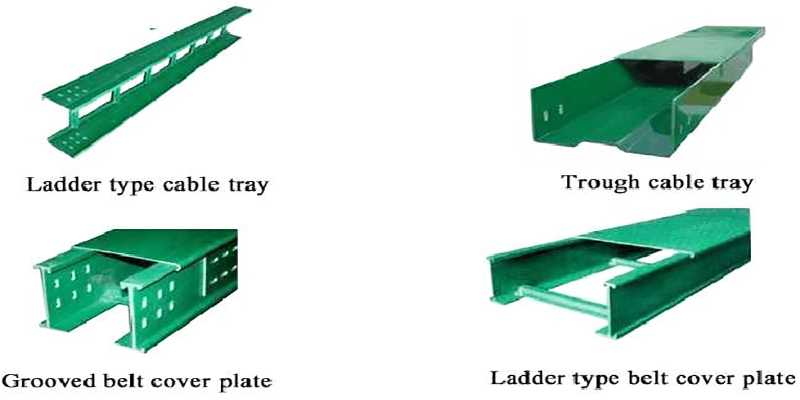
- Tray types: Ladder, solid-bottom, perforated, and channel.
- Manufacturing process: Pultruded FRP structural profiles assembled into cable tray sections.
- Electrical properties: FRP is electrically non-conductive and can be used where electrical insulation is a consideration in cable support design.
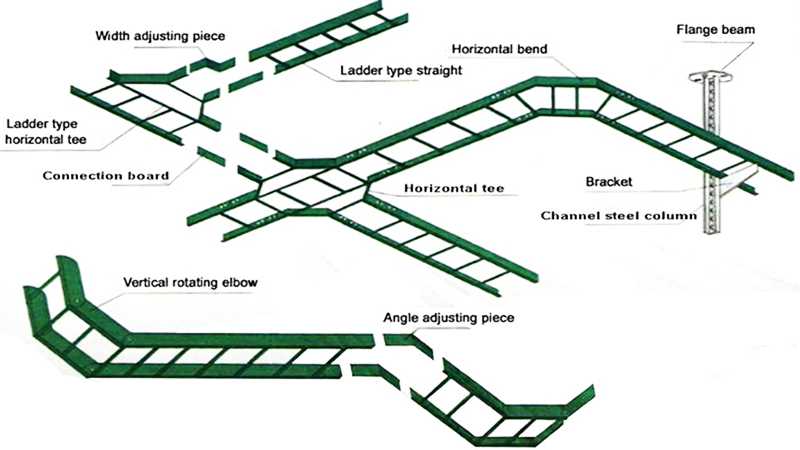
- System configuration: Straight sections, bends, tees, risers, covers, and other compatible components can be combined according to the required cable routing layout.
Material & Construction
The primary structural members are manufactured by pultrusion. Continuous glass fiber reinforcement is impregnated with a thermosetting resin system and pulled through a heated die to form consistent FRP profiles. The profiles can then be assembled into ladder, solid-bottom, perforated, or channel tray configurations using mechanical fasteners or other suitable connection methods.
Polyester resin is commonly used for fiberglass cable tray construction, while other resin systems may be specified where the operating environment or chemical exposure requires a different material selection.
Field cutting or drilling can expose glass fibers at a modified edge. Where required by the installation conditions, exposed cut edges should be sealed with a compatible resin or suitable edge-sealing system.
Typical Applications
Fiberglass cable trays are commonly used for cable support and routing in industrial environments where corrosion exposure, electrical insulation, or maintenance requirements are important considerations. Typical application areas include:
- Chemical processing: Cable routing in areas exposed to chemical substances, fumes, or moisture.
- Offshore oil & gas: Cable support in salt-laden, humid, and outdoor environments.
- Wastewater treatment: Cable management in continuously wet or humid areas.
- Power generation: Support and routing for control, communication, and power cables.
- Mining and tunnel installations: Non-metallic cable support in industrial installations with specific environmental requirements.
- Transportation infrastructure: Cable routing along bridges, rail systems, and other outdoor infrastructure.
Tray selection depends on the cable arrangement, structural requirements, environmental exposure, and installation conditions.
Load Capacity
The load capacity of a fiberglass cable tray depends on the specified tray configuration and installation conditions. Important variables include:
- Tray type, such as ladder, solid-bottom, perforated, or channel.
- Tray width and side rail height.
- Span between supports.
- Resin system and temperature conditions.
- Number, arrangement, and weight of cables.
Load rating and deflection should be evaluated for the specified tray configuration and design conditions. Project-specific load calculations can be prepared when the required tray dimensions, cable loads, and support spacing are provided.
Selection Considerations
When selecting a fiberglass cable tray, consider the following variables in relation to the project requirements:
- Tray type: Ladder trays provide an open structure for cable routing, while solid-bottom trays provide continuous cable support. Perforated and channel configurations provide other options for different installation layouts.
- Load requirements: Consider tray width, side rail height, support span, cable arrangement, and total cable weight when determining the required tray configuration.
- Resin system: Polyester resin is commonly used. Other resin systems may be considered where the chemical exposure or operating environment calls for different material characteristics.
- Fire performance: Where fire performance is a project requirement, the applicable performance specification should be identified during product selection.
- UV exposure: For outdoor installations, consider expected sunlight exposure when selecting the resin system and surface finish.
- Installation conditions: Consider support spacing, connection methods, field modifications, and the environmental conditions surrounding the cable tray installation.
Technical Specifications
Fiberglass cable tray configurations can be specified according to tray type, dimensions, material system, accessories, and project requirements. Typical specification items include:
- Material: FRP/GRP with glass fiber reinforcement and thermosetting resin; alternative resin systems may be specified according to project requirements.
- Tray types: Ladder, solid-bottom, perforated, and channel.
- Dimensions: Width, side rail height, section length, and other dimensions depend on the specified tray configuration and project requirements.
- Structural configuration: Tray geometry and profile dimensions are selected in relation to cable load, support spacing, and installation conditions.
- Accessories: Covers, bends, tees, risers, clamps, splice plates, and support brackets.
- Operating temperature: The applicable service range depends on the selected resin system and project conditions.
For project-specific dimensional or load information, provide the required tray type, dimensions, support spacing, cable loads, and environmental conditions for technical review.
Frequently Asked Questions
What is a fiberglass cable tray?
A fiberglass cable tray is a non-metallic cable support system made from fiberglass reinforced plastic (FRP/GRP). It is used to route and support electrical, control, and communication cables in industrial installations where corrosion exposure, electrical insulation, or lightweight construction are relevant considerations.
Can a fiberglass cable tray support electrical cables?
Yes. Fiberglass cable trays are cable support systems used for power, control, and communication cables. The required tray configuration depends on cable weight, tray dimensions, support span, and installation conditions.
What types of fiberglass cable tray are available?
Common configurations include ladder, solid-bottom, perforated, and channel cable trays. The appropriate configuration depends on cable arrangement, support requirements, ventilation considerations, and the installation environment.
Is fiberglass cable tray suitable for corrosive environments?
FRP cable trays are commonly considered for corrosive industrial environments because the FRP material system does not develop the surface rust associated with conventional steel cable trays. Resin selection remains an important consideration when the installation involves specific chemical exposures.
Can fiberglass cable tray be used outdoors?
Fiberglass cable trays can be used in outdoor installations. For long-term exposure to sunlight and changing environmental conditions, the resin system and surface finish should be selected according to the installation environment.
Does fiberglass cable tray require painting?
FRP cable trays do not require conventional metal painting for rust prevention. Inspection of tray supports, connections, and fasteners can be included as part of normal installation and maintenance practices.
Can fiberglass cable tray be customized?
Tray dimensions, configurations, and component arrangements may be specified according to project requirements and production capabilities. Required dimensions, tray type, cable loads, support spacing, and installation conditions can be provided for technical review.
Related Products & System Components
Fiberglass cable trays are typically installed as part of a cable management system. Related components may include:
- FRP support structures and brackets for tray mounting.
- Cable ladders and compatible cable management components.
- Fasteners and splice plates.
- Tray covers and associated system components.
Related components can be selected according to the tray configuration and installation requirements.
Technical Data Request
For technical data, dimensional information, layout planning, or project-specific configuration review, submit the required project information so the appropriate cable tray configuration can be evaluated.
- Tray type and required dimensions
- Cable types, arrangement, and total load
- Support spacing and installation conditions
- Chemical exposure and ambient temperature range
- Outdoor or indoor installation requirements
- Project-specific material or configuration requirements


