


Fiberglass Solid Top Checker Plate Grating Overview
Fiberglass solid top checker plate grating is an FRP flooring panel that combines a structural grating base with a solid, textured top surface. Made with glass fiber reinforcement and a thermosetting resin matrix, it is used for covered walkways, platforms, trench covers, and other industrial flooring areas. Panel thickness, resin system, grating configuration, and support spacing all influence the final load performance.
What Is Fiberglass Solid Top Checker Plate Grating?
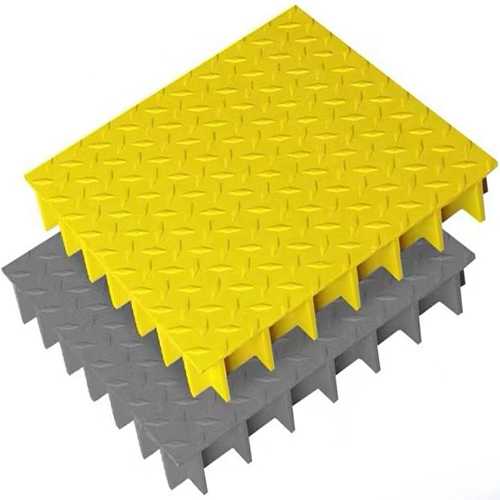
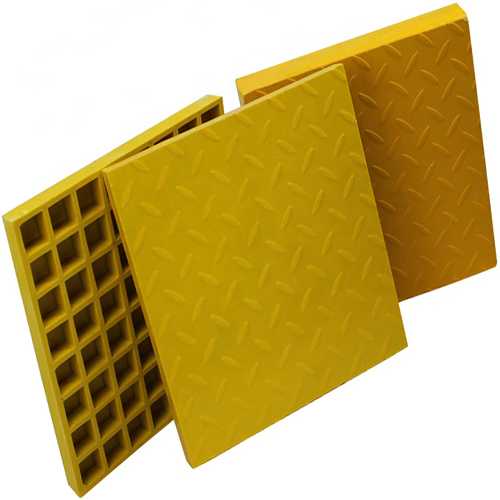
Fiberglass solid top checker plate grating is a type of FRP grating with a solid upper surface and raised checker pattern. The closed top covers the openings of the underlying grating structure, making the panel suitable for areas where a continuous walking surface is preferred or where the passage of small objects, debris, or liquids through the grating should be limited.
It may also be described as solid top FRP grating, FRP checker plate grating, or covered grating, depending on project and supplier terminology.
Key Product Facts
- Material: Fiberglass reinforced plastic (FRP / GRP)
- Top surface: Solid checker plate with a raised textured pattern
- Resin options: Polyester, vinyl ester, and phenolic
- Standard panel thickness: 25 mm, 30 mm, and 38 mm
- Color options: Gray, yellow, green, and custom colors
Material & Surface Construction
The panel uses continuous glass fiber reinforcement within a thermosetting resin matrix. Its solid upper surface creates a closed walking area over the structural grating base, while the raised checker pattern provides a textured surface for routine industrial access.
Resin selection can be matched to the service environment. Polyester is commonly used for general applications, while vinyl ester and phenolic systems may be selected when the project requires different chemical or fire-performance characteristics. The suitable resin system depends on the chemicals, concentrations, temperatures, and other operating conditions involved.
Typical Applications
Fiberglass solid top grating is commonly considered for industrial areas where a continuous covered surface is required. Typical applications include chemical processing facilities, oil and gas installations, wastewater treatment plants, power generation areas, food and beverage processing spaces, and marine structures.
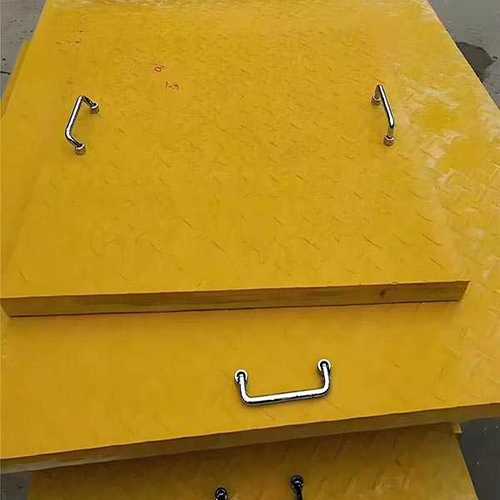
Depending on the project layout, the panels can be used for walkways, mezzanines, stair treads, trench covers, access areas, and equipment platforms.
Selection Considerations
The final configuration should be selected according to the installation environment and the required service conditions:
- Load and span: Panel thickness, grating configuration, and support spacing should be matched to the expected loads and traffic type. Engineering calculations can be used to confirm the required configuration.
- Chemical exposure: Resin selection should reflect the specific chemicals, concentrations, and operating temperatures present at the installation site.
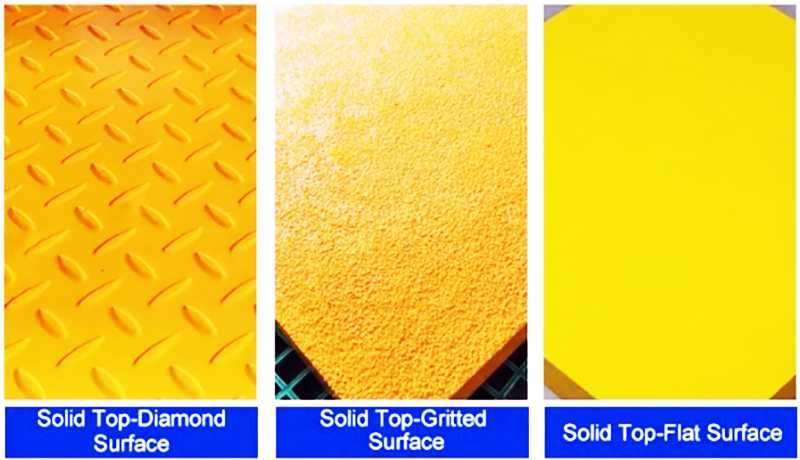
- Surface characteristics: The raised checker pattern provides a textured walking surface. Additional surface treatments may be considered where the project requires a different traction profile.
- Fire-performance requirements: Resin selection should take project-specific fire-performance requirements into account where applicable.
- Coverage: The solid top surface provides a closed panel area that can help limit the passage of small objects, debris, and liquids through the grating openings.
Engineering Data
Load ratings, deflection limits, and other engineering characteristics depend on the selected panel thickness, grating configuration, resin system, and support spacing. Project-specific selection should therefore be based on the actual installation conditions and expected loads.
Technical Specifications
| Property | Standard Options / Values |
|---|---|
| Material | Fiberglass reinforced plastic (FRP / GRP) |
| Top surface | Solid checker plate with raised textured pattern |
| Resin options | Polyester, vinyl ester, phenolic |
| Panel thickness | 25 mm, 30 mm, 38 mm |
| Color options | Gray, yellow, green, custom colors |
| Load capacity | Depends on panel configuration and support spacing |
Frequently Asked Questions
Is fiberglass solid top checker plate grating suitable for heavy loads?
Load capacity depends on panel thickness, grating configuration, support spacing, and the type of load. The required configuration should be selected according to the actual span and service conditions.
How does fiberglass solid top grating differ from steel checker plate?
FRP is a non-metallic composite material, while steel checker plate is metallic. FRP therefore does not form iron rust in the way carbon steel does. The appropriate choice depends on the required load, installation environment, surface configuration, and project service conditions.
Can the grating be customized?
Product configurations can be selected according to dimensions, thickness, resin system, color, and surface requirements. The available configuration should be confirmed against the specific project requirements.
Related Products & System Components
Fiberglass solid top checker plate grating can be used as part of a broader FRP flooring or platform system. Related components may include:
- FRP support beams and structural framing for grating installation
- Handrails and guardrail systems for elevated platforms
- Fastening hardware, hold-down clips, and connection accessories
For related product families, see our Molded FRP Grating selection guide or the FRP Grating Systems overview.
Engineering Inquiry
To help determine a suitable panel configuration, provide the main project conditions when making an inquiry:
- Panel dimensions and required thickness
- Support spacing and expected loads
- Type of traffic, such as pedestrian, cart, or vehicle
- Chemical exposure and operating temperature range
- Surface finish preference
- Project-specific fire-performance requirements, if applicable
- Color preference and required quantity


