


Fiberglass Mini Mesh Grating Overview
Fiberglass Mini Mesh Grating is a molded FRP grid panel with smaller mesh openings than standard open mesh grating. It is made from glass fiber reinforcement embedded in a thermosetting resin matrix. The reduced opening size helps limit small tools, fasteners, and other small items from passing through the grating. Typical applications include industrial walkways, inspection platforms, and access areas where smaller openings are required.
Product Definition
Fiberglass Mini Mesh Grating is a molded fiberglass reinforced polymer (FRP / GRP) panel with a smaller mesh opening than standard open mesh grating. It is used to form walking, working, and access surfaces in industrial and other areas where a finer grid opening is required.
Key Product Facts
- Material: glass fiber reinforced polymer (FRP / GRP)
- Manufacturing process: molded one-piece construction
- Mesh type: mini mesh grid with reduced openings
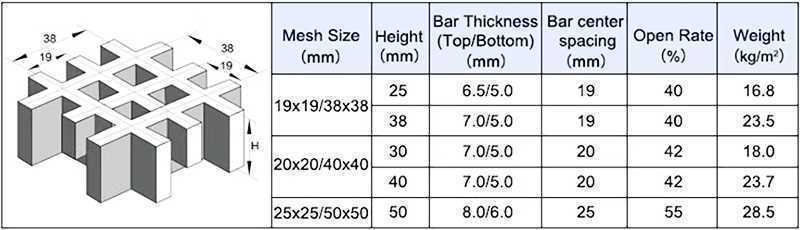
- Standard panel thickness options: 25 mm, 38 mm, 50 mm
- Surface options: grit, concave, or smooth finish
Material & Construction
Fiberglass Mini Mesh Grating is manufactured by the molding process using continuous glass fiber reinforcement and a thermosetting resin system. The molded grid forms the panel structure while the resin matrix bonds the glass fibers and maintains the shape of the finished grating.
The mini mesh opening is smaller than that of standard open mesh grating. This reduced opening can help limit small tools, fasteners, and other small items from passing through the walking surface. Resin systems can be selected according to project requirements, with options including polyester, vinyl ester, and halogen-free flame-retardant formulations.
Applications
FRP gratings, including mini mesh types, are commonly used in industrial environments where corrosion resistance and low-maintenance material systems are considered in flooring and access design. Typical industry applications include chemical processing plants, wastewater treatment facilities, marine and coastal structures, and power generation plants.
The mini mesh version is used for walkways, inspection platforms, equipment access areas, and similar surfaces where smaller openings are preferred. The finer opening can also provide a more continuous surface for small-wheeled carts and other wheeled equipment compared with standard open mesh grating.
Selection Considerations
When specifying Fiberglass Mini Mesh Grating, several factors affect the required configuration:
- Panel thickness and support span: Load capacity depends on panel thickness, support spacing, expected loads, and the selected grating configuration. The required thickness should therefore be considered together with the actual support arrangement.
- Resin type: Resin selection should reflect the chemical exposure and other environmental conditions of the project. Options include polyester, vinyl ester, and halogen-free flame-retardant systems.
- Surface finish: Grit, concave, and smooth finishes provide different surface characteristics. The selected finish should match the expected traffic, cleaning requirements, and operating environment.
- Color: Standard colors include gray, yellow, green, and black. Custom colors may be available depending on order requirements.
- Field modifications: Panels can be cut on site using suitable FRP cutting tools. However, cutting or drilling alters the factory-sealed edges. Exposed glass fibers must be re-sealed with a compatible resin topcoat to maintain the sealed edge condition and corrosion resistance of the finished panel.
Technical Specifications
| Property | Standard Options / Values |
|---|---|
| Material | Fiberglass reinforced polymer (FRP / GRP) |
| Manufacturing process | Molded one-piece construction |
| Mesh type | Mini mesh grid with reduced openings |
| Panel thickness | 25 mm, 38 mm, 50 mm (custom sizes may be available) |
| Surface options | Grit, concave, smooth |
| Color options | Gray, yellow, green, black (custom colors may be available) |
| Typical traffic | Pedestrian and light wheeled equipment traffic |
Load capacity is configuration dependent and should be evaluated based on panel thickness, support spacing, expected loads, and environmental conditions.
Frequently Asked Questions
How does mini mesh grating compare with standard open mesh grating?
Mini mesh grating has smaller openings than standard open mesh grating. The reduced opening size helps limit small items from passing through the surface and can provide a more continuous walking surface for small-wheeled carts and other wheeled equipment.
Can the panels be cut on site?
Yes, panels can be cut using suitable FRP cutting tools. However, field cutting removes the factory-sealed edge. Exposed glass fibers must be re-sealed with a compatible resin topcoat to maintain the sealed edge condition and corrosion resistance of the finished panel.
Is this product suitable for outdoor use?
FRP gratings are commonly used in outdoor industrial and access applications. Resin selection should be considered for the expected UV exposure and local environmental conditions. UV-stabilized resin systems may be available depending on the required configuration.
How is load capacity determined?
Load capacity depends on panel thickness, support spacing, expected loads, and the grating configuration. Project-specific load assessment can be considered when the required panel dimensions, support arrangement, and loading conditions are provided.
Related Products & System Components
Fiberglass Mini Mesh Grating is typically installed as part of a complete flooring or platform system. Common related components include:
- FRP support beams and structural framing for grating mounting
- Handrails and guardrail systems for elevated platforms
- Fastening hardware, hold-down clips, and connection accessories
For compatible products and system-level recommendations, contact our engineering team with your project requirements. You may also review our Molded FRP Grating selection guide or the FRP Grating Systems overview for related product families.
Engineering Inquiry
For technical data requests, load assessment, or project-specific drawings, please submit a request. Providing the following information helps our team prepare a more relevant response:
- Panel dimensions and required thickness
- Support spacing and expected loads
- Type of traffic (pedestrian, cart, or vehicle)
- Chemical exposure and ambient temperature range
- Surface finish preference (grit, concave, or smooth)
- Fire performance requirements, if any
- Color preference and quantity required


