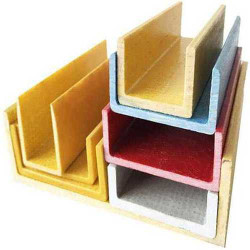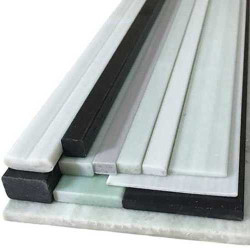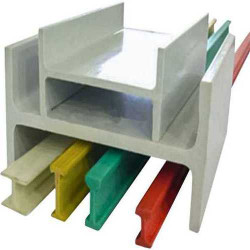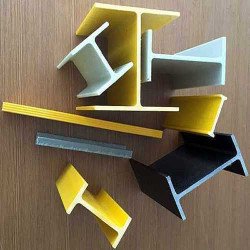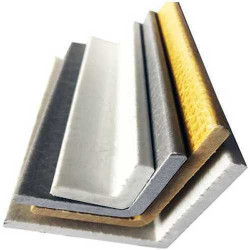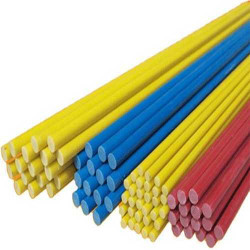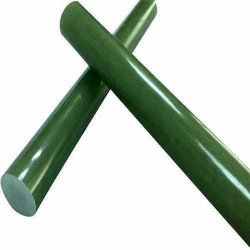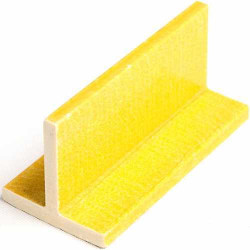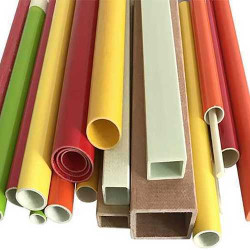
Standard FRP profiles are pultruded structural sections supplied in established constant cross-sectional shapes, including channels, I-beams, angles, bars, and tubes. Also known as pultruded FRP profiles or fiberglass structural profiles, they are selected according to structural function, load direction, section geometry, span, environmental exposure, connection requirements, and other project conditions.
Standard FRP Profile Family
Standard FRP profiles are produced as continuous pultruded sections with fixed cross-sectional geometry. Common shapes include FRP channels, I-beams, angles, flat bars, and square or rectangular tubes. These profiles are considered for structural framing and support applications where designers need a non-metallic section and must account for loading, geometry, environmental exposure, installation conditions, and project requirements.
Pultruded fiberglass profiles typically consist of continuous glass-fiber reinforcement embedded in a thermosetting resin matrix. Profile geometry and resin selection influence the properties and suitability of a given configuration for a specific application.
How to Select a Standard FRP Profile
Profile selection should start with the structural function of the member and then consider loading, support conditions, required section properties, service environment, and connection details. Key considerations include:
- Load direction – Pultruded profiles contain reinforcement oriented primarily along the profile axis, so the relationship between fiber direction and applied loading should be considered during structural design.
- Section geometry – The profile shape affects section properties such as section modulus and moment of inertia, which are used when evaluating bending, stiffness, and deflection.
- Span and deflection – Span, support conditions, loading, and allowable deflection should be considered together when selecting a structural FRP section. Because FRP generally has a lower elastic modulus than structural steel, deflection can be an important design consideration.
- Resin system – Resin selection should be matched to the intended service environment and the type of chemical exposure expected in the application.
- Environmental exposure – Chemical exposure, moisture, temperature, UV exposure, and other project-specific conditions should be considered when evaluating profile suitability.
- Connection method – Bolted connections, brackets, bonded joints, and other connection details can affect practical profile selection and should be considered as part of the structural design.
Choosing Between Standard Profile Shapes
Different profile shapes serve different structural functions. I-beams may be considered where an efficient section for bending is required, while channels and angles can be used in framing, bracing, supports, and other structural assemblies. Tubes provide closed sections that may be used for supports, frames, posts, or related structures depending on the design.
The appropriate section should be selected from its structural function and calculated section properties rather than from profile shape alone. Final sizing depends on the project design, loading, support conditions, and structural analysis.
Information Used for Profile Selection
For project selection or quotation, useful inputs include the required profile shape and dimensions, span, support conditions, loading, service environment, connection requirements, and quantity. Defining these conditions helps narrow the profile configuration to options relevant to the intended application.
Frequently Asked Questions
What are standard FRP profiles?
Standard FRP profiles are pultruded structural sections manufactured in established constant cross-sectional shapes such as channels, I-beams, angles, bars, and tubes. They are commonly considered for structural framing and support applications where geometry, loading, environmental exposure, and project requirements all need to be evaluated.
How do I choose between an FRP channel, I-beam, angle, or tube?
Selection depends on the structural function, load direction, span, support conditions, required section properties, connection details, and service environment. Different shapes can serve different roles, so the final section should be based on the project design and structural analysis.
What should be considered when selecting a pultruded fiberglass profile?
Important considerations include profile geometry, loading, span, allowable deflection, fiber direction, resin system, environmental exposure, connection method, and project requirements. These factors should be considered together rather than selecting a profile from shape alone.
Can custom FRP profile sizes be produced?
Custom pultrusion tooling can be considered when a required cross-section is not available within the standard profile range. The proposed geometry, material configuration, production quantity, and project requirements determine whether a custom profile is feasible.