
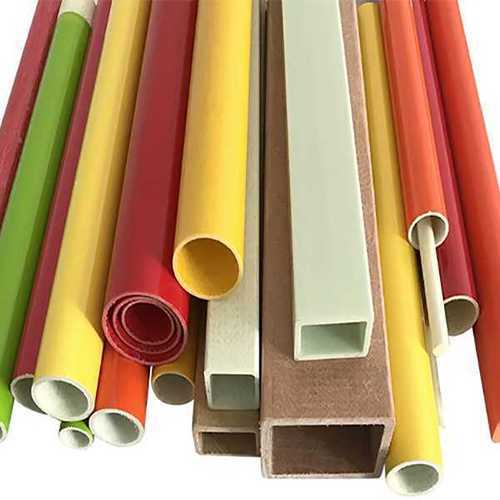
Fiberglass Tube Profile Overview
Fiberglass tube profiles, also known as FRP tubes or composite hollow sections, are pultruded structural members with round, square, or rectangular cross-sections. They combine continuous glass fiber reinforcement with a thermosetting resin matrix and are used for framing, supports, enclosures, and modular structures where corrosion resistance and non-conductivity are important. Cross-section shape, wall thickness, and resin system influence the mechanical performance of the profile.
What Is a Fiberglass Tube Profile?
A fiberglass tube profile is a hollow composite structural section manufactured by pultrusion. The profile combines glass fiber reinforcement with a resin matrix to form a continuous structural section. Its hollow geometry can be used for framing, supports, enclosures, and other applications where low maintenance, corrosion resistance, and non-conductivity are relevant.
Key Product Facts
- Material: Fiberglass Reinforced Polymer (FRP / GRP)
- Manufacturing method: Pultrusion
- Profile shapes: Square, rectangular, round
- Electrical properties: Non-conductive
- Resin systems: Polyester, vinyl ester, and epoxy can be selected according to application requirements
Material & Construction
The tube profile is produced by pultrusion, a continuous process in which glass fiber reinforcement is impregnated with resin and drawn through a heated die to form the required hollow cross-section. The process supports consistent fiber alignment, resin distribution, and dimensional repeatability along the profile.
Resin selection can be matched to the application and environmental conditions. Polyester, vinyl ester, and epoxy systems may be considered for different combinations of general use, chemical exposure, and mechanical requirements. Surface finish can also be selected according to bonding and finishing needs, with smooth, veiled, and sanded surfaces among the possible configurations.
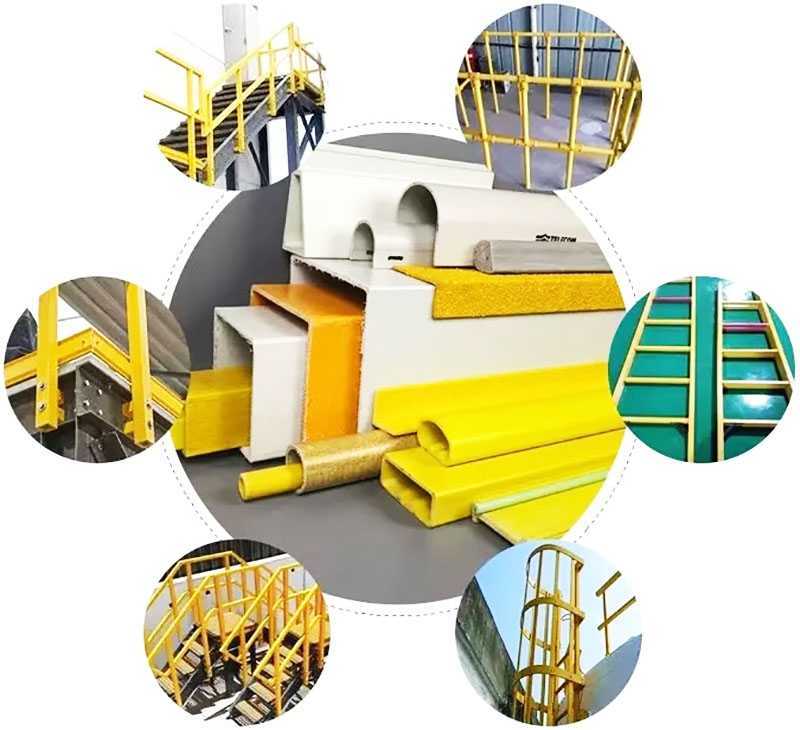
Typical Applications
Fiberglass tube profiles are used in industrial and infrastructure environments where corrosion resistance, light weight, and non-conductivity are important. Common application areas include chemical processing plants, wastewater treatment facilities, marine and coastal structures, electrical enclosures, equipment support frames, and renewable energy mounting systems. The profiles can be integrated into permanent structures or modular assemblies for walkways, platforms, protective enclosures, and secondary framing.
Selection Considerations
When specifying a fiberglass tube profile, the following factors typically influence design and performance:
- Cross-section and dimensions: Shape, width, height, and wall thickness should match the required bending, compression, and torsional loading conditions.
- Resin system: Chemical exposure, temperature range, and other environmental conditions help determine the appropriate resin system.
- Electrical requirements: The non-conductive nature of FRP can be relevant for applications near electrical equipment or in electrically sensitive environments.
- Surface finish: Surface selection can be matched to cleaning, bonding, coating, or finishing requirements.
- Fire performance: Where smoke, flame, or fire performance is specified, the resin formulation and project requirements should be reviewed as part of material selection.
Engineering Considerations
Flexural strength, compressive strength, stiffness, and other mechanical characteristics vary with profile dimensions, fiber architecture, resin system, and support conditions. Section geometry and wall thickness should therefore be considered together with the intended span, loading conditions, and service environment during product selection.
Technical Specifications
| Attribute | Description |
|---|---|
| Material | Fiberglass Reinforced Polymer (FRP / GRP) |
| Manufacturing method | Pultrusion |
| Profile shapes | Square, rectangular, round |
| Resin systems | Polyester, vinyl ester, epoxy |
| Surface finishes | Smooth, veiled, sanded |
| Electrical properties | Non-conductive |
Frequently Asked Questions
Can fiberglass tube profiles be used as load-bearing components?
Fiberglass tube profiles can be used for load-bearing and support applications when the section is selected for the required loading and support conditions. Actual capacity depends on cross-section dimensions, wall thickness, resin system, fiber architecture, span, and support configuration.
Are these profiles suitable for outdoor environments?
Fiberglass tube profiles can be used in many outdoor environments where corrosion resistance and non-conductivity are relevant. Resin selection, UV exposure, temperature range, and the surrounding environment should be considered during specification.
Can dimensions be customized?
Custom cross-sections and lengths can be discussed according to project requirements, section geometry, tooling considerations, and order conditions.
How do fiberglass tube profiles compare to metal tubes?
Compared with many metal tube sections, fiberglass profiles are often lighter, non-conductive, and resistant to corrosion. Their structural stiffness and load capacity differ from metals, so section geometry and project loading conditions should be considered when selecting the profile.
Related Products & System Components
Fiberglass tube profiles are commonly used with other FRP structural components. Related products include:
- Fiberglass angles and channels for framing connections
- FRP T shape profiles for structural reinforcement
- Connection hardware and fastening accessories
For related FRP profile categories and system-level product selection, review the FRP Structural Profiles product family.
Engineering Inquiry
For project-specific selection, the following information helps define the required fiberglass tube profile:
- Required cross-section shape and dimensions
- Wall thickness and length requirements
- Span length and support conditions
- Expected loads and deflection limits
- Chemical exposure and temperature range
- Required resin system or fire performance criteria
- Project quantity and delivery schedule


