
Leave Us a Message
Fiberglass Rain Gutter Overview
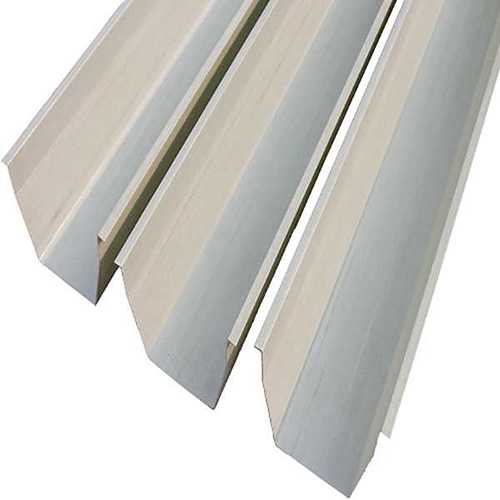
Fiberglass rain gutters, also known as FRP rain gutters, GRP rain gutters, or composite roof drainage channels, are used to collect and direct rainwater from roof edges to the building drainage system. Made from fiberglass reinforced polymer (FRP/GRP), they are suited to roof drainage applications where moisture, weather exposure, or corrosive surroundings are part of the design conditions. Gutter profile, dimensions, material configuration, and connection details are selected according to the roof and drainage requirements.
What Is a Fiberglass Rain Gutter?
A fiberglass rain gutter is a channel-shaped component installed along the eaves or roof edge of a building to collect and discharge rainwater. It is also described as a fiberglass roof gutter, FRP gutter, or GRP gutter. The gutter forms part of the roof drainage arrangement and is sized and configured according to the roof geometry, rainfall conditions, outlet arrangement, and installation interface.
For industrial and commercial buildings, fiberglass gutters can be considered where the drainage system is exposed to moisture, outdoor weather, or environments in which corrosion of metallic components is a design concern.
Key Product Facts
- Material: Fiberglass reinforced polymer (FRP/GRP)
- Product form: Channel-shaped roof drainage component
- Profile geometry: Selected according to roof-edge layout and drainage requirements
- Length and dimensions: Specified according to project and installation requirements
- Connection arrangement: Selected according to gutter layout, support, and roof interface
Material & Construction
Fiberglass rain gutters are made from glass fiber reinforcement embedded in a thermosetting resin matrix. The composite structure combines reinforcement with a polymer matrix to form a channel component for roof rainwater collection and discharge.
Resin selection can be considered according to the intended service environment, particularly where the gutter is exposed to moisture, coastal conditions, or chemical surroundings. The appropriate material configuration depends on the specific exposure and project requirements.
Gutter geometry and surface configuration are selected as part of the overall drainage arrangement. Connection details should provide a continuous path for rainwater from the roof edge toward the designated drainage outlet.
Typical Applications
Fiberglass rain gutters can be used in industrial and commercial roof drainage applications where the gutter forms part of a building rainwater management system. Typical applications include:
- Industrial factories and production buildings
- Warehouses and logistics facilities
- Chemical and process facilities
- Power generation and utility buildings
- Commercial and large-area roofing systems
- Coastal or high-humidity structures
The actual gutter configuration depends on roof geometry, rainfall conditions, drainage layout, environmental exposure, and the connection to the supporting roof structure.
Selection Considerations
When specifying a fiberglass rain gutter, the following factors typically influence the required configuration:
- Roof catchment area and rainfall conditions: Gutter dimensions and the drainage arrangement are selected according to the roof area contributing runoff and the expected rainfall conditions.
- Profile geometry: The cross-section should suit the available roof-edge space, support arrangement, and required water path.
- Resin system: Material selection should reflect the intended environmental exposure, including moisture, coastal conditions, or chemical surroundings where relevant.
- Connection details: Joint and outlet arrangements should be compatible with the gutter geometry, supporting structure, and downstream drainage components.
- Installation interface: The gutter should be coordinated with roof-edge construction, supports, outlets, and adjacent roofing elements.
- Project-specific requirements: Dimensions, profile geometry, length, material configuration, and connection details may be specified from project drawings and drainage requirements.
Technical Specifications
| Property | Specification Basis |
|---|---|
| Material | Fiberglass reinforced polymer (FRP/GRP) |
| Product type | Channel-shaped roof rainwater drainage component |
| Profile geometry | Project- and roof-interface dependent |
| Length | Specified according to project and installation requirements |
| Wall thickness | Configuration dependent |
| Resin system | Selected according to intended environmental exposure |
| Connection arrangement | Project- and layout dependent |
| Surface configuration | Dependent on the selected product configuration |
Drainage capacity and temperature or chemical suitability depend on the selected gutter configuration and project conditions. Roof area, rainfall conditions, gutter geometry, outlet arrangement, and environmental exposure should be considered together when defining the required specification.
Frequently Asked Questions
Is a fiberglass rain gutter suitable for coastal industrial environments?
Fiberglass gutters can be considered for coastal environments where moisture and salt exposure are relevant design conditions. Material and resin selection should be matched to the intended exposure environment.
How is a fiberglass rain gutter sized for heavy rainfall?
Gutter sizing is based on the roof catchment area, rainfall conditions, gutter geometry, slope, outlet arrangement, and the overall drainage layout. Larger roof areas or higher runoff conditions may require a different gutter configuration or drainage arrangement.
How does temperature variation affect a fiberglass rain gutter?
Temperature suitability depends on the selected FRP material configuration, resin system, and actual service environment. Project conditions should be considered when specifying the material for significant temperature variation.
Can fiberglass rain gutters be used for roof retrofit projects?
Fiberglass rain gutters can be incorporated into retrofit projects when the gutter geometry, support arrangement, roof edge, outlets, and connection details are compatible with the existing system.
Can the gutter configuration be specified for a project?
Project-specific gutter configurations can be defined from the required profile geometry, dimensions, drainage layout, roof interface, environmental exposure, and installation requirements.
Related Products & System Components
Fiberglass rain gutters can form part of a broader roof drainage and water-management arrangement. Related products and components may include:
- FRP roofing sheets and roof-edge components
- Downspouts and drainage accessories
- Fastening hardware and connection accessories
- FRP drainage channels for downstream water management
For related FRP water-management products, see Fiberglass Drainage Trench and Fiberglass Irrigation Channel. For roof-related FRP products, see Fiberglass Roofing Sheet.
Engineering Inquiry
For a quotation or project review, provide the key roof and drainage requirements below. This information helps define the relevant gutter configuration.
- Roof catchment area and rainfall conditions
- Required gutter profile geometry and approximate dimensions
- Gutter length and project quantity
- Environmental exposure, including coastal or chemical conditions
- Roof-edge and support arrangement
- Outlet and connection requirements
- Target delivery schedule


