Fiberglass Platform Overview Fiberglass platforms, also referred to as FRP or GRP access platforms, are industrial access systems assembled from fiberglass-reinforced polymer components such as grat... Read More
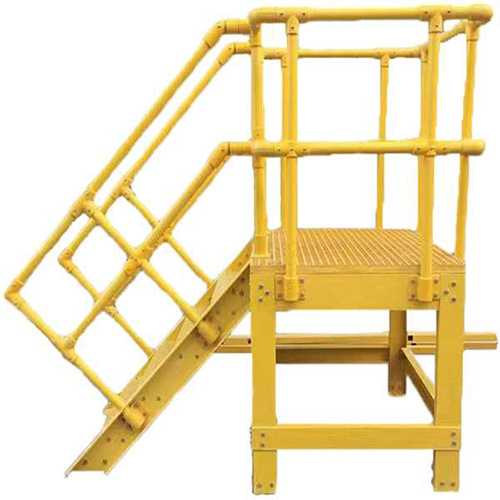
Fiberglass platforms, also referred to as FRP or GRP access platforms, are industrial access systems assembled from fiberglass-reinforced polymer components such as grating decks, handrails, and supports. Available configurations can include different panel thicknesses and surface finishes for elevated walkways, inspection areas, equipment access, and maintenance platforms. Selection depends on project loads, support spacing, environmental exposure, and site layout.
What Is a Fiberglass Platform?
A fiberglass platform is a deck system for industrial walking and working areas, built from FRP / GRP composite components. Depending on the project design, the platform can include grating panels, handrails, support beams, structural framing, and connection hardware. Fiberglass-reinforced polymer is not subject to metallic rusting or wood rot, making material selection relevant where moisture, chemical exposure, or salt spray are part of the operating environment.
Surface options: Grit anti-slip or molded textured finish
Panel thickness options: 25 mm, 30 mm, 38 mm, 50 mm
Standard colors: Yellow, gray, green, or custom industrial colors
Load configurations: Light, medium, and high-load options, with final selection dependent on project loads and support conditions
Material & Construction
The platform panels consist of continuous glass fiber reinforcement combined with a thermosetting resin matrix. Resin selection is an important part of platform specification where moisture, chemical exposure, salt spray, UV exposure, or temperature variation are design considerations.
Surface finishes can be specified according to the intended access conditions. Grit and molded textured finishes provide different surface characteristics, while smoother surfaces may be considered where frequent cleaning is a priority.
Platform systems can be assembled with supporting structures made from matching FRP profiles or other compatible materials, depending on the project layout, support arrangement, and connection design.
Typical Applications
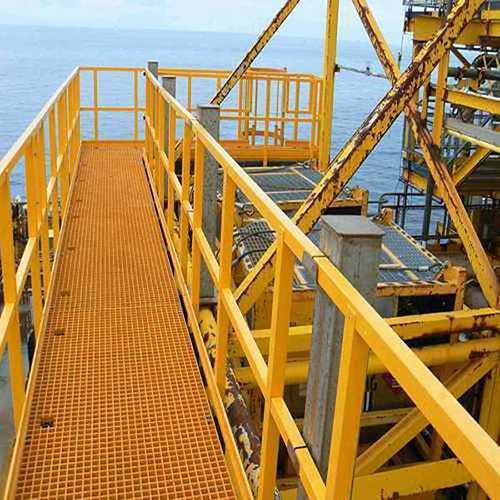
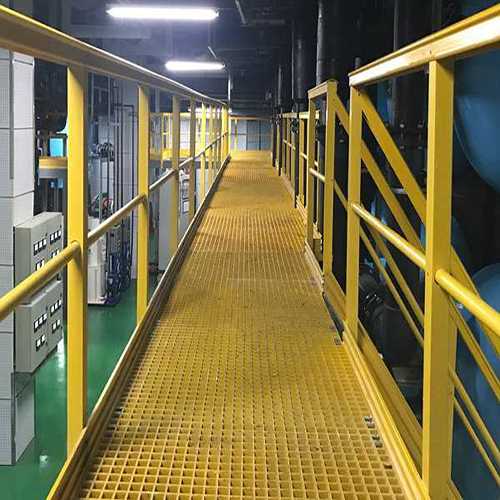
FRP and fiberglass platforms are commonly used where elevated walking, working, inspection, or equipment access areas are required. Typical application contexts include chemical processing plants, water and wastewater treatment facilities, power generation stations, marine terminals, mining operations, and manufacturing workshops.
Platform configurations may be used for elevated walkways, inspection decks, equipment access areas, maintenance platforms, and other industrial access structures in indoor or outdoor environments.
Selection Considerations
When specifying a fiberglass platform, several project variables typically influence the final configuration:
Load requirements: Panel thickness and support spacing should be selected according to expected loads, traffic type, and platform geometry. The final configuration should be confirmed through the project design.
Environmental exposure: Resin system selection should consider the chemical type, concentration, temperature range, UV exposure, moisture, and other site conditions.
Surface finish: Grit and textured surfaces provide different surface characteristics. Finish selection should reflect the expected contamination, moisture, traffic, and cleaning conditions.
Electrical properties: Non-conductive options are available for projects where electrical isolation is a specified requirement.
Support structure: The platform configuration must correspond with the planned support beams, columns, connection points, fastening hardware, and available installation space.
Technical Specifications
Fiberglass platform product options and configuration factors
Property
Standard Options / Values
Material
Glass fiber reinforced polymer (FRP / GRP)
Panel thickness
25 mm, 30 mm, 38 mm, 50 mm
Surface options
Grit anti-slip, molded textured finish
Color options
Yellow, gray, green, custom industrial colors
Load configurations
Light, medium, and high-load options
Electrical properties
Non-conductive options available
Load capacity and deflection depend on panel thickness, support spacing, loading conditions, platform geometry, and the selected system configuration. Chemical suitability likewise depends on resin selection and actual project exposure conditions.
Frequently Asked Questions
What affects the service life of a fiberglass platform?
Service life depends on resin selection, chemical and environmental exposure, temperature, UV conditions, loading frequency, impact, installation details, and maintenance practices. The relevant project conditions should be considered when selecting the platform configuration.
Can fiberglass platforms be used outdoors?
Fiberglass platforms can be specified for outdoor applications. Resin selection, UV stabilization, temperature range, moisture exposure, surface finish, and the local installation environment should be considered when defining the configuration.
Can the platform be customized for industrial projects?
Dimensions, panel thickness, surface finish, color, support arrangement, and other configuration details can be adapted to project requirements. Non-standard configurations should be reviewed against the required loads, geometry, connections, and site conditions.
Which surface finish should be considered for wet or oily areas?
Grit and molded textured finishes are available for projects where surface traction is an important design consideration. The appropriate finish depends on moisture, contamination, traffic, cleaning requirements, and the intended operating conditions.
What maintenance should be considered for a fiberglass platform?
Maintenance planning should consider the platform surface, connections, support structure, environmental exposure, and visible wear or damage. Routine cleaning and inspection can be included according to the operating environment and project requirements.
Related Products & System Components
Fiberglass platforms are often configured as part of a larger industrial access system. Common related components include:
FRP grating panels for walkways and decking
FRP handrails and guardrail systems
Support beams and structural framing made from FRP or compatible materials
Fastening hardware and hold-down clips
For compatible products and system-level configuration discussions, share the project requirements with our engineering team. You may also review our FRP Grating Systems or Fiberglass Mini Mesh Grating pages for related product entities.
Engineering Inquiry
For technical data requests, project-specific drawings, or platform configuration discussions, please submit a request. Providing the following information helps define the relevant product configuration:
Required panel dimensions and thickness
Support spacing and expected loads
Type of traffic (pedestrian, cart, or vehicle)
Chemical exposure and ambient temperature range
Surface finish preference (gritted, textured, or smooth)
Fire performance or electrical non-conductivity requirements, where applicable