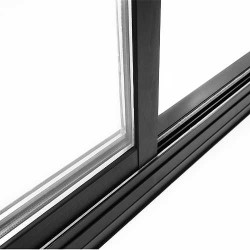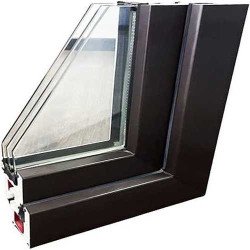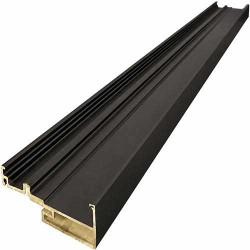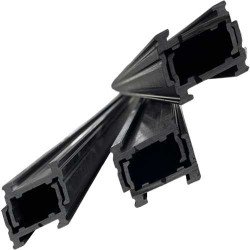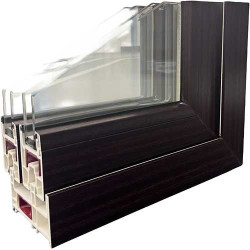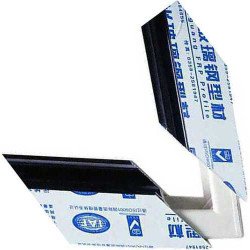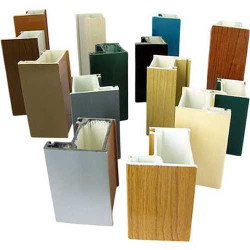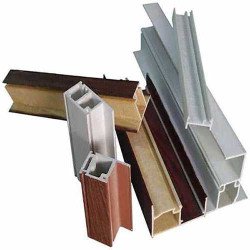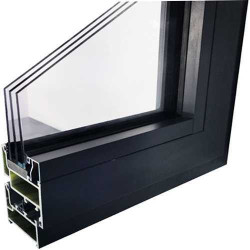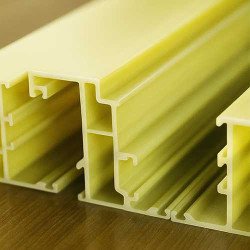
Fiberglass-reinforced polymer (FRP) and polyurethane (PU) frame profiles are composite lineal sections used in compatible door, window, and fenestration systems. FRP profiles are produced by pultrusion, while PU profiles can serve as thermal-break components in framing designs that incorporate them.
Product Family Overview
Composite frame profiles include pultruded FRP frame profiles and polyurethane profiles for door, window, and related fenestration assemblies. Pultruded FRP profiles are produced as continuous lineal sections with constant cross-sections and can be supplied for applications that integrate with glazing, weatherstripping, hardware, and connection details. The product family can be considered where thermal performance, structural requirements, profile fit, and dimensional stability are relevant selection factors.
Selection Considerations
- Thermal performance – thermal transmittance is an important consideration when evaluating the performance of a frame assembly.
- Structural span – influences the required profile depth, section geometry, and reinforcement.
- Profile fit – the profile section should be compatible with glazing, weatherstripping, hardware, and connection details.
- Dimensional stability – relevant to maintaining the required fit and geometry over the intended service conditions.
Frequently Asked Questions
Can FRP profiles be machined?
Pultruded FRP profiles can be cut and machined with suitable carbide-tipped tools. After cutting or drilling, exposed fibers can be sealed with a compatible resin or coating system during fabrication.
What affects the thermal performance of FRP profiles?
Thermal conductivity varies with the resin system, fiber content, profile geometry, and profile construction. Thermal performance also depends on how the profile is incorporated into the overall frame assembly.