

Fiberglass Scaffolding

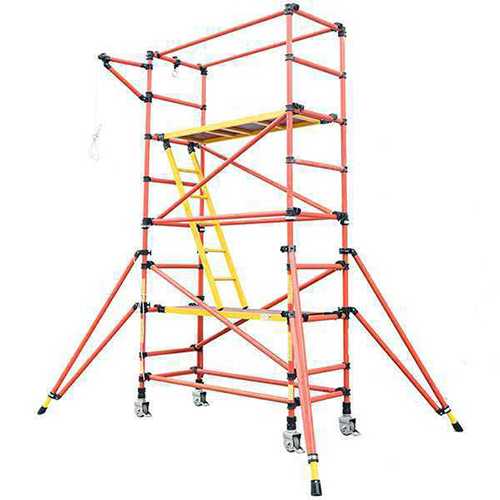
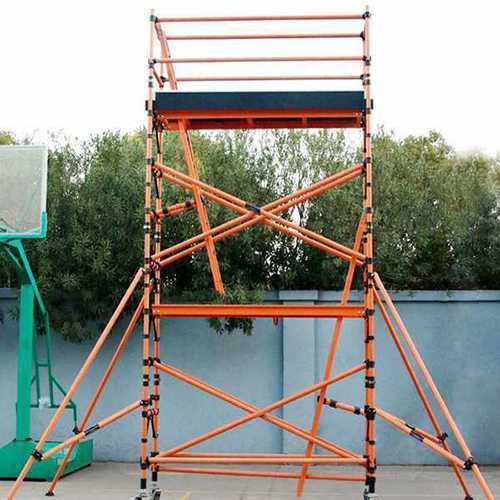
Fiberglass scaffolding, also known as FRP scaffolding or GRP scaffolding, is a modular access system for elevated work in industrial, utility, maintenance, and other demanding environments. Its structural members are made from glass fiber reinforced polymer (FRP / GRP), providing a corrosion-resistant alternative to metal components where non-conductive composite members are required. The modular design allows different platform heights and layouts to be configured for specific work areas.
Fiberglass scaffolding is a temporary or semi-permanent access system used to provide elevated working platforms for maintenance, inspection, installation, and related work. Compared with conventional metal scaffolding, FRP scaffolding can be considered where electrical non-conductivity, corrosion resistance, or lower component weight are important selection factors. The required structure, platform height, and load capacity depend on the selected configuration.
The scaffolding components use glass fiber reinforcement embedded in a thermosetting resin matrix. This composite construction provides resistance to moisture, salt spray, and many corrosive environments. Unlike steel, FRP does not rust, making it suitable for applications where corrosion protection of structural members is an important consideration.
FRP electrical properties are relevant to applications where non-conductive structural members are required. The electrical characteristics of the complete scaffolding system depend on the materials and components included in the selected configuration.
The modular structure can include frames, braces, locking components, platform decks, and other connection elements. Platform surfaces may be specified with anti-slip characteristics for work areas where moisture or surface contamination is present. Resin selection can also be considered according to the chemical, UV, temperature, and other environmental conditions of the application.
Fiberglass scaffolding is used in industrial and utility environments where elevated access is required and the properties of FRP are relevant to the working conditions. Typical application areas include power plants, substations, telecommunications infrastructure, chemical processing facilities, marine terminals, water and wastewater treatment plants, and food production environments.
FRP scaffolding may be considered for electrical maintenance environments where non-conductive structural members are specified. Its corrosion-resistant composite construction can also be useful in coastal, humid, or chemically exposed locations.
When specifying fiberglass scaffolding, several factors typically influence the required configuration:
| Property | Typical Options / Characteristics |
|---|---|
| Material | Glass fiber reinforced polymer (FRP / GRP) |
| Structure type | Modular frame system with locking components |
| Platform surface | Anti-slip surface options available, configuration dependent |
| Configuration | Modular layouts for different access heights and work areas |
| Electrical properties | Non-conductive FRP structural members |
| Mobility | Caster-wheel configurations available where required |
| Fire performance | Flame-retardant resin options may be specified for applicable configurations and project requirements |
Load capacity, deflection limits, electrical characteristics, and chemical resistance depend on the selected configuration and exposure conditions. Project requirements should therefore be defined together with the required platform arrangement, loads, environmental exposure, and other applicable operating conditions.
Fiberglass scaffolding provides non-conductive FRP structural members and resistance to rust and corrosion-related degradation. Steel scaffolding can provide different structural characteristics depending on the design. The appropriate material and configuration depend on the required loads, environment, access arrangement, and electrical requirements.
Yes. FRP scaffolding can be used in outdoor environments where its corrosion resistance and composite construction are relevant. UV exposure should be considered when selecting the resin system and any surface treatment for prolonged outdoor service.
FRP scaffolding is used in applications where non-conductive structural members are required, including some electrical maintenance environments. The electrical characteristics of the complete system depend on the specific configuration and the conditions of use.
FRP structural members do not rust, so corrosion-control painting is not required for the FRP material itself. Routine inspection of joints, locking components, caster wheels where fitted, platform surfaces, and other system elements is recommended, together with cleaning as required by the operating environment.
Fiberglass scaffolding can be configured for working platforms carrying personnel, tools, and equipment. The required load capacity depends on the platform design, frame configuration, support spacing, and other structural conditions and should be established for the selected configuration.
Fiberglass scaffolding may form part of a broader access system. Common related components include:
For compatible products and system-level recommendations, contact our engineering team with your project requirements. You may also review our Fiberglass Platform or Fiberglass Pultruded Bar Grating pages for related FRP solutions.
For technical data requests, load calculations, or project-specific drawings, please submit a request. Providing the following information helps our team prepare a more relevant response:


