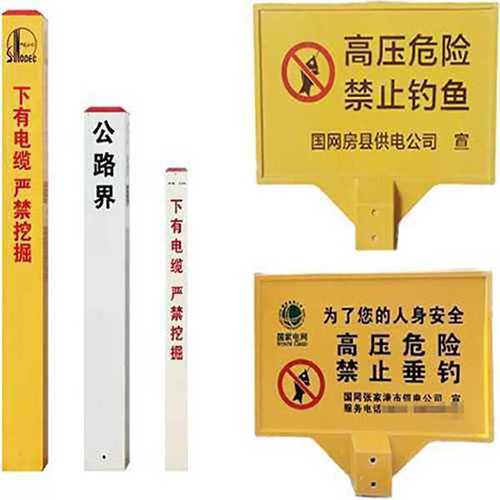


Fiberglass Marker Post

Fiberglass marker post, also known as an FRP marker post, GRP marker post, or composite utility marker, is an above-ground identification post for underground pipelines, cable routes, utility lines, boundaries, and infrastructure locations. It is made with glass fiber reinforcement in a thermosetting resin matrix. Post height, profile shape, color, reflective elements, markings, and installation method are project-specified. Configuration depends on the required visibility, exposure conditions, and installation method.
A fiberglass marker post is a vertical identification post made from glass fiber reinforced plastic (FRP/GRP). It is installed above ground to identify underground utilities, cable routes, pipelines, property boundaries, or other infrastructure locations. FRP does not rust or rot like conventional metal or wood, and it is generally non-conductive. Marker posts can be supplied in project-specified heights, profile shapes, colors, markings, and reflective configurations.
The post body consists of glass fiber reinforcement embedded in a thermosetting resin matrix. Resin selection can be matched to the expected exposure conditions, including sunlight, moisture, soil conditions, chemical exposure, and ambient temperature.
Resin options can include polyester and vinyl ester systems, depending on the required application and exposure conditions. UV-stabilized resin formulations are available for outdoor applications requiring additional UV stability. Flame-retardant resin systems can also be considered where specific fire-performance requirements are defined.
Where field cutting or drilling is required, exposed glass fibers should be sealed with a compatible resin topcoat to restore the protective surface. Chemical resistance depends on the selected resin system and the actual exposure conditions.
Fiberglass marker posts are commonly used for above-ground identification of buried and concealed infrastructure. Typical industry applications include:
These are common industry uses of FRP utility marker posts. Final configuration can be specified according to visibility requirements, marking conventions, ground conditions, and installation method.
Structural requirements for a fiberglass marker post depend on the specified configuration. Important design variables include:
Load requirements should be evaluated for the specified post geometry and installation method rather than assumed from a different configuration.
When specifying a fiberglass utility marker post, the following variables are typically considered:
Final specifications depend on the selected configuration and project requirements.
The table below summarizes the main configuration variables for fiberglass marker posts. Final dimensions and performance-related requirements depend on the specified project configuration.
| Attribute | Specification / Configuration Options |
|---|---|
| Material | Fiberglass Reinforced Plastic (FRP/GRP) |
| Post Height | Project-specified |
| Profile Options | Round, flat, triangular, U-channel, square, or dome-top |
| Wall Thickness | Project-specified based on the required configuration |
| Color Options | Yellow, orange, blue, white, green, red, and other project-specified colors, subject to the selected resin system |
| Markings | Reflective tape, printed graphics, warnings, arrows, or identification markings |
| Installation Method | Direct-bury, anchor base, or soil spike |
| UV Protection | UV-stabilized resin formulations available for outdoor applications |
| Temperature Performance | Depends on the selected resin system and project conditions |
| Electrical Insulation | FRP is generally non-conductive; actual electrical properties vary with resin and additives |
FRP does not rust like metal and does not rot like wood. Resistance to specific chemicals depends on the resin system and the actual exposure conditions. Polyester and vinyl ester systems can be considered for different exposure requirements.
FRP is generally non-conductive. For installations near electrical equipment, dielectric requirements, site conditions, and the selected configuration should be considered during specification.
Yes. Project-specified options can include post height, profile shape, color, reflective elements, markings, and installation method. Final configuration depends on the project requirements and production feasibility.
Service life depends on factors such as UV exposure, moisture, soil conditions, chemical exposure, resin system, temperature, and installation conditions. These variables should be considered when selecting the post configuration for a specific environment.
Common installation arrangements include direct-bury, anchor base, and soil spike configurations. The appropriate arrangement depends on ground conditions, post geometry, and project installation requirements.
Fiberglass marker posts can form part of a broader utility identification system. Related components may include:
Related components can be selected according to the marker configuration and installation requirements.
For project-specific configuration requirements, provide the following information where available:


