Fiberglass Roofing Sheet Overview
Fiberglass roofing sheets, also known as FRP roofing sheets, GRP roofing sheets, or composite roof panels, are glass-fiber-reinforced polymer sheets used... Read More
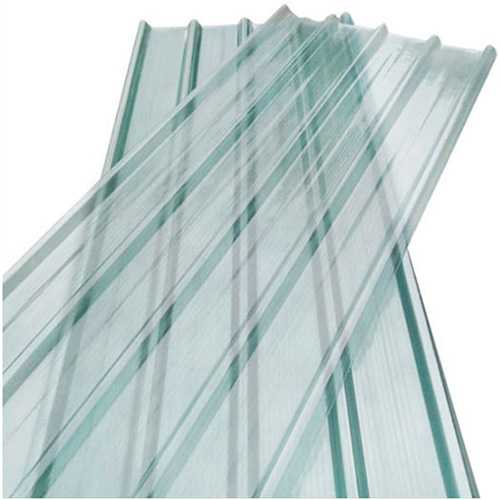
Fiberglass roofing sheets, also known as FRP roofing sheets, GRP roofing sheets, or composite roof panels, are glass-fiber-reinforced polymer sheets used for roof covering, wall cladding, and selected daylighting applications. They can be supplied in different profiles, thicknesses, colors, and surface configurations to suit project requirements. Translucent configurations are used where natural daylight is required, while the composite material does not rust like steel and can be considered where corrosion resistance is important.
What Is a Fiberglass Roofing Sheet?
A fiberglass roofing sheet is a panel-shaped composite component used for roof covering or wall cladding. It combines glass fiber reinforcement with a thermosetting resin matrix. The resulting composite construction provides a lightweight sheet material with weather and corrosion resistance suitable for a range of outdoor building environments.
Profile options: Corrugated, trapezoidal, flat, or embossed
Thickness options: 0.8 mm to 3.0 mm
Width options: 600 mm to 1200 mm depending on profile
Color options: Clear, blue, green, opal white, or custom colors
Material & Construction
Fiberglass roofing sheets consist of glass fiber reinforcement combined with a thermosetting resin system. The resin and reinforcement system influences the sheet's resistance to moisture, UV exposure, and chemical environments. Resin selection should therefore reflect the intended operating conditions.
Surface treatments such as UV-protective films or gel coats can be specified for selected configurations. Different resin systems may also be considered where a project has particular chemical-resistance or fire-performance requirements.
Typical Applications
Fiberglass roofing sheets are used for roof covering and wall cladding in a range of industrial, commercial, and agricultural buildings. Typical applications include factories, warehouses, logistics facilities, agricultural buildings, chemical processing environments, and selected coastal locations.
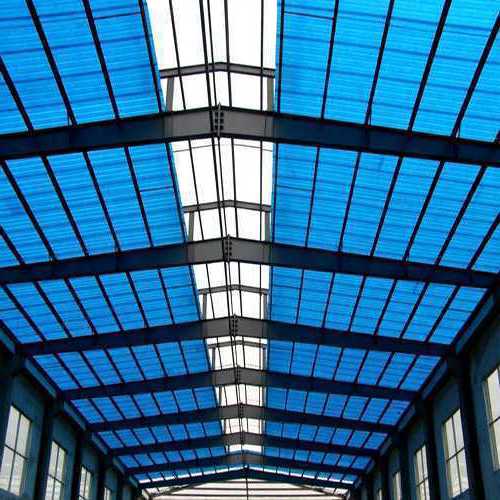
Translucent configurations are commonly used where daylighting is required, including workshops, greenhouses, storage facilities, and other buildings where natural light can supplement artificial lighting.
Selection Considerations
When specifying fiberglass roofing sheets, the following factors typically influence product selection and installation:
Profile shape: Corrugated, trapezoidal, and flat profiles have different span, support, and installation characteristics. The selected profile should match the roof or cladding system.
Light transmission: Translucent configurations are available with different levels of light transmission. The required level depends on the building layout, daylighting objective, and internal use.
Resin type: Resin selection affects the material's chemical resistance, UV stability, and available fire-performance characteristics. Options may include standard polyester, vinyl ester, or flame-retardant formulations depending on the configuration.
Surface treatment: UV-protective films or gel coats may be specified for selected configurations where additional surface protection is required.
Installation environment: Coastal or chemically active environments may require a suitable resin system and compatible installation details. Support spacing and fastening arrangements should match the expected project loads and roof design.
Technical Specifications
Listed product options for fiberglass roofing sheets
Property
Product Options / Values
Material
Fiberglass reinforced polymer (FRP / GRP)
Thickness
0.8 mm to 3.0 mm
Width
600 mm to 1200 mm depending on profile
Length options
Custom lengths
Profile types
Corrugated, trapezoidal, flat, embossed
Color options
Clear, blue, green, opal white, custom colors
Surface options
UV-protective film or gel coat
Light transmission, chemical resistance, and fire-performance characteristics vary with the selected configuration. For a project quotation, share the required profile, dimensions, environmental conditions, and other relevant design requirements.
Frequently Asked Questions
What is the expected service life?
Service life varies with UV exposure, environmental conditions, resin system, surface protection, installation details, and maintenance. Product selection should therefore consider the actual exposure environment and configuration.
Can these sheets resist chemical exposure?
Chemical resistance is configuration-dependent. Resin type, chemical concentration, temperature, exposure duration, and operating conditions all influence suitability. A resin system should be selected according to the chemicals present in the intended environment.
Are they suitable for high-wind areas?
Suitability for high-wind applications depends on the sheet profile, thickness, support spacing, fastening arrangement, and project design loads. The roof system should be specified with support and fastening details appropriate to the expected wind conditions.
How much maintenance is required?
FRP does not rust, so maintenance does not involve anti-rust treatment as required for conventional steel surfaces. Routine maintenance generally focuses on inspection and cleaning, with specific requirements depending on the installation environment and surface configuration.
Can profiles and colors be customized?
Profile shape, thickness, color, and surface treatment can be specified according to project requirements, subject to the selected production configuration.
Related Products & System Components
Fiberglass roofing sheets are often used together with other FRP structural or installation components. Common related items include:
FRP purlins for roof support framing
Fiberglass rain gutters for drainage systems
Fastening hardware and connection accessories
For compatible products and system-level recommendations, contact our engineering team with your project requirements. You may also review our Fiberglass Purlin or Fiberglass Rain Gutter pages for related FRP solutions.
Engineering Inquiry
For technical data requests, project-specific drawings, or configuration recommendations, please submit a request. Providing the following information helps our team prepare a more relevant response:
Required sheet profile, thickness, and width
Roof area and expected design loads
Environmental exposure such as UV, chemical, or coastal conditions
Light transmission requirements, if any
Fire-performance or electrical insulation requirements, if relevant to the project