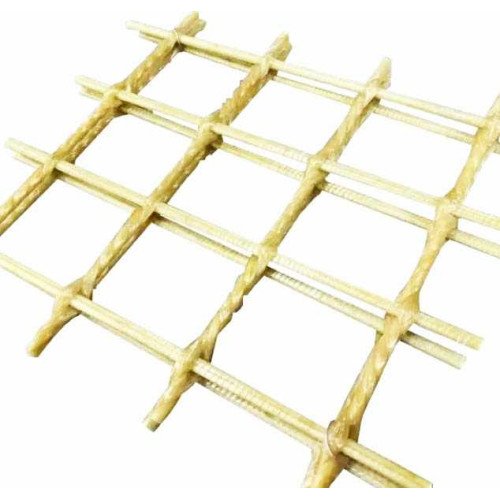
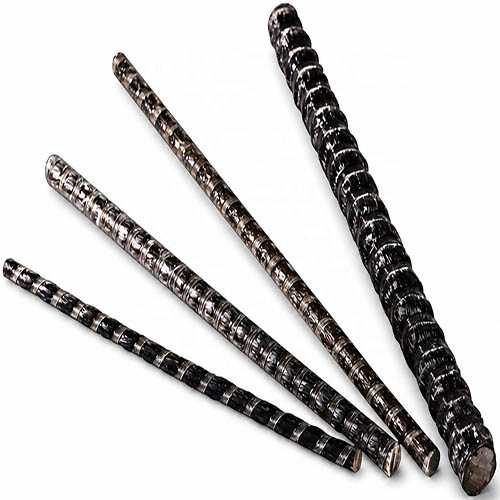
FRP reinforcement mesh is a grid of composite reinforcing elements intended to be incorporated into concrete as part of a project-designed reinforcement arrangement. Its structural role depends on the... Read More
FRP reinforcement mesh is a grid of composite reinforcing elements intended to be incorporated into concrete as part of a project-designed reinforcement arrangement. Its structural role depends on the mesh configuration, documented product properties, project design requirements, and installation details. Similar grid geometry alone does not establish structural equivalence to steel mesh or prove suitability for a particular structure.
Product Identity and Configuration
FRP reinforcement mesh is intended for concrete reinforcement. It is distinct from FRP grating, which forms walking, working, or access surfaces, and from fiberglass mesh used for plastering or insulation. These products may have a grid-like appearance, but their functions and selection criteria differ.
To define a mesh requirement, identify the required opening and spacing, reinforcement element dimensions, grid construction, material designation, and overall dimensions. The actual construction and available configuration must be confirmed for the specific product requested; attributes or supply options associated with a different FRP reinforcement product should not automatically be assigned to this mesh.
Applications in Concrete Construction
FRP reinforcement mesh may be considered for concrete projects where a non-metallic reinforcement system is specified, including projects where corrosion of conventional steel reinforcement is a design consideration. These conditions provide context for material selection; they do not establish that every FRP mesh configuration is suitable for a particular environment or structure.
Suitability depends on the intended structural function, design loads, concrete system, exposure conditions, documented properties of the selected mesh, and installation requirements. The proposed configuration should be assessed against the requirements of the individual project rather than selected solely because FRP reinforcement is used in similar environments.
Mesh Geometry and Configuration Requirements
The following information helps define the requested configuration and identify the product-specific properties that need to be checked.
Selection item
Information to specify
What to verify
Mesh opening and spacing
Required clear opening and center-to-center spacing in both directions.
Consistency with the reinforcement drawings and concrete placement requirements.
Reinforcement element dimensions
Required diameter or cross-sectional dimensions of individual elements.
Compatibility with the documented properties of the proposed mesh configuration.
Grid construction and intersections
Required grid arrangement and relevant connection or intersection details.
The actual construction and joining method for the configuration being considered.
Material designation
Specified fiber type and, where relevant, resin system.
The material composition documented for the specific mesh.
Overall dimensions and delivery format
Required overall dimensions and handling or delivery requirements.
Whether the requested dimensions and supply format are available for that configuration.
Mechanical properties
Tensile properties, stiffness, bond characteristics, and other values required by the structural design.
Product-specific data, applicable test methods, and the scope of the supporting information.
Exposure and service conditions
Relevant moisture, chloride, chemical, temperature, and other environmental conditions.
Whether the available product information addresses the intended exposure and service requirements.
This table identifies information to establish during specification. It is not a statement of standard dimensions, available options, tested performance, or confirmed supply capability.
Material Selection: GFRP and BFRP
Glass fiber-reinforced polymer (GFRP) and basalt fiber-reinforced polymer (BFRP) use different reinforcement fibers within a polymer composite. The wider FRP reinforcement category includes products made with both fiber types, but that does not confirm that every mesh configuration is available in both materials.
For the mesh under consideration, confirm the specified fiber type and material system before using product properties in a structural design. Data for a different fiber type, resin system, or FRP product form should not be transferred to the selected mesh without supporting evidence for that configuration.
Structural Design and Comparison with Steel Mesh
FRP reinforcement does not exhibit the same ductile yielding behavior as conventional reinforcing steel. Differences in stiffness, deformation, bond behavior, and structural response therefore need to be considered using a design approach appropriate to the selected FRP reinforcement.
Similar mesh openings, element dimensions, or overall panel dimensions do not establish structural equivalence between FRP and steel mesh. A proposed substitution must be evaluated against the required structural function, design loads, serviceability requirements, documented product properties, and applicable design provisions; it should not be treated as a direct one-for-one replacement based on geometry alone.
Installation details should be resolved during project design. Depending on the project, these may include reinforcement position, concrete cover, overlap, anchorage, connections with other reinforcement, and coordination with the concrete placement sequence. The required details depend on the project design and the selected mesh configuration.
Frequently Asked Questions
Is FRP reinforcement mesh the same as FRP grating?
No. FRP reinforcement mesh is intended to be incorporated into a concrete reinforcement arrangement. FRP grating forms walking, working, or access surfaces. Their functions and selection criteria differ.
Are both GFRP and BFRP versions available for every mesh configuration?
That should not be assumed. The wider FRP reinforcement category includes GFRP and BFRP products, but the fiber type and availability of a particular mesh configuration must be confirmed for the specific requirement.
Product Inquiry
For an inquiry or quotation request, provide the intended application, required mesh opening and spacing, reinforcement element dimensions, overall dimensions, specified fiber type if applicable, relevant structural requirements, exposure conditions, quantity, and delivery destination. Project drawings or specifications can help define the requested configuration and identify which product properties need to be checked.