
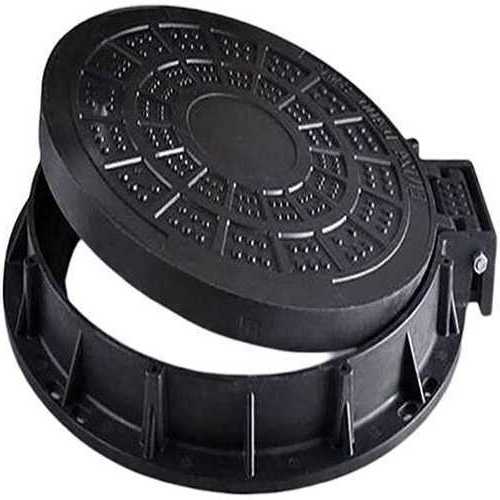
Fiberglass Manhole Cover Overview
Fiberglass manhole cover, also known as FRP manhole cover, GRP access cover, or composite manhole cover, is an access cover for underground utility chambers, cable routes, drainage systems, and other service openings. It combines glass fiber reinforcement with a thermosetting resin matrix. Dimensions, load class, surface finish, and locking options are specified according to the installation requirements. Configuration depends on cover thickness, reinforcement design, support conditions, and the required load class.
What Is a Fiberglass Manhole Cover?
A fiberglass manhole cover is a glass fiber reinforced plastic (FRP/GRP) access cover designed for openings over underground utility chambers, inspection areas, drainage systems, and service routes. It can be configured for pedestrian or vehicular access according to the specified load requirements. Common selection factors include cover dimensions, load class, reinforcement design, resin system, surface finish, support conditions, and locking requirements.
Key Product Facts
- Material: Glass fiber reinforcement with a thermosetting resin matrix
- Function: Access cover for underground utility chambers, inspection openings, and service routes
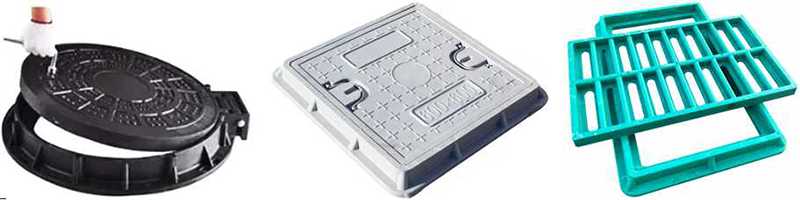
- Shape options: Round, square, and rectangular configurations
- Surface options: Textured, solid-top, or ventilated configurations
- Configurability: Dimensions, load class, resin system, and locking requirements are project-specified
- Electrical properties: FRP is generally non-conductive; electrical behavior can vary with material formulation and surface condition
Material & Construction
The cover body consists of glass fiber reinforcement embedded in a thermosetting resin matrix. Cover construction is selected around the required dimensions, load class, reinforcement design, support conditions, and expected service environment.
Resin options include polyester for general applications and vinyl ester for applications where greater chemical resistance is required. UV-stabilized resin formulations can be specified for outdoor exposure. Where a project has specific environmental or fire-performance requirements, the resin system and cover configuration should be matched to those requirements.
Field cutting or drilling exposes the composite edge and should be followed by suitable edge sealing with a compatible resin or protective coating. For chemical exposure involving multiple agents, temperature cycling, or other combined conditions, material selection should be evaluated against the actual project environment.
Applications
Fiberglass manhole covers are used in municipal, utility, and industrial environments where composite construction, corrosion resistance, lower weight, or non-conductive properties are relevant to the installation. Typical application areas include:
- Water supply and distribution networks
- Telecommunications and fiber-optic cable routes
- Underground power cable chambers
- Wastewater and sewer inspection chambers
- Chemical processing and industrial facilities
- Sidewalks, service areas, and other utility access locations
These are common industry applications for FRP and composite access covers. Final configuration depends on the opening dimensions, expected traffic, support arrangement, environmental exposure, and required load class.
Load Capacity
Load capacity for a fiberglass manhole cover depends on the specified configuration and installation conditions. Important design variables include:
- Cover thickness and reinforcement design
- Support frame geometry and seating conditions
- Resin system and operating temperature
- Required load class
- Expected traffic type and frequency
Load requirements should be defined together with the cover dimensions, support conditions, and intended traffic conditions so that the cover configuration can be evaluated as a complete system.
Selection Considerations
When specifying a fiberglass manhole cover, the following factors help define the appropriate configuration:
- Load class: Based on the intended traffic and installation conditions
- Clear opening dimensions: Determined by the utility chamber opening and required access area
- Cover construction: Thickness and reinforcement design are related to the required load conditions and support arrangement
- Resin system: Selected according to chemical exposure, outdoor conditions, temperature, and other service requirements
- Surface finish: Textured or other surface configurations can be specified according to the installation environment
- Locking mechanism: Selected where controlled access or additional security is required
- Shape: Round, square, or rectangular according to the frame and installation arrangement
Technical Specifications
Fiberglass manhole covers are configured according to the required opening, traffic conditions, support arrangement, surface requirements, and environmental exposure.
| Attribute | Configuration |
|---|---|
| Material | Fiberglass Reinforced Plastic (FRP/GRP) |
| Shape | Round, square, or rectangular |
| Clear Opening | Project-specified according to the chamber opening and access requirements |
| Load Class | Project-specified according to intended traffic and installation conditions |
| Surface Finish | Textured, solid-top, or ventilated configurations |
| Resin System | Selected according to environmental and service requirements |
| Color | Available according to the specified resin and production requirements |
| Locking | Locking configurations available according to access and security requirements |
| Outdoor Exposure | UV-stabilized resin formulations can be specified where required |
Frequently Asked Questions
How is the load capacity of a fiberglass manhole cover determined?
Load capacity depends on the cover thickness, reinforcement design, support conditions, required load class, and expected traffic. These variables should be considered together when defining the cover configuration.
Are fiberglass manhole covers suitable for chemical environments?
Fiberglass manhole covers can be configured for environments where chemical exposure is part of the service conditions. Resin selection should consider the specific chemical agents, concentration, temperature, exposure duration, and other relevant project conditions.
Can fiberglass manhole covers be used for electrical or telecom chambers?
FRP is generally non-conductive and is used for access covers in electrical and telecom infrastructure. Where a project has specific electrical-property requirements, those requirements should be defined together with the cover configuration.
What shapes are available for fiberglass manhole covers?
Round, square, and rectangular configurations can be specified according to the frame geometry, clear opening, and installation arrangement.
What information is needed to specify a fiberglass manhole cover?
The main inputs include clear opening dimensions, required shape, intended traffic, load class, support conditions, environmental exposure, surface finish, and locking requirements. Chemical exposure and operating temperature should also be included where relevant.
Related Products & System Components
Fiberglass manhole covers can form part of an underground utility access system. Related components may include:
- FRP trench covers and cable protection panels
- Support frames and seating components for cover installation
- Locking hardware and access control components
Engineering Inquiry
For a configuration-specific inquiry, provide the main installation and service requirements so the cover can be evaluated around the actual application.
- Clear opening dimensions and required shape
- Expected traffic type and required load class
- Support frame and seating conditions
- Chemical exposure and ambient temperature range
- Outdoor or UV exposure conditions
- Surface finish requirements
- Locking mechanism requirements, if any


