

Fiberglass Light Pole

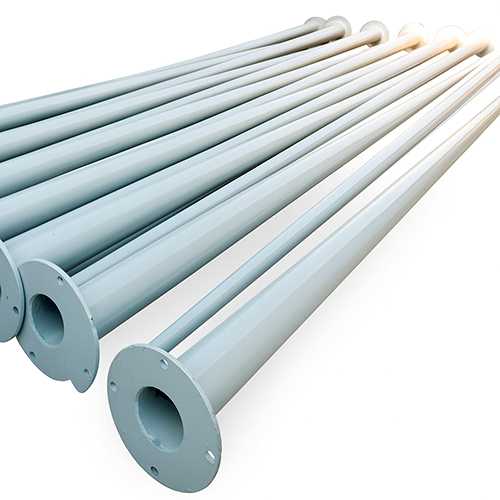
Fiberglass light poles, also referred to as FRP light poles or GRP lighting columns, are structural supports for outdoor luminaires. They are made with glass fiber reinforcement embedded in a thermosetting resin matrix. Typical applications include street lighting, road infrastructure, industrial sites, coastal facilities, and other outdoor lighting installations. Pole height, wall thickness, mounting method, and arm configuration are project-specified.
A fiberglass light pole is a vertical structural support for outdoor lighting fixtures, manufactured from glass fiber reinforcement and a thermosetting resin matrix. FRP light poles can be used in public, commercial, transportation, and industrial environments where corrosion resistance, lighter weight, or electrical non-conductivity are relevant considerations. Available configurations include different pole heights, wall thicknesses, mounting bases, and arm arrangements.
The pole body combines glass fiber reinforcement with a thermosetting resin matrix. Resin selection can be based on the expected outdoor exposure, including UV radiation, moisture, salt air, or industrial chemical exposure. Wall thickness and structural configuration are determined from project requirements such as wind load, fixture weight, pole height, and installation method.
Resin options include polyester for general outdoor applications and vinyl ester for applications requiring increased chemical resistance. UV-stabilized resin formulations are available for outdoor exposure, while flame-retardant resin systems can be supplied where fire-performance requirements apply.
Where field cutting or drilling is required, exposed edges should be sealed with a compatible resin system to maintain the protective surface. Chemical exposure, temperature range, and installation conditions should be considered when selecting the pole configuration and resin system.
Fiberglass light poles are commonly used for outdoor lighting where corrosion resistance, lower weight, or electrical non-conductivity are relevant to the installation environment. Typical application areas include:
These applications represent common industry uses of FRP lighting poles. Final pole configuration depends on the site environment, lighting arrangement, structural requirements, and installation conditions.
The load capacity of a fiberglass light pole is configuration dependent. Structural design considers the pole height, wall thickness, fixture weight, mounting arrangement, foundation conditions, and applicable wind load requirements for the project.
Structural performance is therefore evaluated for the specified pole configuration rather than treated as a single fixed value for all fiberglass light poles.
When specifying a fiberglass light pole, the following variables are typically considered:
The general product attributes below describe the available configuration range. Specific dimensions and structural characteristics are determined for the selected project configuration.
| Attribute | Specification / Configuration |
|---|---|
| Material | Fiberglass Reinforced Plastic (FRP/GRP) |
| Pole Height | Project-specified according to application and structural requirements |
| Wall Thickness | Project-specified according to structural requirements |
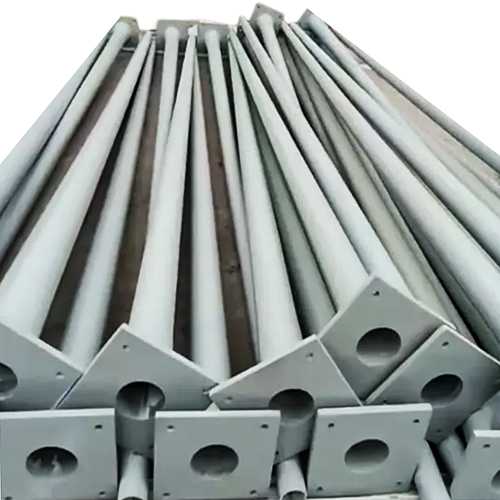
| Mounting Options | Flange base or embedded foundation type |
| Resin Options | Polyester and vinyl ester systems; other formulations may be specified according to project requirements |
| Color Options | Gray, white, and custom colors, subject to the selected resin system |
| UV Protection | UV-stabilized resin formulations available for outdoor exposure |
| Load Capacity | Configuration dependent; determined from pole geometry, fixture loading, mounting arrangement, and wind requirements |
| Electrical Insulation | FRP is generally non-conductive; actual properties depend on resin formulation, additives, and surface condition |
A fiberglass light pole is an outdoor lighting support made with glass fiber reinforcement and a thermosetting resin matrix. It is also commonly described as an FRP light pole or GRP lighting column.
Load capacity is configuration dependent and is determined from factors such as pole height, wall thickness, fixture weight, mounting arrangement, foundation conditions, and project wind requirements.
FRP light poles are commonly used in coastal and corrosive environments. Resin selection should consider salt air, moisture, chemical exposure, UV conditions, and the expected service environment.
Yes. Pole height, wall thickness, mounting type, arm configuration, resin system, and cable entry details can be specified according to project requirements.
FRP is generally non-conductive. Actual electrical properties can vary depending on the resin formulation, additives, surface condition, and the final product configuration.
Key considerations include pole height, wall thickness, fixture weight, wind conditions, mounting arrangement, foundation interface, resin system, environmental exposure, and lighting layout.
Fiberglass light poles can form part of an outdoor lighting installation together with related structural and cable-management components.
For a project-specific fiberglass light pole configuration, the following information helps define the required design parameters:


