
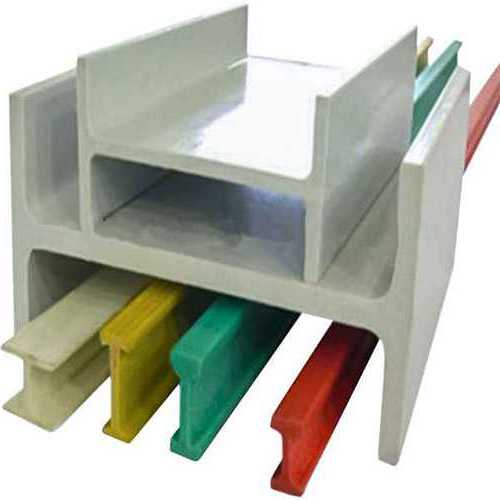



Fiberglass H-Beam Profile Overview
Fiberglass H-beam, also known as an FRP H-beam or GRP H-profile, is a pultruded structural profile with an H-shaped cross-section. It is used for structural frames, supports, and related assemblies in construction, marine, industrial, and infrastructure environments. The profile combines continuous glass fiber reinforcement with a thermosetting resin matrix, while structural performance depends on profile geometry, fiber architecture, resin system, and span conditions.
What Is a Fiberglass H-Beam Profile?
A fiberglass H-beam profile is a pultruded structural member made from fiberglass reinforced plastic (FRP/GRP). Its H-shaped cross-section provides a structural geometry for bending and load transfer. These profiles are used for framing, supports, and load-bearing assemblies where the project requires a fiberglass-reinforced composite structural profile.
Key Product Facts
- Material: Continuous glass fiber reinforcement embedded in a thermosetting resin matrix
- Manufacturing process: Pultrusion, in which continuous reinforcement is impregnated with resin and formed into the H-shaped profile through a heated die
- Cross-section: H-profile geometry for structural framing and load transfer
- Configurability: Profile dimensions and resin systems can be specified according to project requirements
- Electrical characteristics: FRP is generally non-conductive; electrical behavior can vary with resin formulation, additives, and surface conditions
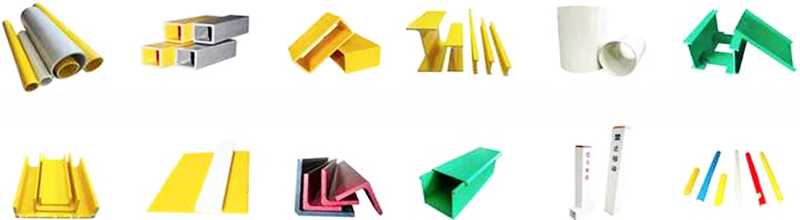
Material & Construction
The H-beam profile is manufactured by pultrusion. Continuous glass fiber reinforcement is impregnated with resin and formed through a heated die to produce the required H-shaped cross-section.
Resin selection is project-driven. Polyester and vinyl ester systems can be selected according to the intended environment and project requirements. Flame-retardant resin formulations can also be supplied for projects where fire performance is part of the specification.
Profile depth, flange width, web thickness, and length are specified according to structural requirements and production capability. Custom cross-sections may also be considered for project-specific requirements.
When profiles are cut or drilled during fabrication, exposed reinforcement should be protected with a compatible resin system. Chemical exposure, temperature cycling, and other environmental conditions should be considered when selecting the profile and resin system.
Applications
Pultruded fiberglass H-beams are used as structural members in applications where composite structural profiles are required. Common industry application environments include:
- Construction framing and structural supports
- Marine and coastal structures
- Chemical processing and wastewater treatment facilities
- Industrial equipment frames and secondary structures
- Walkways, platforms, and infrastructure support structures
Final profile and material selection depends on structural loads, span conditions, environmental exposure, connection details, and other project requirements.
Load Capacity
Load capacity for a fiberglass H-beam is configuration dependent. Structural evaluation considers factors such as cross-sectional dimensions, span length, support conditions, reinforcement characteristics, resin system, operating temperature, and connection details.
- Cross-sectional dimensions and wall thickness
- Span length and support conditions
- Fiber orientation and reinforcement content
- Resin system and operating temperature
- Fastener type and connection layout
Load calculations apply to the specific profile, span, support arrangement, and loading conditions being evaluated.
Selection Considerations
When specifying a fiberglass H-beam, engineers typically consider the following variables:
- Profile dimensions: Section depth, flange width, and web thickness are selected according to span, load, and deflection requirements.
- Resin system: Resin selection is related to chemical exposure, temperature conditions, and specified fire performance requirements.
- Fiber architecture: Reinforcement orientation and content influence the mechanical characteristics of the profile.
- Connection details: Bolted or bonded connections affect load transfer and should be considered as part of the structural arrangement.
- Environmental exposure: Moisture, UV exposure, chemical contact, and temperature conditions can influence material and surface-protection selection.
Mechanical characteristics and load capacity depend on the selected profile configuration and project conditions.
Technical Specifications
Fiberglass H-beam profiles are specified according to cross-section, dimensions, resin system, and project requirements. Exact values and configurations depend on the selected profile.
| Attribute | Typical Scope / Options | Notes |
|---|---|---|
| Material | Fiberglass Reinforced Plastic (FRP/GRP) | Resin system selected according to application requirements |
| Manufacturing process | Pultrusion | Continuous reinforcement is formed into the H-shaped profile |
| Cross-section | H-beam / H-profile | Dimensions specified according to project requirements |
| Length | Project-specified | Subject to production, transport, and handling requirements |
| Width / depth | Project-specified | Selected according to structural requirements |
| Load capacity | Configuration dependent | Depends on profile size, span, supports, loading, and connections |
| Resin system | Polyester / Vinyl Ester / Other available systems | Selected according to project requirements and environmental conditions |
| Fire performance | Configuration dependent | Flame-retardant formulations can be considered where specified |
| Electrical characteristics | Generally non-conductive FRP | Electrical behavior varies with formulation and surface conditions |
For project-specific structural data, provide the required profile dimensions, span, support conditions, loading, environmental exposure, and resin requirements.
Frequently Asked Questions
What is a fiberglass H-beam profile?
A fiberglass H-beam profile is a pultruded FRP/GRP structural profile with an H-shaped cross-section. It is used for framing, supports, and related structural assemblies.
What materials are used to manufacture fiberglass H-beams?
Fiberglass H-beams use continuous glass fiber reinforcement embedded in a thermosetting resin matrix. Polyester and vinyl ester resin systems can be selected according to project and environmental requirements.
Can fiberglass H-beam dimensions be customized?
Profile depth, flange width, web thickness, and length can be specified according to project requirements and production capability. Custom cross-sections may also be considered for suitable applications.
What factors affect fiberglass H-beam load capacity?
Load capacity depends on the selected profile geometry, span, support conditions, loading arrangement, reinforcement characteristics, resin system, temperature, and connection details.
Can fiberglass H-beams be used in corrosive environments?
FRP structural profiles are used in industrial, marine, wastewater, and other environments where corrosion exposure is part of the material-selection consideration. Resin selection and environmental conditions should be considered together.
What information is needed to select a fiberglass H-beam?
Useful project information includes the required section dimensions, span, support conditions, expected loads, deflection requirements, connection method, chemical exposure, temperature range, UV exposure, and any specified fire-performance requirements.
Related Products & System Components
Fiberglass H-beams can form part of a larger FRP structural system. Related profiles and components may include:
- FRP I-beam and channel profiles for structural framing
- FRP grating and decking panels for platforms and walkways
- FRP brackets, connection components, and fastening systems
Related product selection depends on the structural arrangement and project requirements.
Engineering Inquiry
For project-specific structural information, provide the key design conditions below so the appropriate fiberglass H-beam configuration can be evaluated.
- Required beam dimensions: depth, flange width, and web thickness
- Span and support conditions
- Expected loads and deflection requirements
- Chemical exposure and operating temperature
- UV exposure and installation environment
- Fire-performance requirements, if applicable


