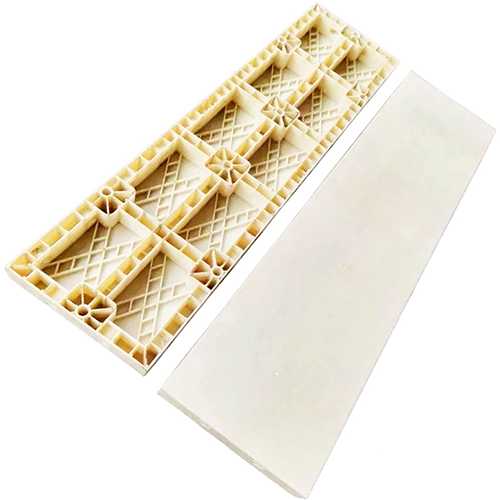
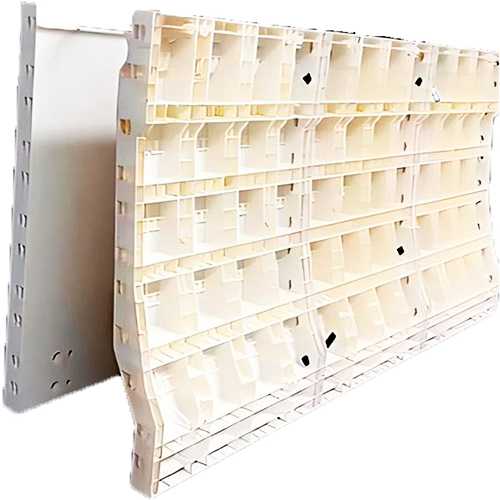
Fiberglass formwork panels—also called FRP formwork panels, GRP formwork boards, or composite concrete form panels—are modular formwork components made from glass fiber reinforced plastic. They provide a reusable, lightweight alternative to steel or wood formwork for casting concrete walls, slabs, and columns. Available with smooth or textured contact surfaces, these panels can be customized in size and thickness to match concrete pressure and support spacing. They help contractors achieve clean concrete finishes while reducing maintenance and handling effort.
What Is a Fiberglass Formwork Panel?
A fiberglass formwork panel is a reusable concrete forming panel built from fiberglass reinforced polymer (FRP/GRP). It serves as the contact surface for poured concrete, shaping the concrete and imparting the desired surface finish. The panel is supplied as a modular unit, often in standard dimensions, with options for custom sizes. Because it resists moisture, chemicals, and repeated handling, it is well suited for multiple casting cycles in commercial, residential, and infrastructure projects. It is sometimes referred to as a fiberglass concrete form panel, composite formwork board, or plastic formwork panel.
Key Product Facts
Material: Glass fiber reinforcement embedded in a thermosetting resin matrix, typically polyester or vinyl ester
Product form: Modular panels with standard and custom dimensions
Surface finish: Smooth or textured concrete contact surface
Reusability: Engineered for repeated use with proper handling and release agent application
Customization: Panel dimensions, thickness, and surface treatment can be tailored to project requirements
Weight advantage: Lighter than steel formwork, making transport and assembly easier
Material & Construction
The panel body is constructed from glass fiber reinforcement and a thermosetting resin. The resin system is chosen to withstand the moisture and alkaline conditions typical of concrete work. Standard resin options include polyester and vinyl ester, with vinyl ester offering enhanced resistance to aggressive release agents and cleaning chemicals.
The concrete contact face can be smooth, producing a clean, uniform concrete surface, or textured to create architectural patterns. Panel thickness and internal reinforcement are sized to handle the lateral pressure of fresh concrete, and the overall panel design is intended to stay flat and stable during pouring.
Because the panels are lightweight compared to steel, they reduce the physical strain on workers and can be handled with smaller lifting equipment. With proper cleaning and storage between uses, the panels retain their shape and surface quality over many casting cycles.
Typical Applications
Fiberglass formwork panels are used across the construction industry wherever reusable, easy‑to‑handle formwork is needed. Common application areas include:
Commercial building construction: Walls, columns, and elevator cores
Residential projects: Multi‑unit housing and foundation walls
Infrastructure works: Bridge decks, tunnel linings, and retaining walls
Industrial construction: Concrete tanks, pits, and process structures
Precast concrete production: Molds and formwork for off‑site casting
The right panel configuration for your project depends on concrete mix design, pour rate, panel span, and the desired surface finish. Our team can help you select the proper thickness and reinforcement layout.
Selection Considerations
When specifying a fiberglass formwork panel, consider the following factors:
Concrete pressure: The lateral pressure during pouring determines the required panel thickness and internal reinforcement.
Panel dimensions: Standard or custom sizes should match the formwork layout and available handling equipment.
Support spacing: The distance between backing supports affects how much the panel will deflect under load.
Surface finish: Smooth faces suit most structural concrete; textured faces can create decorative effects or hide minor imperfections.
Reuse expectations: For high‑cycle projects, a vinyl ester resin or additional surface protection may be recommended to maximize panel life.
Technical Specifications
The table below outlines the general attributes of fiberglass formwork panels. Exact dimensions, load ratings, and performance values are confirmed for each project based on the concrete pressure and support conditions.
Attribute
Typical Scope / Options
Notes
Material
Fiberglass Reinforced Plastic (FRP/GRP)
Polyester or vinyl ester resin
Panel dimensions
Standard and custom sizes
Commonly up to 3 m × 1.2 m; larger sizes possible
Panel thickness
Configuration dependent
Designed for concrete pressure and span
Surface finish
Smooth or textured
Selected for concrete finish requirements
Weight
Approximately 30–50% lighter than steel formwork
Actual weight depends on panel thickness and size
Load capacity
Configuration dependent
Determined by panel design and support spacing
For detailed technical data, structural calculations, or material certificates, contact our engineering team with your concrete mix, pour height, and support layout.
Frequently Asked Questions
What is the typical lifespan of fiberglass formwork panels?
The lifespan depends on how the panels are handled, cleaned, and stored. With proper care and the right release agents, many contractors achieve a high number of reuse cycles. Vinyl ester resin panels generally last longer in aggressive conditions. We can recommend a maintenance routine based on your usage intensity.
Are fiberglass panels suitable for all concrete casting projects?
They work well for a wide range of concrete structures, from walls and columns to slabs and precast elements. The key is selecting the correct panel thickness and support spacing for the expected concrete pressure. We review each project’s specifications to ensure the panel configuration matches the pour conditions.
How do I request technical data for fiberglass formwork panels?
Simply fill out the inquiry form on this page with your project details—concrete mix design, pour height, support spacing, and desired surface finish. Our engineering team will provide structural calculations and panel recommendations.
Can these panels be reused?
Yes, reusability is one of the main advantages. The panels are designed to withstand repeated concrete pours. To maximize service life, clean the contact surface after each use and apply a suitable release agent before the next pour.
Engineering Inquiry
Ready to specify fiberglass formwork panels for your next concrete project? Send us your concrete mix details, pour height, and support layout, and we’ll help you select the right panel thickness, resin system, and surface finish. Our team can also provide structural calculations and material certificates as needed.