
Leave Us a Message
BFRP rebar (basalt fiber-reinforced polymer rebar) is a non-metallic composite reinforcing bar made with basalt fibers embedded in a polymer resin matrix. It is used for concrete reinforcement where the structural design specifies fiber-reinforced polymer reinforcement. BFRP differs from GFRP rebar primarily in the reinforcing fiber: basalt rather than glass.
The BFRP designation identifies the fiber type, not a fixed performance grade. Tensile strength, tensile modulus, strain capacity, bond behavior and durability must be established for the specific bar configuration and evaluated against the structural design and intended service environment.
Material and Construction
BFRP rebar combines basalt fibers with a polymer resin matrix. The fibers provide the principal reinforcing phase, while the matrix binds the fibers and contributes to stress transfer within the composite. Fiber architecture, resin chemistry and manufacturing route are product-specific and should not be inferred from the BFRP designation alone.
When these details affect structural performance, chemical exposure assessment or material selection, confirm the information applicable to the proposed bar configuration.
Surface Profile and Concrete Bond
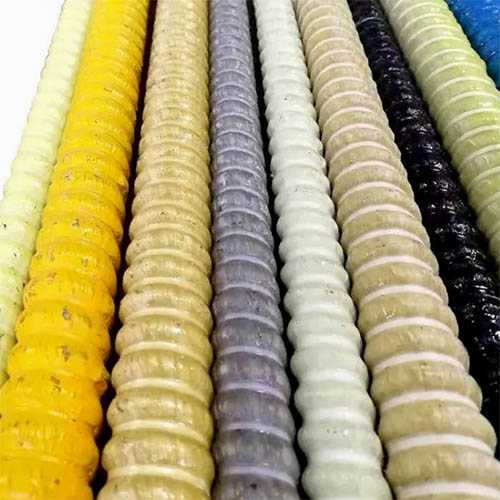
Depending on product design, BFRP bars may have sand-coated, ribbed, helically wrapped or other textured surface profiles. These are possible configurations within the product category, not confirmation that every profile is available for a particular supply.
The surface profile is relevant to bond behavior between the bar and the surrounding concrete. Bond performance and the required development length, anchorage and lap details must be addressed using the actual bar geometry, surface configuration, concrete properties and applicable structural design requirements.
When specifying BFRP rebar, state the required surface profile and confirm the configuration to be supplied. Nominal diameter alone does not establish equivalent bond or structural behavior.
Potential Applications
BFRP rebar may be considered for concrete structures where non-metallic reinforcement is specified or evaluated as part of the project design. Potential applications include:
- Bridge decks, parking structures and transportation facilities where exposure to de-icing salts or chlorides is a design consideration.
- Coastal and marine concrete structures exposed to moisture and saline conditions.
- Water and wastewater facilities where reinforcement compatibility must be evaluated for the operating environment.
- Industrial concrete structures subject to defined chemical, temperature or moisture exposure conditions.
- Electrical facilities and other installations where non-metallic reinforcement is required by the design.
These are potential project contexts, not blanket suitability claims for every BFRP bar. Selection must be based on the properties of the proposed product, the exposure conditions and the structural design requirements.
Product Specifications and Verification
Confirm the following items for the specific BFRP rebar configuration before final specification, procurement or structural approval.
| Item | Information to confirm |
|---|---|
| Bar dimensions | Nominal diameter, cross-sectional geometry, dimensional tolerances, required lengths and quantity. |
| Mechanical properties | Product-specific tensile strength, tensile modulus, ultimate strain and the applicable test method or documented test basis. |
| Surface profile and bond | Actual surface configuration and relevant bond data where required by the project design. |
| Material and exposure | Relevant resin-system information and supporting data for the specified moisture, salt, chemical and temperature conditions. |
| Supply form and fabrication | Available straight lengths, dimensional requirements and whether any required hooks, bends or special shapes can be supplied. |
| Standards and acceptance | Applicable project specification, acceptance criteria and evidence required for the proposed product configuration. |
Use verified properties for the proposed bar rather than generic BFRP values. Where a required parameter or acceptance criterion has not been established, resolve it before using the product in the structural design.
Selection and Installation Considerations
Select BFRP rebar using the required mechanical properties, bar geometry, bond requirements and expected service conditions. Reinforcement detailing should address concrete cover, bar spacing, development length, anchorage and lap requirements under the applicable design framework.
BFRP rebar should not be treated as a direct, one-for-one replacement for steel solely because the nominal bar diameter is similar. Differences in stiffness, tensile behavior, bond characteristics and detailing requirements must be accounted for in the structural design.
Do not assume that a cured BFRP bar can be bent on site. Specify required hooks, bends and special shapes before ordering, and confirm the proposed configuration and its acceptance for the intended design. Cutting, handling and installation should follow the applicable product instructions and site safety requirements.
Frequently Asked Questions
Can BFRP rebar directly replace steel reinforcement?
No direct material-for-material substitution should be assumed. BFRP and steel differ in stiffness, tensile behavior, bond characteristics and detailing requirements. Use the verified properties of the proposed bar within the applicable structural design.
What is the difference between BFRP rebar and GFRP rebar?
BFRP uses basalt fibers as the reinforcing phase, whereas GFRP uses glass fibers. The fiber designation alone does not establish which product has better structural performance or is more suitable for a particular exposure environment. Compare the documented properties and configurations of the bars under consideration.
Does BFRP rebar rust?
BFRP is non-metallic and does not rust in the same way as steel reinforcement. This distinction does not establish unlimited service life or immunity to every chemical, moisture or temperature condition. Suitability must be assessed for the proposed composite configuration and service environment.
Can BFRP rebar be bent on site?
Do not assume that a cured BFRP bar can be bent on site. Identify required bends, hooks and special shapes before ordering, and confirm the available configuration and applicable design requirements.
Request a Quote
To identify the required BFRP rebar configuration, include the following information in your inquiry where available:
- Required nominal diameter, length, quantity and dimensional requirements.
- Intended concrete application and relevant exposure conditions.
- Required surface profile and any hooks, bends or special shapes.
- Structural design properties, applicable project standards and acceptance criteria.
- Delivery destination and requested schedule.
These details help define the requested configuration and clarify which product information and supporting evidence need to be confirmed for the project.


