


Fiberglass Fence Overview
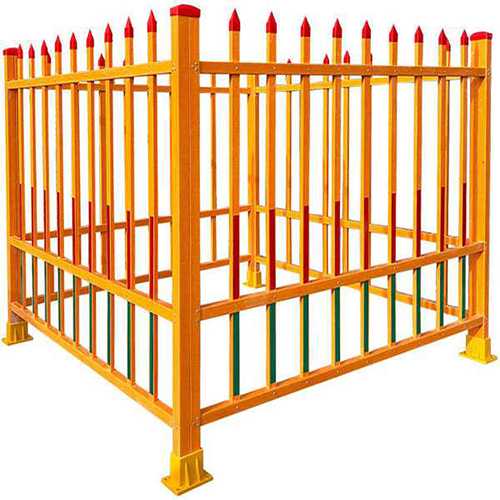
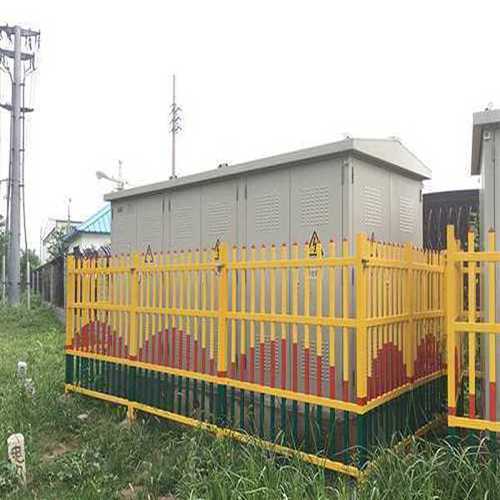
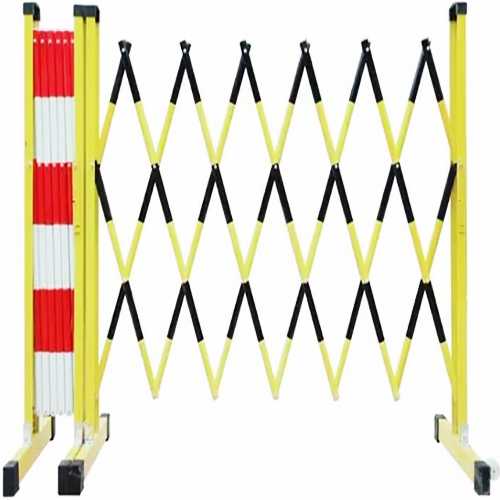
Fiberglass Fence, also known as FRP fence or GRP perimeter fencing, is a modular barrier system made from glass fiber reinforced plastic. It consists of panels, posts, and rails for perimeter separation and access control in industrial and commercial environments. Non-conductive FRP/GRP construction makes the system relevant to areas around electrical equipment, while resin selection depends on chemical exposure and environmental conditions. Fence configuration depends on panel style, resin system, installation method, panel height, and wind exposure.
What Is a Fiberglass Fence?
A fiberglass fence is a modular perimeter fencing system built from FRP/GRP profiles and panels. The system typically consists of fence panels, posts, and horizontal rails assembled to form a defined perimeter or restricted-access area. Standard or custom panel dimensions can be specified according to the project layout.
Because FRP/GRP materials are non-conductive and can be selected with different resin systems, fiberglass fencing is used in applications where electrical isolation, corrosion exposure, moisture, or site-specific environmental conditions need to be considered.
Key Product Facts
- Material: Glass fiber reinforcement embedded in a thermosetting resin matrix, with polyester and vinyl ester systems available.
- Product form: Modular fence panels with matching posts and horizontal rails.
- Surface finish: Smooth or textured profiles; gel coat can be specified where required by the project.
- Color options: Industrial gray, green, white, or custom colors.
- Customization: Panel heights, widths, and colors can be specified according to project requirements.
- Installation: Post and panel configurations are assembled according to the foundation and mounting arrangement.
Material & Construction
Fiberglass fence components are manufactured from FRP/GRP profiles containing continuous or structural glass fiber reinforcement within a thermosetting resin matrix. Polyester and vinyl ester resin systems can be selected according to the intended environment and project requirements.
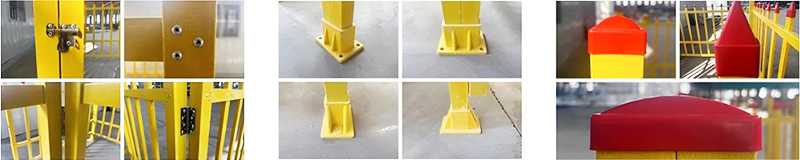
Surface finishes can be smooth or textured, with gel coat available for selected configurations. The fence system can be assembled by anchoring posts to concrete footings or steel base plates and connecting the panels and rails with the specified fastening hardware. The mounting arrangement depends on the foundation type, fence geometry, and project requirements.
Typical Applications
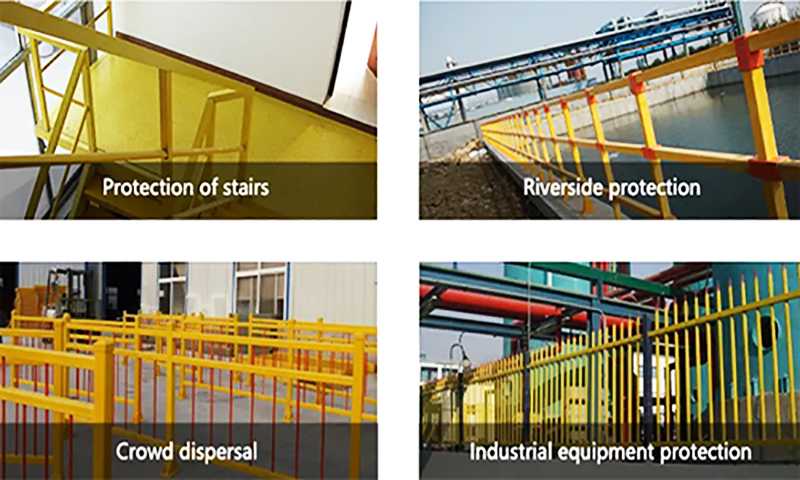
FRP/GRP fencing is used in perimeter and access-control applications where the material characteristics and environmental conditions need to be considered. Common application settings include:
- Industrial complexes and factory perimeters
- Electrical substations, utility areas, and equipment enclosures
- Chemical processing plants and chemical storage areas
- Water and wastewater treatment facilities
- Coastal and marine facilities exposed to salt-laden environments
- Commercial sites, campuses, and controlled-access areas
- Municipal infrastructure and public safety zones
For a specific project, fence configuration is determined by factors such as required height, wind exposure, mounting conditions, environmental exposure, and site security requirements.
Selection Considerations
When specifying a fiberglass fence, the following project variables are typically considered:
- Panel height and wind exposure: Panel height, post spacing, panel geometry, and local wind exposure are considered when determining the fence support configuration.
- Resin system: Resin selection depends on the chemical and environmental exposure identified for the project. Polyester and vinyl ester systems can be specified for different service conditions.
- Installation method: The foundation and mounting surface, such as concrete or steel, determine the applicable post-base and anchoring arrangement.
- Fire performance: Where a fire-performance requirement applies, the required standard should be identified so the appropriate material configuration can be reviewed.
- Color and finish: Standard and custom colors, together with smooth or textured surface finishes, can be specified according to project requirements.
Technical Specifications
The following table summarizes available product attributes. Exact dimensions and load-related design parameters depend on the selected fence configuration and mounting arrangement.
| Attribute | Typical Scope / Options | Notes |
|---|---|---|
| Material | Fiberglass Reinforced Plastic (FRP/GRP) | Resin system selected according to project requirements |
| Product form | Panels, posts, and horizontal rails | Configuration varies by fence layout |
| Panel dimensions | Standard or custom heights and widths | Specified according to project requirements |
| Color options | Industrial gray, green, white, or custom | Color availability depends on the selected configuration |
| Surface finish | Smooth or textured; optional gel coat | Selected according to project requirements |
| Resin system | Polyester or vinyl ester | Selection depends on environmental exposure |
| Load-related design | Configuration dependent | Depends on panel geometry, support spacing, mounting arrangement, and wind exposure |
| Fire-performance option | Fire-retardant resin available for selected configurations | Specify the required fire-performance standard for review |
For project-specific technical review, submit the fence height, total length, layout, mounting conditions, local wind exposure, environmental conditions, and applicable site requirements.
Frequently Asked Questions
What is a fiberglass fence?
A fiberglass fence is a modular FRP/GRP perimeter fencing system consisting of fiberglass-reinforced panels, posts, and rails. It can be configured for industrial, commercial, electrical, utility, chemical, water, and coastal applications according to project requirements.
Is a fiberglass fence suitable for areas around electrical equipment?
FRP/GRP fencing is non-conductive and can be used for perimeter separation around electrical equipment and utility areas where non-conductive materials are required by the project. The complete fence configuration should be specified according to the site conditions and application requirements.
Can fiberglass fence panels be customized?
Panel heights, widths, and colors can be specified according to project requirements. Custom configurations are subject to production feasibility and order review.
How is a fiberglass fence installed?
Typical installation uses posts anchored to a suitable foundation or mounting surface, followed by attachment of the panels and rails with the specified fastening hardware. The post-base and anchoring arrangement depends on the foundation type, fence geometry, and project conditions.
How is the resin system selected for a fiberglass fence?
Resin selection depends on the environmental conditions identified for the project, including chemical exposure, moisture, and outdoor or coastal exposure. Polyester and vinyl ester systems can be specified according to the required service conditions.
Engineering Inquiry
For technical review or a project-specific quotation, provide the site and fence requirements so the panel configuration, resin system, and mounting arrangement can be evaluated.
- Required fence height and total length
- Site layout and intended perimeter arrangement
- Local wind exposure or design wind requirement
- Foundation type and mounting surface
- Chemical, moisture, coastal, or other environmental exposure
- Preferred color and surface finish
- Fire-performance requirements, where applicable


