
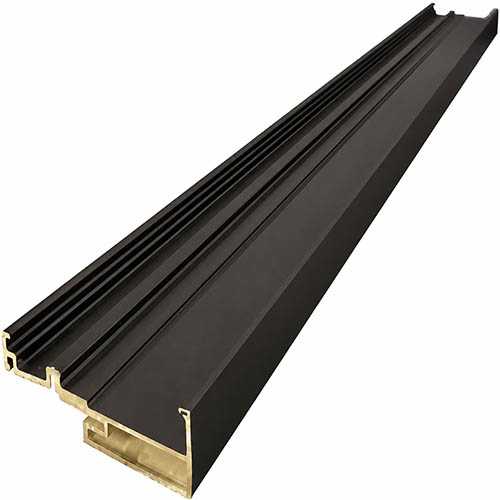
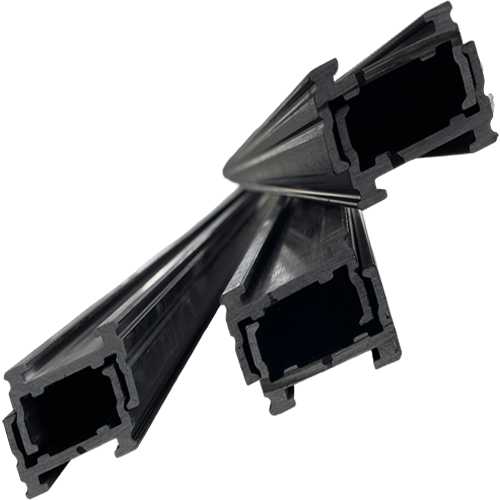


Fiberglass Door Profile Overview
Fiberglass door profiles, also called FRP door profiles, GRP door frame profiles, or pultruded composite door profiles, are structural sections made from glass fiber reinforcement and a thermosetting resin matrix. They are intended for door frame construction in residential, commercial, and industrial buildings. Common application environments include building entrances, industrial facilities, marine structures, and food processing areas. Profile dimensions, resin selection, and hardware machining depend on the required door configuration and installation conditions.
What Is a Fiberglass Door Profile?
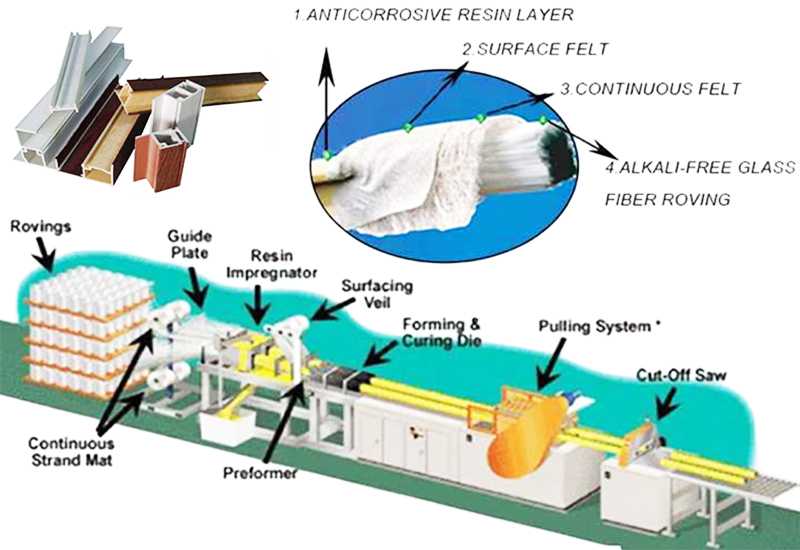
A fiberglass door profile is a pultruded FRP or GRP structural section used to form door frames. Continuous glass fiber rovings and mats are impregnated with a thermosetting resin and pulled through a heated die to form a straight profile with a consistent cross-section. The profiles can be cut, machined, and assembled into door frame configurations.
Fiberglass door profiles are used where moisture exposure, corrosion exposure, electrical insulation, or material compatibility are relevant considerations in door frame design.
Key Product Facts
- Material: Glass fiber reinforcement in a thermosetting resin matrix, with polyester and vinyl ester systems available as resin options.
- Manufacturing process: Pultrusion forms straight profiles with a consistent cross-section; machining and assembly can be used for frame corners and hardware positions.
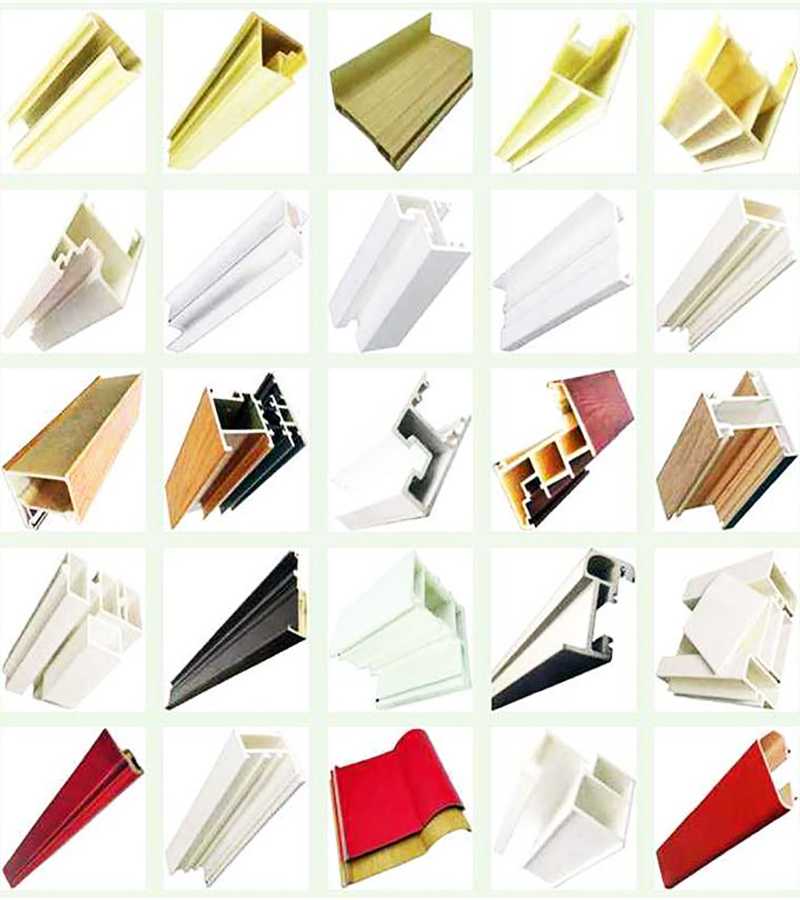
- Profile design: Cross-section shape, wall thickness, and overall dimensions can be customized to project requirements.
- Surface finish: Smooth or textured surface finishes are available.
- Color: Color can be integrated through resin pigmentation or applied as a painted finish.
- Electrical property: FRP is electrically non-conductive.
- Hardware machining: Profiles can be machined for hinges, locks, and other door hardware.
Material & Construction
Fiberglass door profiles are manufactured by pultrusion. Continuous glass fiber rovings and mats are saturated with a thermosetting resin and pulled through a heated die to form the required cross-section. The resulting profile provides a consistent structural section for door frame fabrication.
Polyester and vinyl ester resin systems can be selected according to project requirements and environmental exposure. The appropriate resin system depends on the intended application and the conditions in which the door frame will operate.
Surface finishes can be smooth or textured, while color can be integrated during production through resin pigmentation or applied after fabrication by painting.
When field cutting or drilling is required, exposed profile edges can be sealed with a compatible resin to protect the exposed glass fibers.
Typical Applications
Fiberglass door profiles are commonly used for door frame construction in residential, commercial, and industrial environments. Typical application areas include:
- Commercial offices and public buildings
- Residential entry doors and interior systems
- Industrial facilities where moisture or corrosion exposure is a consideration
- Marine buildings and coastal structures
- Food processing areas and cold rooms
- Prefabricated houses and modular construction
Selection Considerations
Selection of a fiberglass door profile should consider the door configuration, profile geometry, resin system, hardware requirements, and installation conditions.
- Profile dimensions: Cross-section shape, wall thickness, and overall dimensions should correspond to the door configuration and required installation space.
- Resin system: Resin selection depends on the environmental exposure, including moisture and chemical conditions.
- Surface finish and color: Smooth or textured finishes can be specified, with color provided through resin pigmentation or painting.
- Hardware compatibility: Hinges, locks, and other hardware requirements should be considered when defining machining locations and profile details.
- Installation conditions: Consider the wall system, fastening method, door configuration, and surrounding environmental conditions.
- Field modification: Cutting or drilling can expose glass fibers. Exposed edges should be sealed with a compatible resin after field modification.
Product Specifications
- Material: FRP/GRP composite with glass fiber reinforcement and thermosetting resin
- Manufacturing process: Pultrusion
- Resin options: Polyester and vinyl ester systems
- Surface finish: Smooth or textured
- Color: Resin pigmentation or painted finish
- Profile dimensions: Custom cross-section shapes and wall thicknesses
- Length: Custom lengths available
- Hardware machining: Machining for hinges, locks, and other door hardware
- Load-related design: Depends on profile geometry, reinforcement, door configuration, and support conditions
- Chemical exposure: Resin selection depends on the chemical environment and exposure conditions
Frequently Asked Questions
Where are fiberglass door profiles used?
Fiberglass door profiles are used for door frame construction in residential, commercial, and industrial environments. Common applications include building entrances, industrial facilities, marine structures, and other environments where moisture, corrosion exposure, or electrical insulation are relevant design considerations.
Can fiberglass door profiles be used for exterior doors?
Fiberglass door profiles can be used in exterior door configurations. Resin selection, surface treatment, and installation conditions should be considered for the intended outdoor exposure.
What can be customized?
Profile cross-section, wall thickness, length, color, surface finish, and machining locations can be customized according to the required door and frame configuration.
Can the profiles be machined for hinges and locks?
Yes. Fiberglass door profiles can be machined for hinges, locks, and other door hardware. Hardware dimensions and mounting positions should be defined when the profile configuration is specified.
How is the appropriate profile selected?
Profile selection considers the door configuration, required dimensions, hardware, resin system, environmental exposure, and installation conditions.
Engineering Inquiry
For profile selection and configuration, provide the project information relevant to the required door frame design.
- Profile shape and dimensions
- Door type and expected load
- Chemical exposure and ambient conditions
- Surface finish and color requirements
- Hardware specifications
- Installation and fastening conditions


