
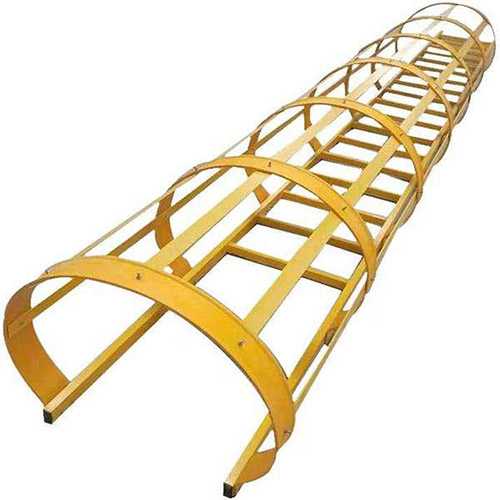
Fiberglass Cage Ladder Overview
Fiberglass cage ladders, also called FRP cage ladders, GRP vertical access ladders, or composite fixed ladders, are permanently installed vertical access systems made from fiberglass-reinforced polymer (FRP/GRP) structural profiles. A safety cage is attached to the climbing section to provide fall protection. Typical applications include access to platforms, roofs, tanks, silos, and equipment in industrial environments. Modular ladder sections, side rails, rungs, and cage components can be configured according to project height, load, environmental exposure, and installation conditions.
What Is a Fiberglass Cage Ladder?
A fiberglass cage ladder is a permanently installed vertical ladder constructed from FRP/GRP composite structural profiles. Typical assemblies include side rails, ribbed or slip-resistant rungs, a safety cage or back guard, and connection hardware. The ladder is intended for fixed industrial access where the selected material system and configuration are suitable for the operating environment. It may also be described as a fiberglass vertical ladder with cage, FRP access ladder, GRP fixed ladder, or non-metallic industrial ladder. Modular sections support transport and on-site assembly for project-specific access configurations.
Key Product Facts
- Material: FRP/GRP composite profiles with glass fiber reinforcement and a thermosetting resin matrix
- Rung configuration: Ribbed or slip-resistant surface profile options
- Cage configuration: Cage geometry and component arrangement can be specified according to project requirements
- Electrical properties: FRP materials are non-metallic and can be selected where electrical insulation is a relevant project consideration
- Modular design: Ladder sections and cage components can be configured for transport and on-site assembly
- Customization: Dimensions, resin systems, connection details, and cage geometry can be configured for individual projects
Material & Construction
The ladder is built from FRP/GRP profiles consisting of glass fiber reinforcement embedded in a thermosetting resin matrix. Resin options can include polyester and vinyl ester systems, with selection based on the expected chemical exposure, temperature, and other project conditions. Fire-retardant resin formulations and UV-stabilized systems can also be specified where required by the project.
Where field cutting or drilling is required, exposed fiber edges should be properly sealed with a compatible resin or suitable protective coating to maintain the intended edge protection and corrosion-resistant characteristics of the FRP material.
Typical Applications
Fiberglass cage ladders are used for fixed vertical access in industrial and infrastructure environments where the selected FRP material system is suitable for the operating conditions. Typical applications include:
- Chemical processing facilities
- Oil and gas facilities
- Marine and offshore structures
- Wastewater treatment plants
- Electrical substations and utility structures
- Food and beverage production areas
- Mining and metal processing facilities
- Cooling towers, tanks, silos, and roof access points
Project configuration should consider access height, expected loading, environmental exposure, support conditions, and installation requirements.
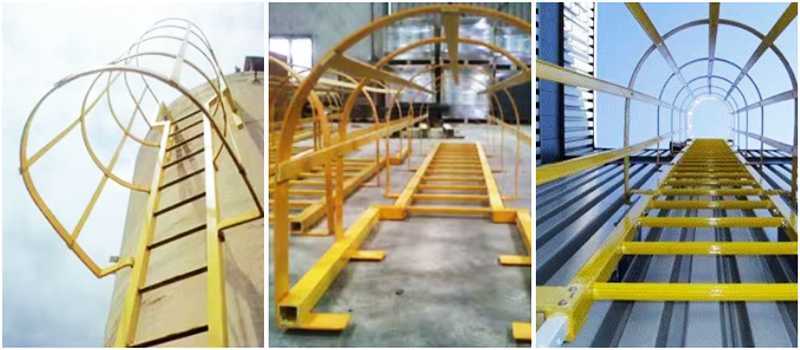
Load Capacity
Load capacity is configuration dependent and should be evaluated for the specified ladder arrangement. Relevant design factors include:
- Side rail dimensions and profile properties
- Rung spacing and connection details
- Material properties of the selected resin system
- Support conditions and anchoring method
- Total climbing height and any intermediate landings
- Specified user and service loads
For project-specific sizing, the required design loads, dimensions, support conditions, and installation details should be provided for engineering review.
Selection Considerations
When specifying a fiberglass cage ladder, consider the following project-specific factors:
- Climbing height: Define the total access height, number of ladder sections, intermediate landings, and available installation space.
- Load requirements: Provide the expected maximum user load and any additional service loads so that the ladder configuration can be evaluated accordingly.
- Resin system: Polyester and vinyl ester systems can be selected according to the expected chemical exposure and operating conditions.
- Safety cage configuration: Cage geometry, component arrangement, and installation details should be specified according to the project requirements.
- Electrical considerations: Where electrical insulation is relevant, the selected FRP material system and the project-specific dielectric requirements should be reviewed.
- UV exposure: UV-stabilized resin systems or protective surface options can be specified for outdoor installations where required.
- Field modification: Any cutting or drilling should be followed by suitable sealing of exposed FRP edges.
Technical Specifications
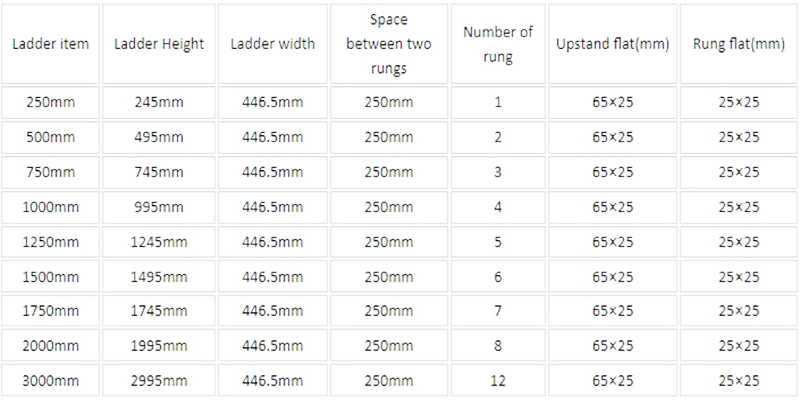
Fiberglass cage ladders can be configured with different materials, dimensions, and component arrangements according to project requirements. The final configuration is confirmed during engineering review.
- Material: FRP/GRP composite profiles with glass fiber reinforcement and thermosetting resin matrix
- Side rail dimensions: Available in different profile sizes according to structural and installation requirements
- Rung configuration: Ribbed or slip-resistant surface options
- Cage geometry: Configurable according to ladder height, installation conditions, and project requirements
- Cage components: Modular cage sections and connection components can be configured with the ladder assembly
- Color options: Yellow, grey, and other colors may be available depending on the selected resin system
- Load capacity: Configuration dependent and evaluated according to the specified design conditions
- Fire performance options: Fire-retardant resin systems can be specified where required by the project
- UV protection: UV-stabilized resin systems or protective surface options can be specified for outdoor use
For project-specific engineering review, provide the required access height, expected loads, environmental conditions, support arrangement, and installation details.
Frequently Asked Questions
Is the fiberglass cage ladder suitable for outdoor environments?
FRP cage ladders can be configured for outdoor installations. UV-stabilized resin systems or protective surface options can be specified where required. Material selection and ladder configuration should consider the expected UV exposure and other site conditions.
How is the ladder configuration selected?
Selection depends on factors such as climbing height, expected loading, support conditions, environmental exposure, resin system, cage configuration, and installation requirements. These inputs are used to determine the appropriate project-specific arrangement.
Can the ladder be used near electrical equipment?
FRP is a non-metallic material with electrical insulation characteristics. Where the ladder will be installed near electrical equipment, the specific dielectric requirements and installation conditions should be reviewed as part of the project design.
Can the ladder be customized for different heights?
Yes. Modular ladder sections and cage components can be configured for different access heights and installation arrangements. Provide the required climbing height, landing details, support conditions, and other project requirements for engineering review.
How should the resin system be selected for chemical environments?
Resin selection depends on the expected chemical exposure, temperature, and other environmental conditions. Polyester and vinyl ester systems can be considered according to the project requirements, with the final material selection based on the specified operating environment.
Related Products & System Components
Fiberglass cage ladders can form part of a complete vertical access system. Related components may include:
- FRP platforms and walkways for landing areas
- Access covers and guardrail systems
- Mounting brackets, anchoring hardware, and connection components
Related components can be considered together where the project requires an integrated access arrangement.
Engineering Inquiry
For project-specific configuration and engineering review, provide the key access and installation requirements so the ladder arrangement can be evaluated accordingly:
- Total climbing height and number of intermediate landings
- Expected maximum user load and additional service loads
- Chemical exposure and ambient temperature range
- UV exposure and outdoor installation conditions
- Support arrangement and anchoring conditions
- Color and surface finish preferences


