The plastic grass grid is a modular ground reinforcement system designed to stabilize natural grass surfaces while maintaining permeability and visual continuity. It is used to address practical p... Read More
The plastic grass grid is a modular ground reinforcement system designed to stabilize natural grass surfaces while maintaining permeability and visual continuity. It is used to address practical problems such as soil displacement, rutting, erosion, and surface failure caused by repeated pedestrian or vehicle traffic. Instead of replacing green areas with rigid paving, this system reinforces the ground structure beneath the grass, allowing natural growth while improving load distribution.
This solution is widely specified by landscaping contractors, infrastructure developers, municipal planners, and industrial project managers who require a balance between surface strength and environmental integration. The plastic grass grid supports functional use cases such as parking, access routes, and emergency lanes while preserving the appearance and drainage behavior of natural ground.
By combining engineered geometry with durable polymer material, the system creates a stable yet flexible surface that performs reliably under long-term outdoor exposure. It is suitable for permanent installations as well as project-based applications where durability, ease of installation, and predictable performance are essential.
Plastic Grass Grid Paving System for Load-Bearing Green Surfaces
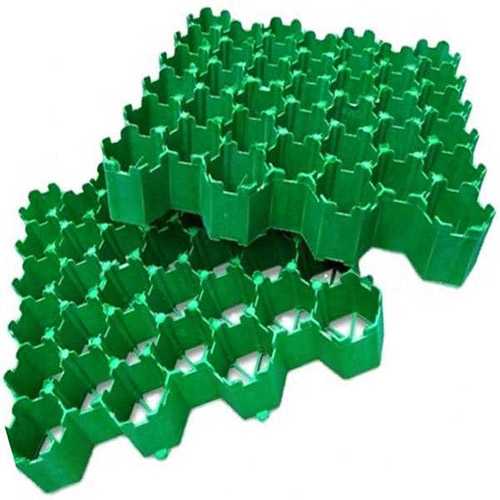
This plastic grass grid paving system is manufactured using high-density polyethylene (HDPE) through controlled molding processes. Each panel is formed with an interconnected cell structure that locks together during installation, creating a continuous load-spreading surface across the prepared base. The design reduces point loading by distributing weight laterally, which helps prevent soil compaction and surface deformation.
Unlike conventional hard paving materials such as concrete or asphalt, this system remains permeable and adaptable. Minor ground movement caused by temperature changes or moisture variation is absorbed by the grid structure rather than transferred directly to the surface. This characteristic reduces cracking, settlement, and long-term maintenance issues.
The paving system is intended for use with grass or gravel infill, depending on project requirements. When filled with grass, it supports root development and soil aeration while providing structural reinforcement. When filled with aggregate, it delivers a stable, permeable surface suitable for utility access or temporary traffic routes.
Permeable Grass Paver Grid for Drainage Control
As a permeable grass paver grid, the system allows surface water to pass directly through the open cells into the sub-base and underlying soil. This permeability plays a critical role in managing surface runoff and reducing water accumulation in high-traffic areas. It also supports compliance with drainage-focused design principles commonly applied in modern infrastructure and landscape projects.
By enabling vertical water movement, the grid helps maintain consistent soil moisture levels beneath the surface. This reduces stress on grass roots and minimizes the formation of muddy or uneven areas after rainfall. The result is a surface that remains usable and visually consistent across varying weather conditions.
HDPE Grass Reinforcement Grid with Structural Stability
The HDPE grass reinforcement grid is produced from polymer material selected for its balance of strength, flexibility, and resistance to environmental exposure. HDPE performs reliably in outdoor conditions, including temperature variation, moisture exposure, and long-term contact with soil and organic matter.
When installed over a properly prepared sub-base, the grid provides structural reinforcement capable of supporting routine vehicular loads. The interconnected cell walls act as a lateral support framework, reducing shear forces within the soil layer. This characteristic is particularly important in areas subject to repeated loading, such as access routes or service lanes.
The material does not rely on surface coatings or treatments to perform its function. Instead, durability is achieved through material composition and structural design, allowing the grid to maintain its shape and load-bearing capability over extended periods of use.
Grass Grid for Parking Areas and Access Routes
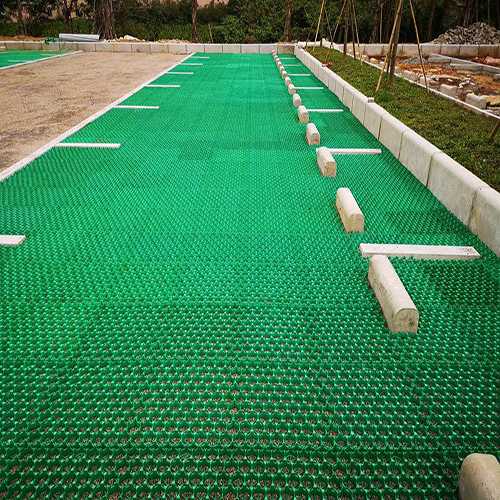
A grass grid for parking areas is commonly specified in projects where vehicle access is required without fully sealing the ground surface. Typical applications include overflow parking, commercial parking zones, residential developments, and shared access routes where visual integration with landscaping is desired.
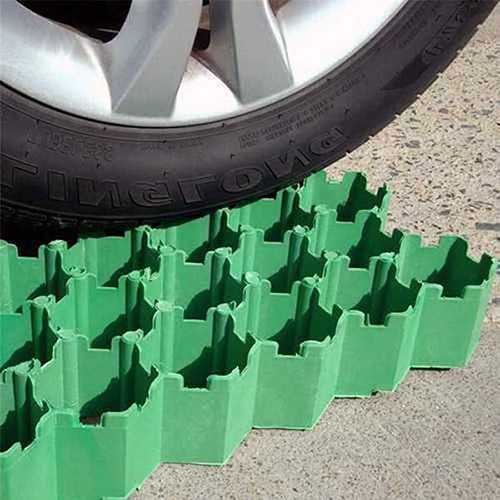
The grid distributes vehicle loads across a wider surface area, reducing localized stress on the soil beneath tires. This minimizes rut formation and surface displacement, even under repeated vehicle movement. When combined with a suitable base layer, the system provides stable performance for light to heavy vehicles depending on design requirements.
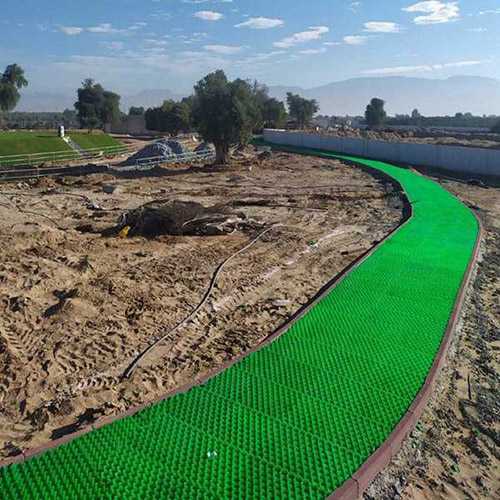
In access routes and emergency lanes, the grid allows reliable vehicle passage while preserving green coverage. This is particularly useful in environments where permanent hard paving is restricted or where surface permeability is required.
Key Advantages & Technical Features
Distributes surface loads to reduce soil compaction
Maintains permeability for effective water drainage
Supports natural grass growth and root integration
Constructed from HDPE suitable for long-term outdoor use
Adaptable for grass or aggregate infill applications
Specifications
Material: High-Density Polyethylene (HDPE)
Panel Structure: Open-cell, interlocking grid
Surface Finish: Grass-filled or aggregate-filled
Load Performance: Dependent on base preparation and infill type
Installation Method: Manual placement over compacted sub-base
Environmental Exposure: Designed for continuous outdoor use
Service Life Expectation: Long-term performance under standard conditions
Applications & Industry Use Cases
Commercial and residential parking areas
Fire access lanes and emergency vehicle routes
Industrial parks and logistics facilities
Municipal green infrastructure projects
Parks, walkways, and landscaped public spaces
Temporary access roads and service paths
Installation Considerations
Proper installation begins with base preparation. A compacted sub-base is essential to ensure even load transfer and long-term stability. The thickness and composition of the base layer should be determined according to expected traffic loads and site conditions.
Once the base is prepared and leveled, the grid panels are placed and interlocked manually. Infill material is then added and compacted lightly to secure the grid in position. Grass seeding or turf placement follows, allowing the surface to integrate naturally over time.
Maintenance & Lifecycle Performance
Maintenance requirements are minimal compared to conventional paving systems. Routine inspection ensures that infill remains evenly distributed and that vegetation remains healthy. In the event of localized damage, individual panels can be removed and replaced without disturbing surrounding areas.
Over its service life, the system helps reduce maintenance costs associated with surface repair, drainage correction, and erosion control. This makes it a practical choice for long-term infrastructure planning.
Frequently Asked Questions (FAQ)
Can the plastic grass grid support regular vehicle traffic?
Yes. When installed on a properly engineered base, it can support regular vehicle movement while maintaining surface integrity.
Does the grid interfere with grass growth?
No. The open-cell structure allows roots to grow through and integrate with the soil below.
Is the system suitable for long-term outdoor exposure?
The HDPE material is designed for continuous outdoor use under typical environmental conditions.
Why Choose Us
We focus on consistent manufacturing quality, stable supply capacity, and practical product design aligned with real-world project requirements. Our plastic grass grid solutions are developed for professional buyers who prioritize predictable performance, scalability, and cost-effective implementation.
Ordering & Sourcing Information
The plastic grass grid is available for bulk procurement and project-based sourcing. Specifications can be adapted to suit different applications, making the system suitable for contractors, distributors, and infrastructure developers engaged in domestic or international projects.
This product offers a reliable balance between ground reinforcement and environmental integration for professional landscaping and infrastructure applications.