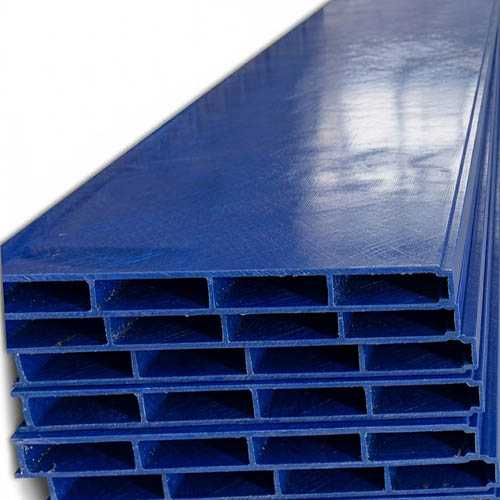
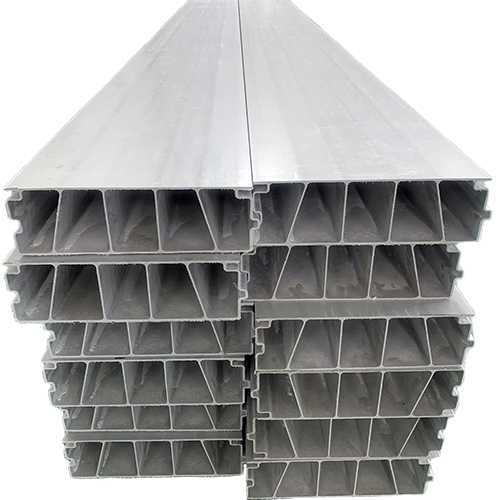
Fiberglass Hollow Core Panel Overview
Fiberglass hollow core panel, also referred to as an FRP or GRP hollow core panel, is a composite panel with an internal hollow cross-section. It con... Read More
Fiberglass hollow core panel, also referred to as an FRP or GRP hollow core panel, is a composite panel with an internal hollow cross-section. It consists of glass fiber reinforcement embedded in a thermosetting resin matrix and is intended for enclosure, flooring, cladding, partition, and modular composite applications. Panel dimensions and core configurations are specified according to project requirements.
What Is a Fiberglass Hollow Core Panel?
A fiberglass hollow core panel is an FRP composite panel featuring an internal hollow cross-section. The core geometry forms the internal panel structure and can be defined according to the required panel dimensions, support conditions, and application.
Panel dimensions, wall thickness, core configuration, and resin system may vary according to project requirements, support arrangement, environmental exposure, and intended use.
Key Product Facts
Material:
Glass fiber reinforcement embedded in a thermosetting resin matrix.
Panel structure:
Internal hollow core cross-section for composite panel construction.
Configuration:
Panel dimensions, wall thickness, and core geometry are project-specified.
Resin system:
Selected according to the intended service environment and project requirements.
Material & Construction
Fiberglass hollow core panels consist of glass fiber reinforcement embedded in a thermosetting resin matrix. The internal hollow cross-section forms the core structure of the panel and is defined according to the required panel configuration.
Resin system selection depends on the intended service environment, environmental exposure, and project requirements. The selected resin system forms part of the confirmed panel configuration.
Panel dimensions, wall thickness, and core geometry can be evaluated according to support conditions, installation arrangement, and intended application.
Applications
Fiberglass hollow core panels are used in composite construction applications where the panel configuration is suitable for the required enclosure, flooring, or modular system. Typical application areas include:
Industrial flooring and platform systems
Building enclosure and cladding systems
Partition and enclosure components
Modular construction components
Industrial equipment and infrastructure components
Application selection depends on panel configuration, environmental exposure, support arrangement, and installation requirements.
Load Capacity Considerations
Load capacity for fiberglass hollow core panels depends on the confirmed panel configuration and support conditions. Engineering evaluation typically considers:
Panel thickness and wall dimensions
Hollow core geometry
Support spacing and installation arrangement
Resin system and operating environment
Connection and edge support details
Load calculations for one panel configuration should be evaluated separately when panel geometry, support conditions, or installation details change.
Selection Considerations
Engineers typically consider the following factors when specifying fiberglass hollow core panels:
Panel dimensions:
Defined according to span, support conditions, installation arrangement, and project requirements.
Core configuration:
Internal geometry forms part of the panel design and affects the required panel configuration.
Wall thickness:
Selected in relation to panel geometry, support conditions, and project requirements.
Resin system:
Selected according to environmental exposure and intended service conditions.
Edge details:
Considered according to installation conditions, connections, and support arrangement.
Surface requirements:
Considered according to cleaning, handling, installation, and application conditions.
Technical Specifications
General characteristics of fiberglass hollow core panels are summarized below. Final dimensions and configuration details depend on the confirmed project requirements.
Attribute
Typical Scope / Options
Notes
Material
Fiberglass Reinforced Plastic (FRP/GRP)
Glass fiber reinforcement embedded in a thermosetting resin matrix
Panel structure
Hollow core cross-section
Internal geometry specified according to the panel design
Dimensions
Project-specified
Defined according to design and installation requirements
Wall thickness
Configuration dependent
Related to panel geometry and support conditions
Core configuration
Project-specified
Defined according to panel design requirements
Resin system
Project-specified
Selected according to environmental and service conditions
Frequently Asked Questions
What is a fiberglass hollow core panel?
A fiberglass hollow core panel is an FRP composite panel with an internal hollow cross-section. It consists of glass fiber reinforcement embedded in a thermosetting resin matrix, with the core geometry defined according to the required panel configuration.
What is the difference between fiberglass hollow core panels and solid FRP panels?
Fiberglass hollow core panels use an internal hollow cross-section, while solid FRP panels have a continuous solid cross-section. The appropriate configuration depends on panel design, support conditions, installation requirements, and intended application.
Can fiberglass hollow core panels be customized?
Panel dimensions, wall thickness, and core configuration may be specified according to project requirements, support conditions, and intended application.
Can fiberglass hollow core panels be used outdoors?
FRP composite panels can be used in outdoor applications where the confirmed material configuration, environmental exposure, and installation conditions are appropriate for the project requirements.
How are fire-performance requirements considered?
Fire-performance requirements may affect resin system selection and panel configuration. Any specific fire-performance requirement should be evaluated against the confirmed project configuration and applicable design criteria.
Related Products & System Components
Fiberglass hollow core panels may be used with related FRP components where required by the overall system design.
FRP structural profiles
FRP grating and decking systems
FRP support structures and framing components
Engineering Inquiry
For project evaluation, provide key application details including: