Frame Profiles for Polyurethane Doors & Windows Overview
Frame profiles for polyurethane doors and windows, also called PU frame profiles, are rigid composite sections used to form door a... Read More
Frame Profiles for Polyurethane Doors & Windows Overview
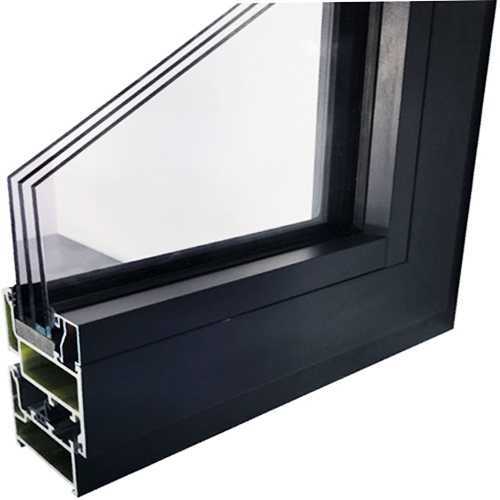
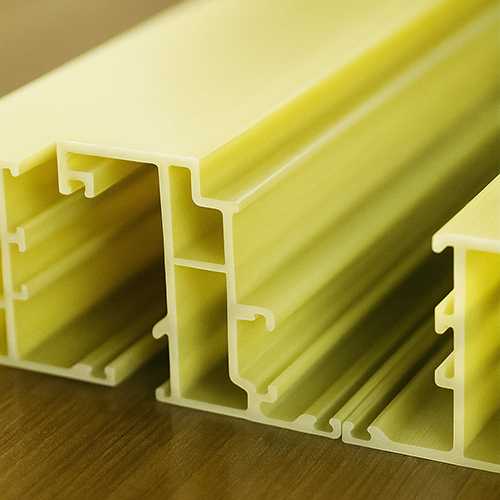
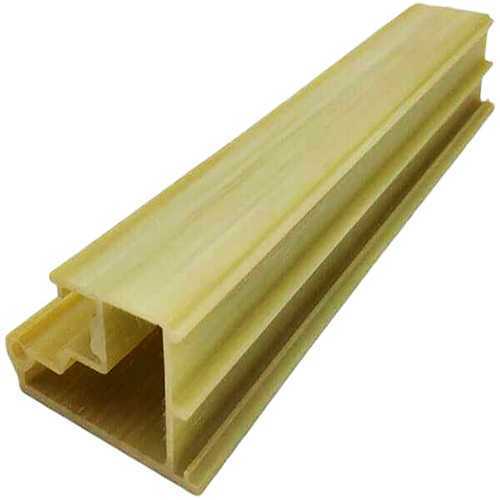
Frame profiles for polyurethane doors and windows, also called PU frame profiles, are rigid composite sections used to form door and window frames. They combine a polyurethane matrix with reinforcement and can be produced in profile geometries matched to glazing, hardware, sealing, and assembly requirements. They are intended for door and window manufacturers, system integrators, and OEM production where thermal separation and structural design are key considerations.
What Are Frame Profiles for Polyurethane Doors & Windows?
A polyurethane frame profile is a linear composite member used to form part of a door or window frame. It provides the framing structure and interface for components such as glazing, seals, and hardware, with the final profile geometry determined by the requirements of the selected door or window system.
Key Product Facts
Material: Reinforced polyurethane (PU) composite.
Profile form: Rigid linear sections for door and window frame assemblies.
Typical use: Door and window framing for residential, commercial, industrial, and OEM systems.
Manufacturing method: Pultrusion for continuous composite profile sections.
Material & Construction
Polyurethane forms the matrix of the composite profile, while reinforcement contributes to the stiffness of the section. Reinforcement type, content, and placement vary according to the profile design and its intended structural function.
Pultrusion forms continuous profile sections with a controlled cross-section. Profile geometry can incorporate interfaces for glazing, sealing components, hardware, fastening, or connection details required by the selected door or window system.
For this reason, structural and thermal characteristics are determined by the actual profile geometry, reinforcement configuration, material formulation, and completed assembly rather than by the profile material alone.
Applications
Polyurethane frame profiles are used in door and window systems where frame geometry, thermal separation, structural design, and material selection are part of the system requirements. Common application contexts include:
Residential door and window systems
Commercial building envelopes
Industrial and institutional buildings
High-humidity and environmentally demanding building environments
OEM production of standardized or project-specific door and window units
Application suitability is determined by the selected profile, glazing arrangement, sealing system, anchoring, exposure conditions, and overall assembly design.
Selection Considerations
Engineers, manufacturers, and system integrators evaluating polyurethane frame profiles typically consider:
Profile cross-section and wall thickness relative to structural and deflection requirements
Reinforcement type, content, and placement relative to the required section behavior
Thermal separation requirements and the intended frame assembly
Glazing type, thickness, support arrangement, and retention method
Compatibility with seals, gaskets, hardware, fasteners, and installation interfaces
Surface finish and coating or bonding requirements
Tooling requirements for standard or customized profile geometries
Profile selection should be based on the geometry and requirements of the intended door or window assembly.
Technical Specifications
The following table summarizes the general configuration characteristics of reinforced polyurethane frame profiles. Specific values depend on the selected profile and assembly configuration.
General characteristics of reinforced polyurethane frame profiles
Characteristic
Description
Material type
Reinforced polyurethane (PU) composite
Manufacturing method
Pultrusion
Profile form
Rigid linear sections with profile-specific cross-sections
Reinforcement
Type, content, and placement vary by profile design
Frame interfaces
Can be configured for glazing, seals, hardware, fastening, and assembly interfaces
Surface finish
Selected according to profile and finishing requirements
Color
Standard or project-specific options, depending on configuration
Thermal characteristics
Configuration dependent on profile geometry, material formulation, reinforcement, and assembly
Structural characteristics
Configuration dependent on section geometry, reinforcement, glazing, span, loading, and assembly
Frequently Asked Questions
Are polyurethane frame profiles suitable for exterior door and window systems?
They can be incorporated into exterior door and window systems when the selected profile, surface finish, sealing components, and installation arrangement are designed for the intended exposure conditions.
Can polyurethane frame profiles be produced for different door and window designs?
Profile geometry and dimensions can be adapted for different frame designs. The available geometry depends on the required cross-section, interfaces, tooling, and production requirements.
How do polyurethane frame profiles differ from aluminum frames?
Polyurethane-based composite profiles and aluminum frames differ in material structure, thermal characteristics, section design, joining methods, and reinforcement requirements. Selection depends on the thermal and structural objectives of the complete door or window assembly.
Can these profiles accommodate glazing and sealing components?
Profile geometry can incorporate interfaces for glazing, seals, gaskets, and hardware. Compatibility depends on the specific cross-section and the interface details used in the selected system.
Are polyurethane frame profiles suitable for OEM production?
Continuous profile production can support repeatable OEM fabrication. Production suitability depends on the required profile geometry, tooling, production controls, and order requirements.
Engineering Inquiry
For technical data requests or project-specific profile evaluations, provide the main requirements for the intended door or window system. Useful information includes:
Required profile cross-section and wall thickness
Door or window opening dimensions
Design wind load and deflection criteria
Glass type, thickness, and weight
Expected exposure conditions, including humidity, UV, and temperature range