


Fiberglass Window Profile Overview
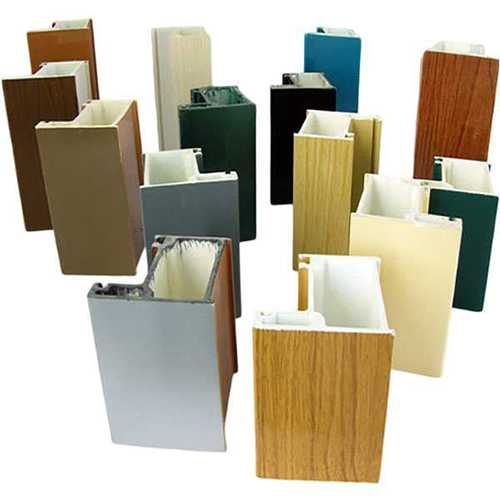
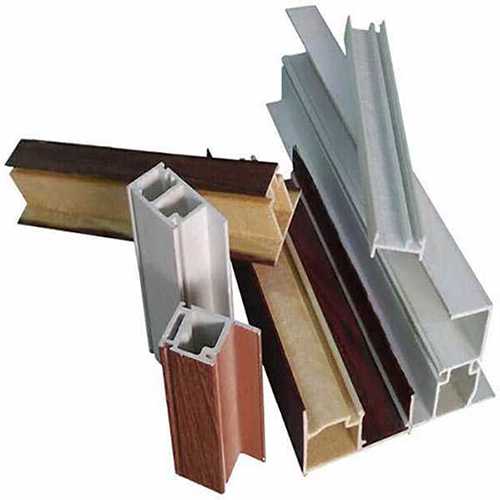
Fiberglass window profiles, also called FRP or GRP window profiles, are rigid framing components made from continuous glass fiber reinforcement embedded in a thermosetting resin matrix. They are used in window and door systems for commercial, industrial, and other building applications. Most profiles are produced by pultrusion, forming continuous sections with uniform cross-sections. Profile geometry, resin system, fiber content, and wall thickness influence mechanical, thermal, and environmental performance.
What Is a Fiberglass Window Profile?
A fiberglass window profile is a pultruded framing member used to form window sashes, frames, and related components around glazed openings. The profile consists of continuous glass fibers embedded in a cured resin matrix, creating a rigid linear section that can be incorporated into complete window and door assemblies.
Key Product Facts
- Profile material: Glass fiber reinforced polymer (FRP / GRP).
- Manufacturing method: Pultrusion, which aligns continuous reinforcement along the profile length.
- Typical use: Window sash, frame, and related framing components in building envelope systems.
- Resin options: Different thermosetting resin systems can be selected according to the intended exposure and application.
Material & Construction
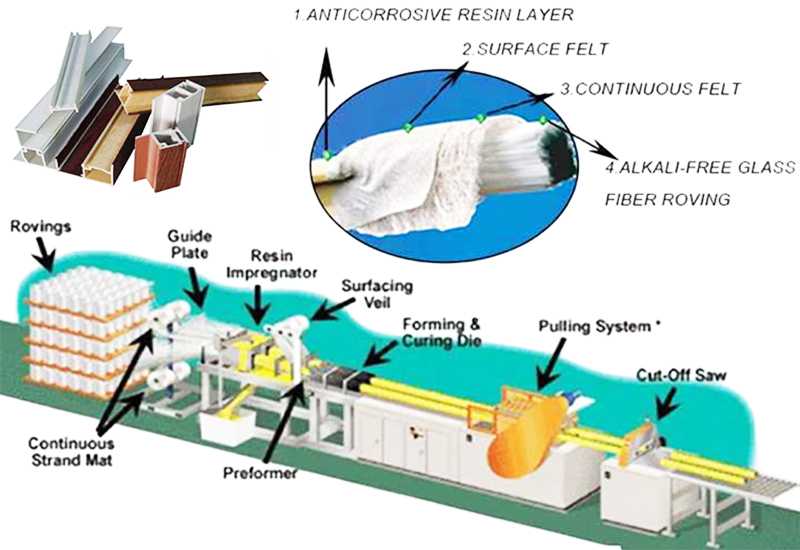
The profile is manufactured by pultrusion, in which continuous glass fiber reinforcement is impregnated with resin and pulled through a heated forming die. The resin cures during the process, producing a continuous profile with a defined cross-section and controlled dimensions.
Glass fiber reinforcement provides the primary load-carrying contribution, while the resin matrix binds the reinforcement and influences environmental and thermal behavior. Common thermosetting matrix options include polyester and vinyl ester. Fiber content, reinforcement arrangement, wall thickness, and profile geometry can be configured according to the intended application and design requirements.
Applications
Fiberglass window profiles are used in window and door systems where profile geometry, material characteristics, corrosion resistance, thermal performance, or low-maintenance design are important considerations. Common application areas include:
- Commercial office buildings and institutional facilities
- Industrial plants, utility buildings, and processing facilities
- Coastal and marine environments exposed to salt spray
- Areas with high humidity or frequent temperature changes
- Window and door assemblies where reduced thermal bridging is a design consideration
Application suitability depends on the selected profile configuration, glazing system, loads, environmental exposure, and installation conditions.
Selection Considerations
Engineers and designers evaluating fiberglass window profiles typically consider the following variables:
- Resin system chemistry relative to expected chemical exposure and UV conditions
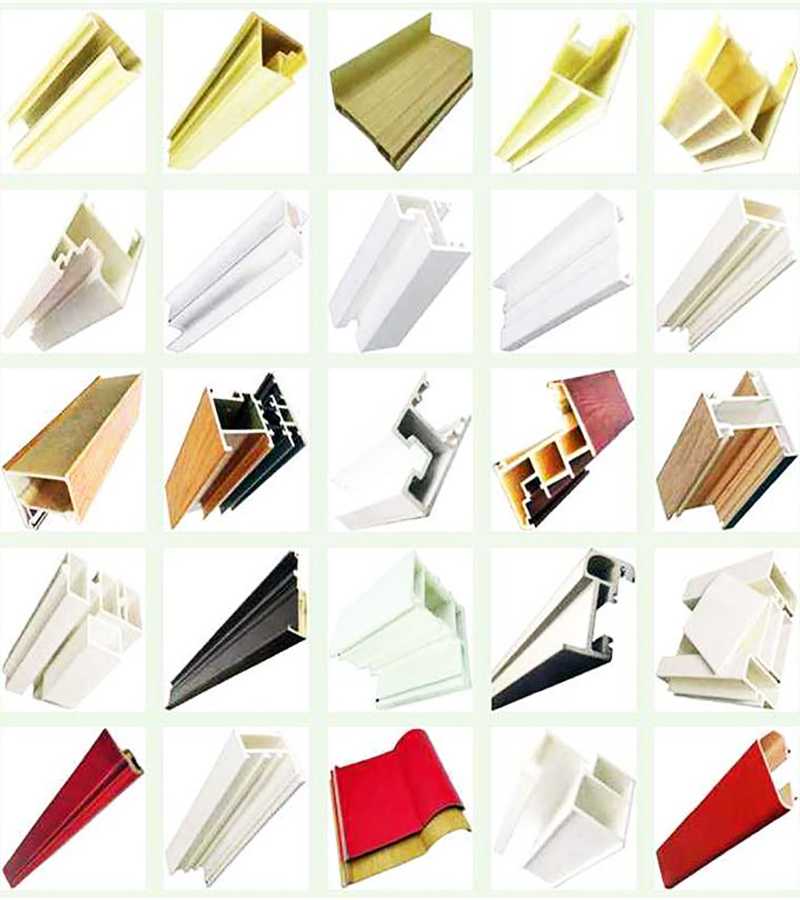
- Profile cross-section and wall thickness in relation to span, wind load, and deflection criteria
- Fiber content and reinforcement orientation in relation to required stiffness
- Glazing type, glass weight, and retention method
- Thermal expansion characteristics and joint design
- Compatibility with hardware, sealants, gaskets, and installation accessories
- Surface finish requirements for cleaning, appearance, and installation
Profile selection is based on the required geometry, glazing arrangement, design loads, exposure conditions, and installation details.
Technical Specifications
Typical configuration characteristics are summarized below. Actual profile details depend on the selected geometry, material formulation, and project requirements.
| Characteristic | Description |
|---|---|
| Material type | Glass fiber reinforced polymer (FRP / GRP) |
| Manufacturing process | Pultrusion |
| Reinforcement | Continuous glass fiber reinforcement |
| Matrix | Thermosetting resin, with options such as polyester or vinyl ester |
| Profile form | Pultruded linear sections with cross-sections configured for the intended application |
| Surface finish | Smooth, sanded, or coated finishes depending on the selected configuration |
| Color | Standard or custom color options depending on the configuration |
| Glazing compatibility | Can be configured for fixed, casement, tilt-and-turn, or sliding window systems |
Mechanical, thermal, and other performance data vary with profile geometry, resin system, reinforcement, and configuration.
Frequently Asked Questions
Are fiberglass window profiles suitable for large window openings?
Pultruded fiberglass profiles can be produced with cross-sections designed for different stiffness requirements. Suitability for a large opening depends on profile dimensions, span, glazing weight, design wind load, support conditions, and the required deflection criteria.
How does fiberglass compare with aluminum window frames?
Fiberglass and aluminum have different thermal and mechanical characteristics. Fiberglass generally has lower thermal conductivity than aluminum, while its mechanical behavior depends on the profile geometry and reinforcement design. Material compatibility should also be considered when selecting hardware and adjoining components.
Can fiberglass window profiles be customized?
Profile geometry, wall thickness, reinforcement arrangement, surface finish, color, and resin system can be configured for different application requirements. Feasibility depends on the required cross-section, tooling, and production parameters.
What resin systems are available for fiberglass window profiles?
Common resin options include polyester and vinyl ester. Resin selection is influenced by the expected chemical exposure, environmental conditions, thermal requirements, and overall application design.
Profile Selection Information
The following information helps define the appropriate fiberglass window profile configuration for a project:
- Required profile cross-section and wall thickness
- Window opening width and height
- Design wind load and deflection criteria
- Glass type, thickness, and weight
- Expected exposure conditions, including chemical, coastal, UV, and temperature conditions
- Required surface finish and color
- Approximate order quantity


