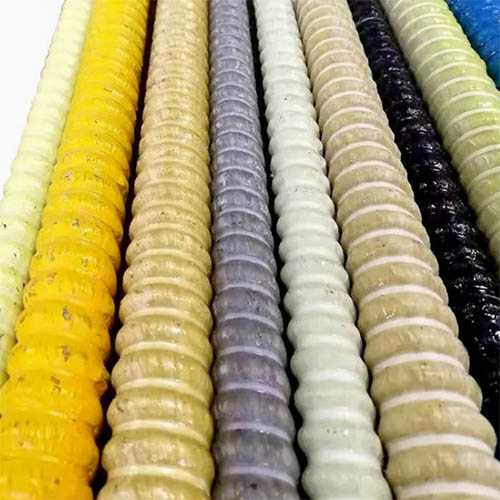
BFRP Rebar

BFRP rebar (basalt fiber-reinforced polymer rebar) is a non-metallic composite reinforcing bar made from basalt fibers embedded in a polymer resin matrix. It may be considered for concrete reinforcement where permitted by the applicable structural design and project requirements. Potential application contexts include selected marine and coastal structures, water and wastewater infrastructure, and transportation concrete exposed to de-icing salts. Unlike GFRP rebar, which uses glass fibers, BFRP uses basalt fibers. Fiber type alone does not establish the finished bar's mechanical properties, concrete bond performance, or durability; these depend on the product configuration and assessment conditions.
BFRP rebar combines basalt reinforcing fibers with a polymer resin matrix. The fibers provide the primary reinforcement, while the resin binds the composite and supports stress transfer between its constituent fibers. The finished bar's properties depend on the material system, manufacturing process, and product configuration.
Bar surface geometry and treatment influence interaction with the surrounding concrete. Bond performance should therefore be considered in relation to the bar configuration, concrete properties, embedment, and reinforcement detailing.
BFRP and GFRP belong to the same broad family of fiber-reinforced polymer composites, but use different reinforcing fibers. Fiber type alone does not establish which product has higher tensile strength, stiffness, bond performance, or durability. Meaningful comparisons require relevant product data assessed under comparable conditions.
Potential application contexts in which non-metallic FRP reinforcement may be considered include:
These examples describe potential application contexts, not confirmed suitability of every BFRP product. Selection for a specific project depends on the actual product properties, exposure conditions, and applicable structural design requirements.
BFRP rebar selection should be based on the structural requirements and the properties of the specific product being considered. Key factors include:
Cost comparisons should reflect the required product configuration and project scope rather than fiber type alone. Quotation factors may include bar dimensions, order quantity, specified properties, delivery destination, and schedule. Purchase cost and lifecycle cost should be compared using project-specific assumptions.
BFRP uses basalt fibers as its primary reinforcement, whereas GFRP uses glass fibers. Both combine reinforcing fibers with a polymer resin matrix. Their mechanical properties and performance in concrete should be compared using relevant product data and comparable assessment conditions.
BFRP rebar is a non-metallic reinforcement option that may be considered where permitted by the structural design and applicable project requirements. It should not be specified by matching steel bar diameter alone. Design calculations must account for differences in stiffness, tensile behavior, bond characteristics, and failure behavior.
BFRP rebar does not undergo the iron-based rusting associated with conventional steel reinforcement. However, this distinction does not establish immunity to environmental degradation. Long-term behavior depends on the composite material system, fiber-resin interface, temperature, moisture, chemical exposure, and exposure duration.
Bond performance depends on bar surface geometry, concrete properties, embedment, and reinforcement detailing. Durability is influenced by the composite material system and service environment, including temperature, moisture, and chemical exposure. These factors should be assessed against the actual product properties and project requirements.
For a BFRP rebar inquiry, provide the main project requirements to help identify the information needed for product selection:
These details help clarify the required product configuration and the properties or supporting information that need to be confirmed before selection.


