
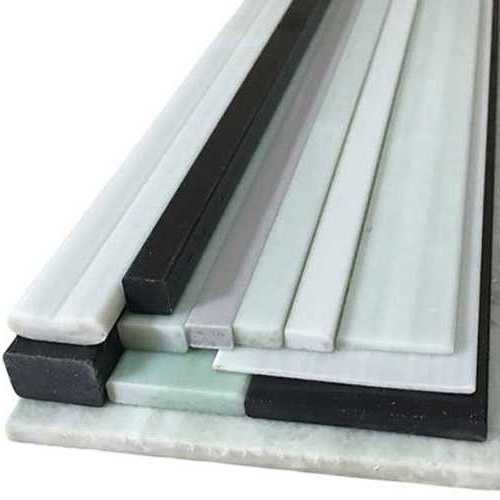
Fiberglass Flat Bar Overview
Fiberglass flat bars are pultruded FRP/GRP profiles with a solid rectangular cross-section made from continuous glass fiber reinforcement and a thermosetting resin matrix. They are used for structural framing, reinforcement, electrical insulation, and fabrication in environments where corrosion or electrical conductivity are relevant considerations. Common resin options include polyester and vinyl ester, while dimensions and performance depend on the selected configuration.
What Is a Fiberglass Flat Bar?
A fiberglass flat bar is a solid rectangular FRP/GRP profile manufactured by pultrusion. Continuous glass fibers are impregnated with a thermosetting resin and pulled through a heated forming die to produce a straight profile with a consistent cross-section.
Fiberglass flat bars are used in structural, manufacturing, electrical, and industrial fabrication applications where corrosion exposure, moisture, or electrical insulation are relevant to the design. They can be cut, drilled, and assembled as part of fabricated structures, with final suitability depending on the profile dimensions, resin system, loading conditions, and installation details.
Key Product Facts
- Material: Glass fiber reinforcement embedded in a thermosetting resin matrix
- Cross-section: Solid rectangular flat bar profile
- Manufacturing process: Pultrusion using continuous reinforcement
- Resin options: Polyester and vinyl ester systems, subject to product configuration
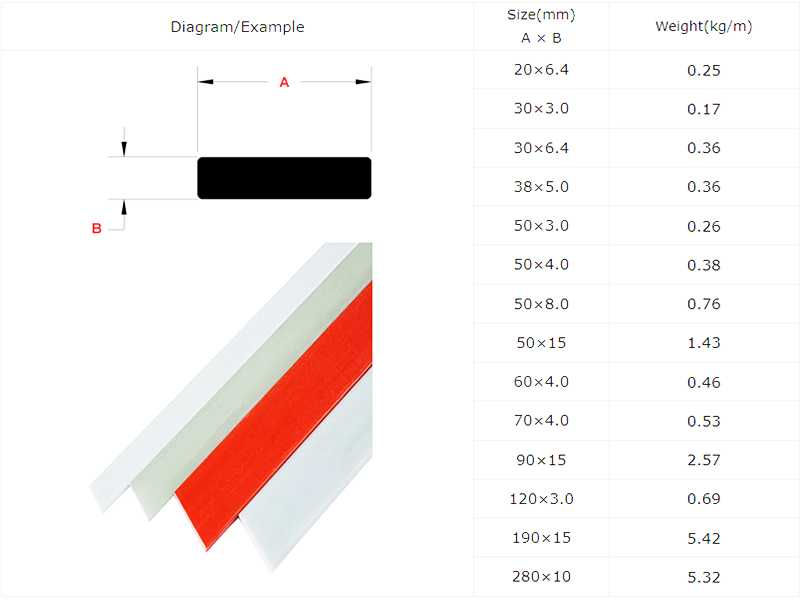
- Dimensions: Multiple widths and thicknesses with selected length options
- Surface finish: Smooth or textured options may be available depending on configuration
- Electrical characteristics: Used for non-conductive structural and insulation applications where the selected FRP configuration is suitable
Material & Construction
Fiberglass flat bars are manufactured from continuous glass fiber reinforcement combined with a thermosetting resin matrix. Polyester and vinyl ester resin systems can be selected according to the intended application and environmental conditions.
Resin selection can be relevant when chemical exposure is part of the application. Suitability depends on the specific chemical, concentration, temperature, exposure duration, and selected resin system rather than on the profile shape alone.
Profile width, thickness, fiber content, and fiber orientation also affect the mechanical behavior of the finished profile. For this reason, load-related suitability should be evaluated against the actual profile configuration and support conditions.
Fiberglass flat bars can be supplied with different surface finishes depending on the product configuration. Standard and custom dimensions or lengths can be considered for fabrication requirements.
Typical Applications
Fiberglass flat bars are commonly used in industrial and fabrication environments where corrosion exposure, moisture, or electrical insulation are relevant considerations. Typical application areas include:
- Construction: Structural reinforcement, supports, framing components, and fabricated assemblies
- Manufacturing: Fixtures, guards, brackets, and support components
- Electrical: Non-conductive structural members, supports, and insulation-related components
- Water and wastewater: Brackets, guides, supports, and fabricated components in wet environments
- Transportation: Fabricated components where corrosion exposure, moisture, or reduced component weight are relevant considerations
Selection Considerations
Selecting a fiberglass flat bar generally involves evaluating the following project variables:
- Resin system: Polyester or vinyl ester can be considered according to the environmental and chemical exposure conditions.
- Profile dimensions: Width and thickness should be selected according to the required structural arrangement, span, load, and support conditions.
- Fiber configuration: Fiber content and orientation affect the mechanical behavior of the profile.
- Surface finish: Finish requirements may depend on fabrication, bonding, handling, or installation considerations.
- Electrical requirements: For electrical or insulation applications, the suitability of the selected FRP configuration should be confirmed against the actual electrical conditions.
- Environmental exposure: Chemical type, concentration, temperature, moisture, UV exposure, and installation conditions should be considered where applicable.
Technical Specifications
The following table summarizes the general product configuration. Exact dimensions, mechanical properties, and environmental suitability depend on the selected profile and resin system.
| Attribute | Typical Scope / Options | Notes |
|---|---|---|
| Material | Fiberglass Reinforced Plastic (FRP/GRP) | Glass fiber reinforcement with a thermosetting resin matrix |
| Manufacturing process | Pultrusion | Produces a continuous solid profile with a consistent cross-section |
| Cross-section | Solid rectangular flat profile | Width and thickness depend on the selected profile |
| Resin system | Polyester or vinyl ester | Selection depends on the intended environment and application requirements |
| Surface finish | Smooth or textured, where available | Depends on the product configuration |
| Mechanical properties | Configuration dependent | Influenced by profile geometry, fiber content, resin system, and support conditions |
| Dimensions | Multiple widths, thicknesses, and length options | Standard or custom dimensions may be considered for fabrication requirements |
For application review, provide the required width, thickness, length, load, span, environmental exposure, and other relevant project conditions.
Frequently Asked Questions
What affects the load capacity of a fiberglass flat bar?
Load-related suitability depends on the profile width and thickness, fiber configuration, resin system, span, support conditions, and applied loading. The selected configuration should therefore be evaluated against the actual project requirements.
Can fiberglass flat bars be used outdoors?
Fiberglass flat bars can be used in outdoor applications, but long-term suitability depends on the resin system, UV exposure, weathering conditions, and any surface protection used. The actual environmental conditions should be considered when selecting the configuration.
Are fiberglass flat bars suitable for electrical insulation applications?
FRP flat bars are used in non-conductive structural and insulation-related applications. For a specific electrical application, the selected profile and material configuration should be evaluated against the required electrical conditions.
Can fiberglass flat bars be cut or drilled on site?
Fiberglass flat bars can be cut and drilled during fabrication or installation. Field cutting and drilling expose the glass fiber reinforcement at the modified edge, so exposed areas should be properly re-sealed with a compatible resin or coating where required by the application to help maintain edge protection.
Engineering Inquiry
To evaluate a fiberglass flat bar for a specific application, provide the main profile and environmental requirements for review.
- Required width and thickness
- Required length or cut length
- Expected load and span conditions
- Chemical exposure and temperature conditions
- Electrical or insulation requirements, where applicable
- Surface finish requirements


