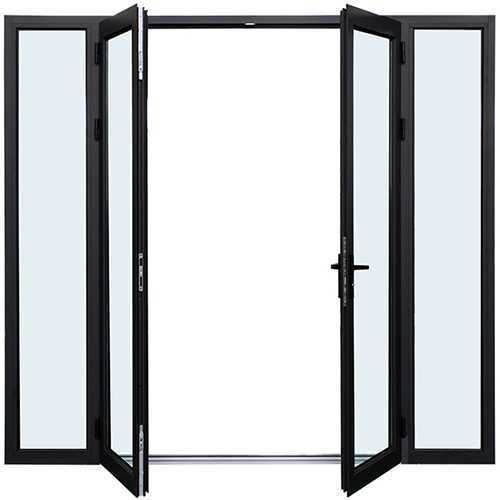
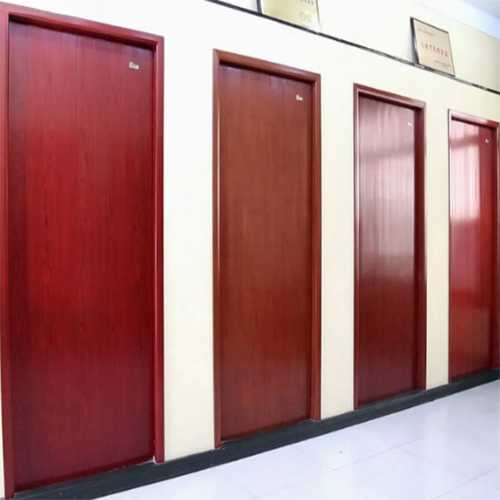
A Fiberglass Swing Door is an industrial access solution designed for facilities that operate in environments where corrosion resistance, durability, and operational reliability are critical. Manu... Read More
A Fiberglass Swing Door is an industrial access solution designed for facilities that operate in environments where corrosion resistance, durability, and operational reliability are critical. Manufactured from fiberglass reinforced plastic (FRP), also known as glass reinforced plastic (GRP), this door type is engineered to perform consistently in conditions that challenge conventional steel or wooden doors.
In industrial facilities, doors are exposed to moisture, temperature variation, cleaning chemicals, physical impact, and constant daily use. Metal doors are prone to corrosion and surface degradation, while wooden doors absorb moisture and may warp or delaminate over time. Fiberglass swing doors address these issues through a non-corrosive structure, dimensional stability, and low maintenance requirements.
These doors are commonly specified by procurement managers, facility engineers, and project contractors responsible for manufacturing plants, warehouses, food processing facilities, pharmaceutical production areas, chemical plants, and infrastructure buildings. Their core value proposition lies in long service life, predictable performance, and reduced lifecycle cost.
FRP Swing Door for Industrial Buildings
An FRP swing door for industrial buildings is engineered to support continuous daily operation without compromising structural integrity or ease of use. The door panel is formed using fiberglass reinforcement combined with industrial resin systems, creating a lightweight yet mechanically strong structure that supports smooth swing motion.
In industrial building layouts, swing doors are often used to separate production areas, storage zones, corridors, and controlled environments. The swing-door configuration offers simple operation and dependable performance without reliance on complex mechanical systems. This makes it particularly suitable for facilities where reliability and ease of maintenance are prioritized.
Fiberglass swing doors do not rust, blister, or deteriorate when exposed to humidity or wash-down conditions. Their moisture resistance makes them suitable for environments where frequent cleaning is required. In addition, fiberglass is non-conductive, which can be advantageous in facilities where electrical safety considerations are present.
From a procurement perspective, FRP swing doors are often selected during the planning phase to reduce long-term maintenance costs and minimize the risk of premature replacement. Their stable performance profile supports consistent facility operation over extended service periods.
Heavy Duty Fiberglass Swing Door Structure
A heavy duty fiberglass swing door is designed to withstand frequent traffic from personnel, carts, and light industrial equipment. The reinforced fiberglass laminate distributes impact forces across the panel, reducing localized stress and helping maintain dimensional stability.
Compared with thin metal doors that may dent or deform under repeated impact, fiberglass maintains its structural form while remaining lighter in weight. This reduced mass places less strain on hinges and frames, contributing to smoother operation and extended component life.
The surface finish of a fiberglass swing door is typically smooth and non-porous, allowing routine cleaning without surface degradation. This characteristic supports industrial housekeeping requirements and contributes to a clean working environment.
In facilities with continuous movement, the heavy-duty construction of fiberglass swing doors helps reduce operational interruptions caused by door damage or misalignment.
Fiberglass Double Action Swing Door Operation
A fiberglass double action swing door enables movement in both directions, supporting efficient flow in busy industrial corridors. This configuration is frequently applied in food processing plants, packaging areas, logistics centers, and transitional zones where rapid movement is necessary.
Double action operation reduces congestion at access points by allowing personnel and equipment to pass through without repositioning. This contributes to smoother workflows and improved operational efficiency, particularly in high-traffic environments.
Fiberglass construction ensures that repeated bi-directional movement does not compromise the door panel’s integrity. The material’s inherent resilience supports consistent performance under continuous use conditions.
Chemical Resistant GRP Swing Door Performance
A chemical resistant GRP swing door is specified for environments where exposure to corrosive substances is a routine operational factor. Chemical processing facilities, laboratories, wastewater treatment plants, and industrial cleaning areas commonly rely on fiberglass doors due to their resistance to chemical attack.
The resin system used in fiberglass door construction can be selected to suit specific chemical exposure profiles. This allows the door to maintain structural stability and surface integrity in environments where traditional materials deteriorate rapidly.
As a result, GRP swing doors provide predictable long-term performance in applications where chemical resistance is a key procurement criterion.
Key Advantages & Technical Features
Non-corrosive FRP / GRP construction
Lightweight structure with high mechanical strength
Resistance to moisture and humidity
Low maintenance requirements over long service life
Impact resistance suitable for industrial traffic
Stable dimensional performance under frequent use
Customizable sizes, colors, and functional configurations
Frame Compatibility: FRP or industrial composite frames
Application Area: Interior and semi-exterior industrial use
Applications & Industry Use Cases
Manufacturing and assembly plants
Food and beverage processing facilities
Pharmaceutical and medical production environments
Chemical processing and laboratory areas
Warehouses and logistics centers
Utility rooms and infrastructure facilities
Frequently Asked Questions
Is a fiberglass swing door suitable for continuous industrial operation?
Yes. Fiberglass swing doors are designed to support frequent opening cycles while maintaining structural stability.
How does a fiberglass swing door compare with a steel door?
Fiberglass doors provide superior corrosion resistance and require less maintenance in humid or chemical environments.
Can fiberglass swing doors be customized for different projects?
Yes. Dimensions, colors, and configuration options can be adapted to meet specific project requirements.
Are fiberglass swing doors appropriate for hygienic environments?
Yes. Their non-porous surfaces support cleaning routines in food, pharmaceutical, and controlled environments.
Why Choose Fiberglass Swing Door Solutions
Fiberglass swing door solutions are selected by industrial buyers who prioritize durability, predictable performance, and long-term operational value. Their material characteristics reduce replacement frequency and support stable facility operation across a wide range of industrial sectors.
Ordering & Sourcing Information
Fiberglass swing doors are available for bulk procurement, OEM projects, and international supply. Technical parameters and configuration options can be reviewed during the sourcing process to ensure alignment with project and operational requirements.
For procurement managers and project planners seeking a reliable industrial access solution, fiberglass swing doors represent a practical and long-term investment.